Key Takeaways
- Home health agencies may provide skilled nursing, rehabilitation therapy, medical social work, and qualifying aide visits.
- Personal care and companion care focus on daily living and are not the same as skilled medical treatment.
- Not every agency is authorized to provide every service. Check the agency type, license, and individual care plan.
- Medicare covers qualifying home health care but does not cover standalone custodial care or around-the-clock home care.
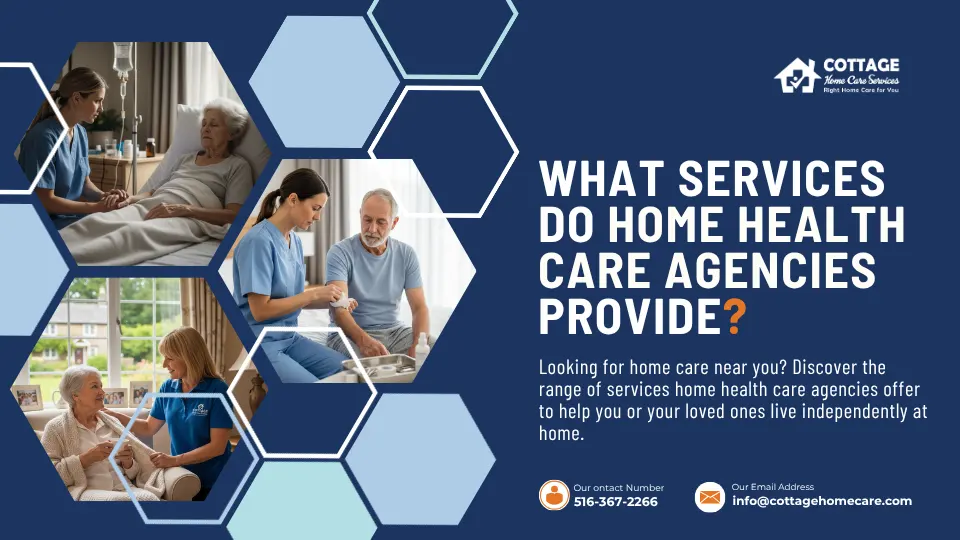
What services do home health care agencies provide? They may send nurses, physical therapists, occupational therapists, speech-language pathologists, home health aides, and medical social workers to a person’s home. Which services are available depends on the agency’s authorization and the patient’s care plan.
If you are helping a parent after surgery, stroke, or a change in health, the first step is to separate medical treatment from everyday help. Some families need both. This guide explains what to ask before choosing an agency and how coverage usually works.
In This Guide
Home Health Agency vs. Home Care Agency: What Is the Difference?
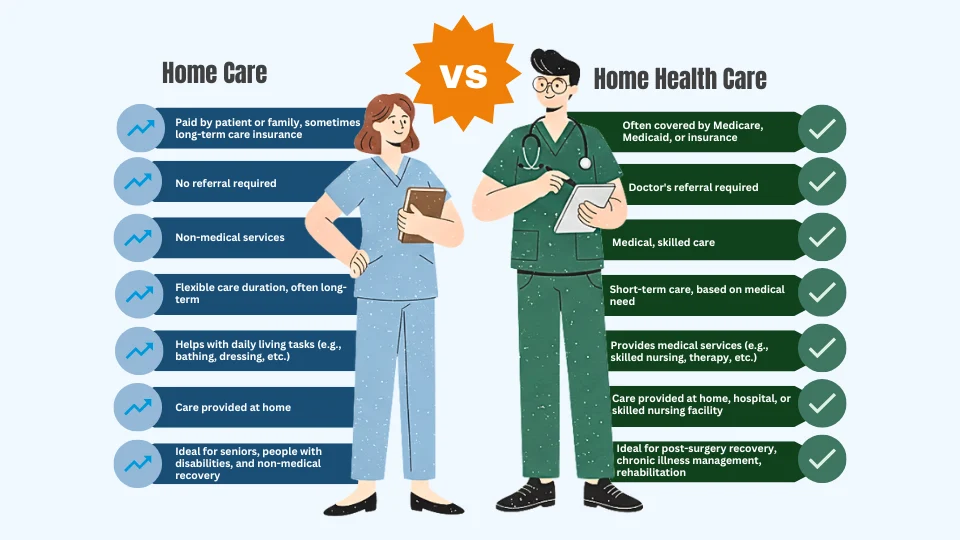
Quick answer: A home health agency focuses on ordered health services at home. A nonmedical home care provider focuses on assistance with daily living. Some properly authorized agencies offer both, but the services and coverage rules remain different.
In New York, a Certified Home Health Agency (CHHA) offers part-time or intermittent skilled and supportive care. A Licensed Home Care Services Agency (LHCSA) may provide authorized personal care, home health aide, and other approved services, including services under contracts with other providers. These are different regulatory categories.
You can compare agency types using New York State’s home care agency directory. The CHHA description and LHCSA description explain the scope of each category. Other states use their own license and registration systems.
What Services Can Home Health Care Agencies Provide?
Quick answer: The main clinical services are skilled nursing, rehabilitation therapy, and medical social work. Home health aide visits may also be part of an approved home health plan. A specific agency may offer only some of these services.
1. Skilled nursing care
Registered nurses and other nursing professionals working within their legal scope may perform skilled tasks ordered by an authorized prescriber. Examples include wound assessments and dressing changes, medication administration when authorized, injections, teaching families about care, and monitoring a serious or changing health condition.
Important: Being an RN or LPN does not, by itself, give someone independent prescribing authority. Medication and treatment orders must come from a legally authorized prescriber. What a nurse can do also depends on state law and professional credentials.
2. Physical therapy
A physical therapist can assess movement, strength, balance, walking, and safe transfers. Therapy may help a person regain function or maintain abilities after an illness, injury, or stroke. The therapist sets the treatment and home exercise plan.
3. Occupational therapy
Occupational therapy helps people practice everyday activities, such as dressing, bathing, getting into a chair, and using household items safely. A therapist may recommend adaptive equipment and changes in how a task is done.
4. Speech-language and swallowing therapy
A speech-language pathologist may help with speech, communication, cognition, and swallowing problems after a stroke or other condition. Swallowing instructions must come from the treating clinical team; families should not change food or liquid textures on their own.
5. Medical social work
Medical social workers can help patients and families understand resources, plan for care needs, address practical barriers, and coordinate with the health care team when that service is part of the plan.
6. Home health aide visits
Home health aides may help with bathing, grooming, walking, eating, and other daily activities as permitted by their training, supervision, and care plan. They do not replace a nurse or therapist. Under Original Medicare, qualifying aide care is tied to the patient also receiving eligible skilled services.
What About Personal Care and Companionship?
Quick answer: Personal care supports activities such as washing, dressing, toileting, and meals. Companion care may provide social engagement and practical household help. Neither should be described as skilled nursing or rehabilitation.
- Personal care: help with bathing, dressing, grooming, toileting, and approved mobility support.
- Homemaker support: assistance with routine household tasks when included in the service agreement or approved care plan.
- Companionship: conversation, shared activities, and help keeping a familiar routine.
- Medication support: reminders are different from preparing, administering, or changing medication; the permitted tasks depend on state rules and the caregiver’s role.
Read more about personal care services and the difference between clinical services and everyday help. In all cases, follow the plan for safe transfers, equipment, and supervision.
Home Health Care vs. Nonmedical Home Care: Service Comparison
| Need | Typically arranged through | Key question |
|---|
| Wound treatment or injections | Authorized skilled nursing provider | Is there a prescriber’s order? |
| Gait, balance, or rehabilitation | Physical or occupational therapist | What does the therapy plan require? |
| Communication or swallowing therapy | Speech-language pathologist | Is there a swallowing or communication plan? |
| Bathing, dressing, toileting | Authorized PCA/HHA or home-care provider | What tasks and supervision are approved? |
| Meals, errands, companionship | Appropriate nonmedical home-care service | Which services are included in the agreement? |
A person may receive skilled services from one agency and daily-living help from another. Ask each provider to identify its legal role, what its staff may do, and who coordinates the care plan.
Does Medicare, Medicaid, or Private Pay Cover Home Care?
Original Medicare
Original Medicare may cover part-time or intermittent skilled home health services for an eligible homebound patient under an authorized provider’s orders, delivered by a Medicare-certified home health agency. Covered services may include nursing, therapy, and qualifying aide visits. A prior hospital stay is not generally required.
Medicare does not cover 24-hour care at home, routine homemaker services unrelated to covered care, or personal care when it is the only service needed. Under Original Medicare, eligible home health services generally have no patient charge, although durable medical equipment can involve costs. See the official Medicare home health coverage guide.
Medicaid
Medicaid may authorize personal care, home health, or other home- and community-based services based on the person’s state program, financial and functional eligibility, and assessed needs. A diagnosis alone does not guarantee approval, hours, or payment. The state or authorized plan makes those decisions.
Private pay and long-term care insurance
With private pay, a family pays the provider directly under an agreed service plan and rate. Long-term care insurance may help when the policy covers the needed services. Ask about exclusions, visit minimums, overtime or overnight pricing, and what is included in the written quote.
For an example of the care-planning process, see Cottage’s New York private pay home care information.
Are MLTC, OPWDD, and Community First Choice Home Health Services?
Quick answer: These are not interchangeable home health agency certifications. They are distinct state programs or care-management systems, each with its own eligibility, approved services, and provider requirements.
Managed Long-Term Care (MLTC) — New York
New York MLTC plans coordinate covered long-term care services for eligible members. Depending on the plan and authorization, these can include personal care, home health aides, and other supports. MLTC is not a promise that a specific agency provides every covered benefit. See New York State’s MLTC program overview and Cottage’s MLTC services information.
OPWDD — New York
The Office for People With Developmental Disabilities oversees supports for eligible New Yorkers with developmental disabilities. Access and services follow OPWDD eligibility, care planning, and provider rules. It is not a type of Medicare-certified home health agency. Families can read Cottage’s OPWDD services guide to understand the distinct pathway.
Community First Choice — Maryland
Maryland Community First Choice is a Medicaid home- and community-based benefit. It may cover personal assistance and other specified services for people who meet the state’s rules. The Maryland Department of Health decides eligibility. Details are available from Maryland’s Community First Choice program.
How Do You Choose a Home Health Care Agency?
Quick answer: Match the services to the patient’s needs, verify the provider’s license or certification, confirm coverage, and ask exactly who will perform each task.
- Confirm the service: Do you need a nurse, therapist, home health aide, personal care aide, or companion?
- Check the provider: What is its exact legal name, license or certification, and authorized service area?
- Review the care plan: Who assesses needs and signs orders, when required?
- Understand the schedule: What visits are ordered or authorized, and what happens when care needs change?
- Review charges: What does the insurer cover, what may you owe, and what is in writing?
- Plan for safety: Which transfers require equipment or more than one person? Who handles emergencies and medication concerns?
If you are planning discharge, ask the hospital team to explain which services are medically necessary and which daily tasks family members or aides will need to cover.
How Cottage Home Care Can Help Families
Cottage Home Care Services can discuss nonmedical personal care needs, caregiver support, and available service pathways during intake. Tell the team which daily activities are difficult, your ZIP code, your insurance situation, and the hours when help is needed. The team can explain next steps without promising eligibility, staffing, or a start date.
Families can explore care information for Michigan and Maryland. Service types and authorizations differ by state, so the local team should confirm the specific provider and service area before making arrangements.
Not sure which kind of care your family needs?
Describe the daily tasks, skilled-care orders if any, and your location. We can discuss home-care intake and what questions to ask the appropriate clinical provider.
Call (516) 367-2266 or contact Cottage Home Care Services.
Frequently Asked Questions
What are the main services provided by home health care agencies?+
Depending on authorization and the care plan, services may include skilled nursing, physical therapy, occupational therapy, speech-language therapy, medical social work, and home health aide visits. Not every agency offers every service.
Is home health care the same as personal care?+
No. Home health care usually refers to ordered clinical care at home. Personal care focuses on assistance with everyday activities such as bathing, dressing, and toileting. One person may need both.
Does Medicare pay for a home health aide?+
Sometimes. Under Original Medicare, part-time or intermittent aide services may be covered while the patient is also receiving qualifying skilled care and meets the other requirements. Standalone custodial care is not covered.
Can a home health aide give injections or change prescriptions?+
An aide cannot independently prescribe or change medication. Clinical tasks such as injections require the right professional, authorization, training, and care plan. Ask the treating nurse or prescriber who may perform each task.
Will Medicare pay for 24-hour home care?+
No. Original Medicare does not cover 24-hour-a-day care at home. Families needing continuous support should ask about available care arrangements and how they will be funded.
Can Medicaid pay for help with bathing and dressing?+
It may cover authorized personal care when the individual meets the relevant state program rules and care assessment requirements. The state or responsible plan determines eligibility and approved hours.
How do I know whether an agency is licensed?+
Ask for its full legal name, state license or certification number, authorized services, and service area. Confirm the information with the state health regulator or official provider directory.
Can I receive nursing care and personal care at the same time?+
Yes, when both services are appropriate and arranged under their respective orders, care plans, and coverage requirements. The two types of care may be delivered by separate providers.
This guide explains common services and coverage rules. Actual provider scope, individual service authorization, and insurance benefits must be confirmed for the person and location.

 Alex TullaoRegistered Nurse