Seniors With Mobility Limitations
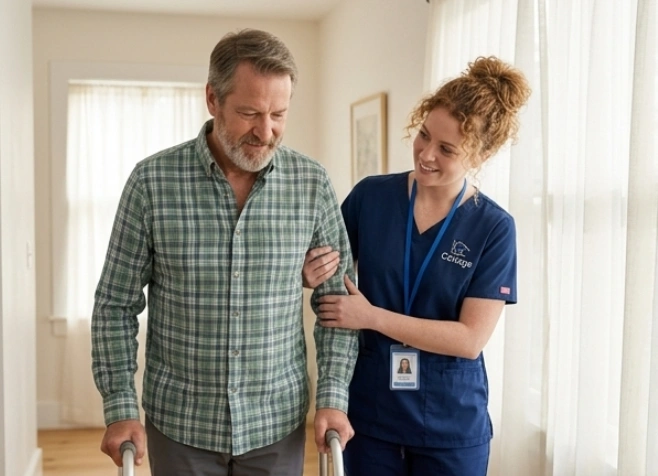
Older adults who can no longer safely bathe, dress, or move around the home without risk of falls.
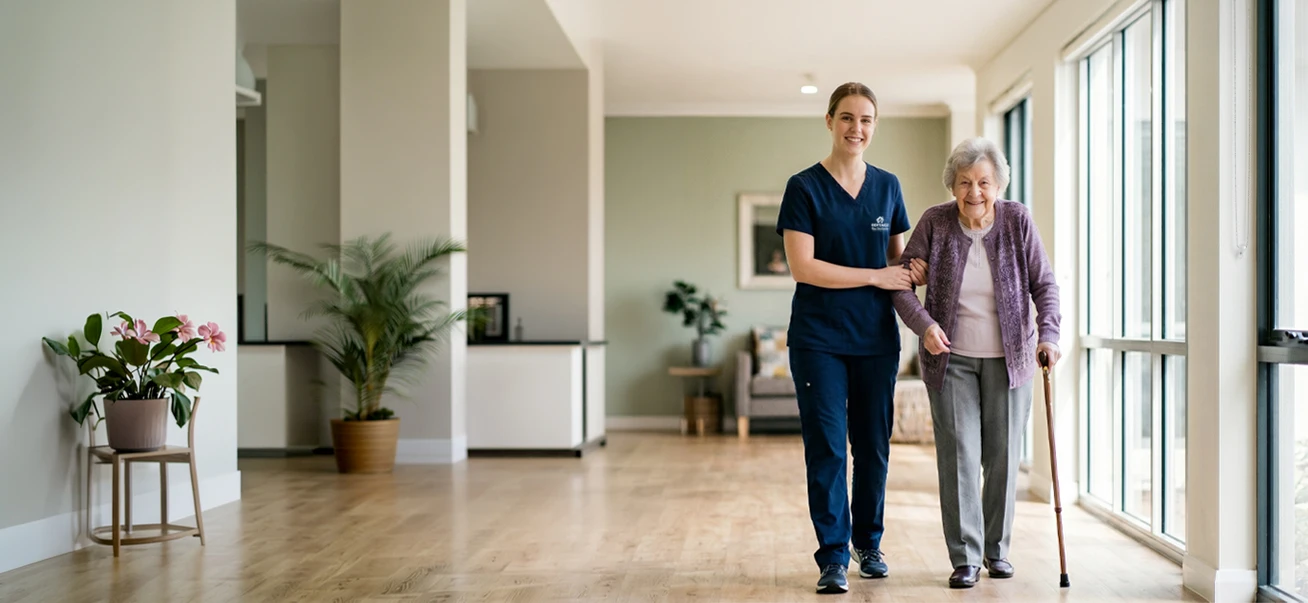
Personal care provides seniors and individuals with disabilities the support they need to live independently and with dignity.
A clear summary of what this service includes and who it supports — written for families making care decisions.
RN-led care team
Personal care from Cottage Home Care provides hands-on assistance with the essential activities of daily living — bathing, dressing, grooming, toileting, mobility, and transfers — so your loved one can stay safe and dignified at home. Our personal care aides are trained, screened, and supervised by an RN-led care team that builds a customized plan around your family’s routines and preferences. Whether someone needs help getting ready in the morning, support after surgery, or steady daily assistance as strength declines, Cottage delivers reliable one-on-one care with compassion and respect. Services combine easily with companion care for social engagement and light household support. Many families qualify for Medicaid-funded personal care at little or no cost, and Cottage handles eligibility guidance on your behalf. With offices across 6+ states and multilingual caregivers, getting started begins with a free in-home assessment.
Personal care services provide direct, hands-on assistance with Activities of Daily Living (ADLs) — the essential tasks that help a person maintain their hygiene, health, and independence at home.
When these daily tasks become difficult or unsafe to do alone, a personal care aide provides the exact level of help needed — doing only what is necessary, always preserving your loved one's privacy and dignity.
Personal care is covered under most Medicaid plans and is one of the most requested services we provide.
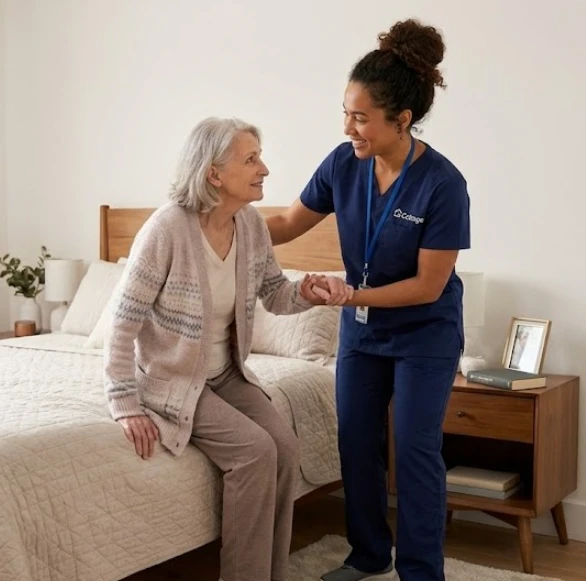
All services are adapted to your loved one's unique needs, comfort level, and medical requirements.
Safe, assisted bathing, showering, or bed baths — preserving privacy and promoting skin health and hygiene.
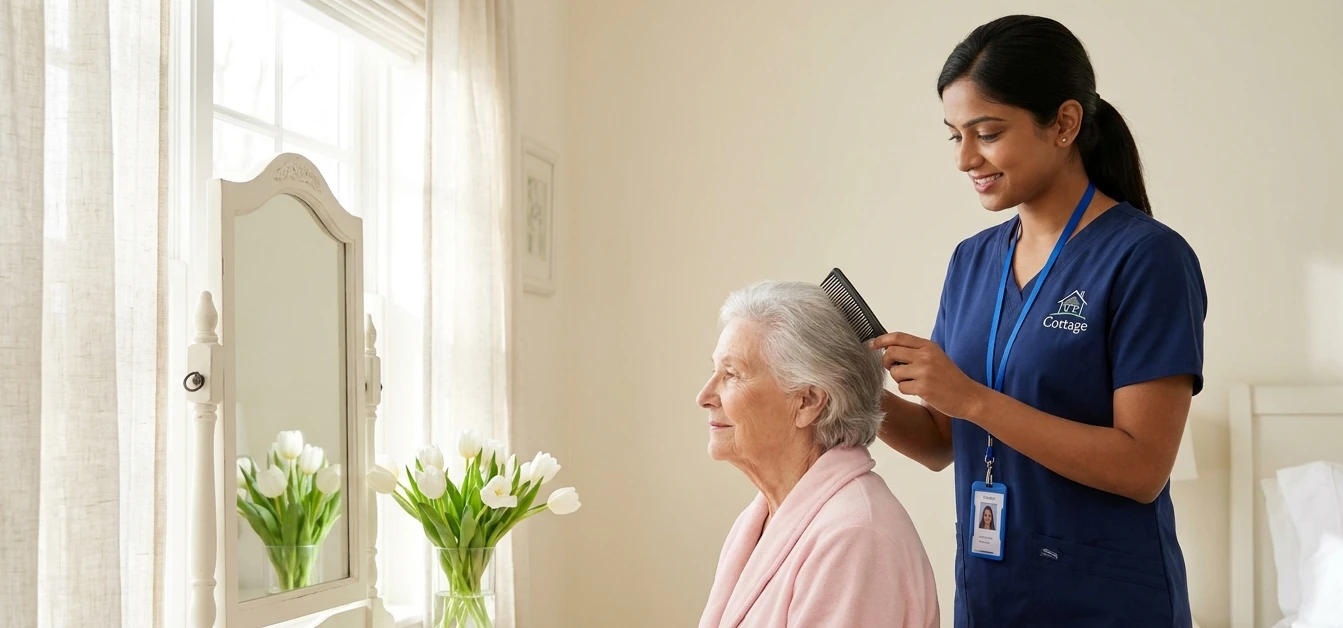
Help selecting appropriate clothing, getting dressed, hair brushing, nail care, and maintaining overall personal presentation and comfort.
Assistance with brushing teeth, denture care, and maintaining proper oral health to prevent complications and infections effectively.
Respectful, discreet assistance with bathroom needs and incontinence care — maintaining comfort and dignity.
Safe assistance with moving between bed, wheelchair, and other positions — preventing falls and injury during daily mobility activities.
Timely reminders to take prescribed medications correctly and on schedule every single day without missing any doses.
Older adults who can no longer safely bathe, dress, or move around the home without risk of falls.
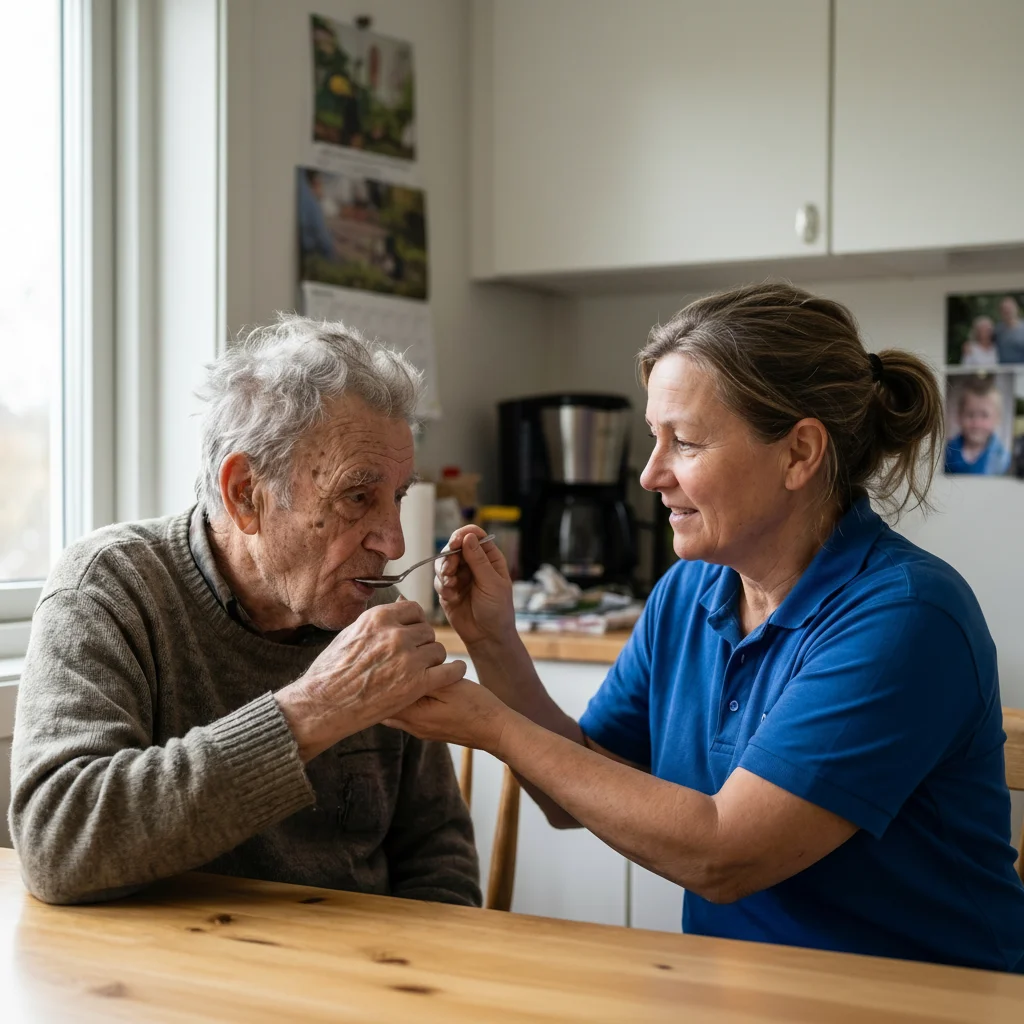
Those with cognitive decline who need gentle, familiar routines and patient guidance through daily tasks.
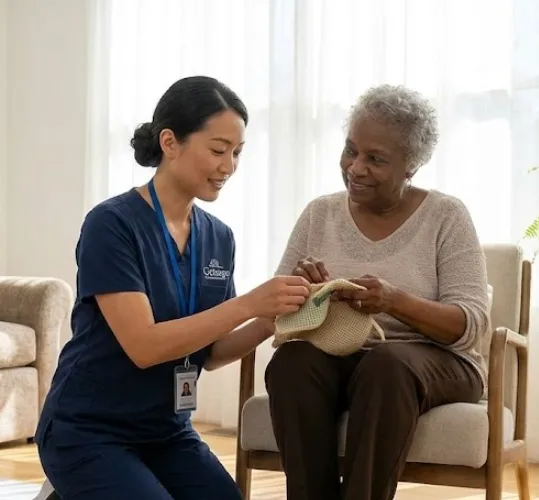
Those managing Parkinson's, MS, COPD, or other chronic conditions who find daily tasks increasingly difficult.
Personal care is the right fit when someone needs dignified help with bathing, dressing, mobility, toileting, or other activities of daily living at home.
Older adults who can no longer safely bathe, dress, or move around the home without risk of falls.
Those with cognitive decline who need gentle, familiar routines and patient guidance through daily tasks.
Those managing Parkinson's, MS, COPD, or other chronic conditions who find daily tasks increasingly difficult.
Individuals recovering from joint replacement, cardiac, or other surgeries who temporarily need extra support.
Younger adults with physical or developmental disabilities who need daily living support to remain independent.
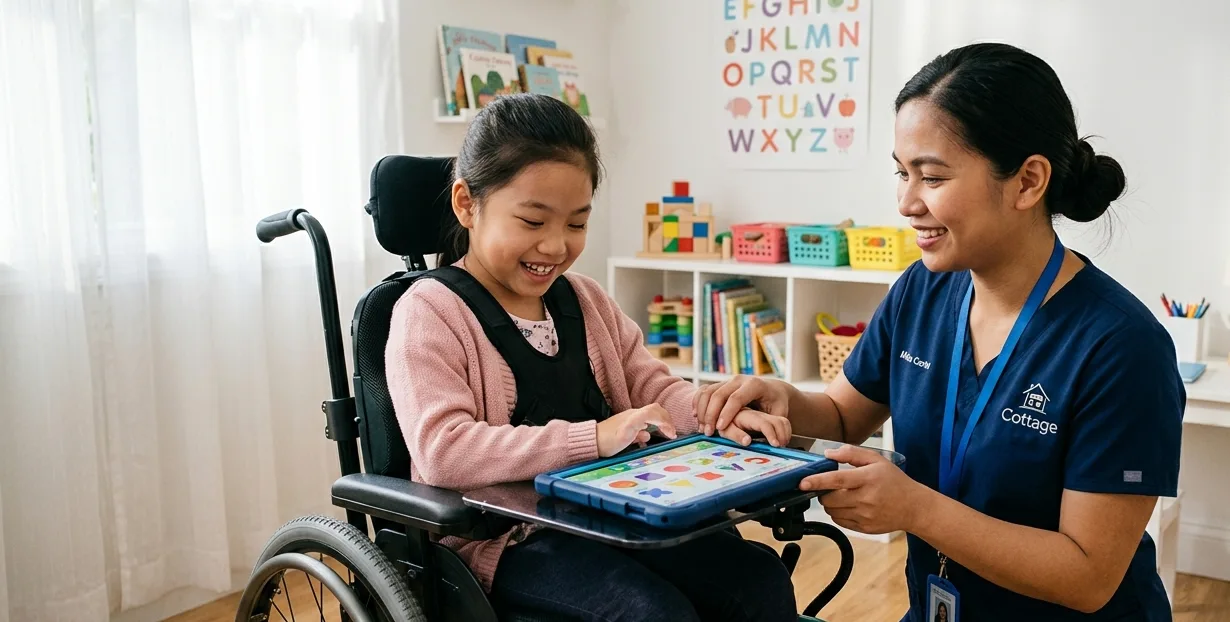
Children with developmental or medical needs who require daily personal care assistance and support.
Personal care services provide direct, hands-on assistance with Activities of Daily Living (ADLs) — the essential tasks that help a person maintain their hygiene, health, and independence at home.
Reach out by phone or complete our eligibility form. A care advisor will call you within hours.
We visit your home (or speak by phone) to understand your loved one's needs, personality, and preferences.
We select 2–3 companion caregivers who match your loved one's interests and introduce you to your top choice.
Your companion caregiver starts their visits. We check in regularly to ensure everything is going well.
Yes — Medicaid covers personal care aide services for eligible individuals in most states. This includes help with bathing, dressing, grooming, toileting, and mobility. Cottage Home Care accepts Medicaid and can help you verify coverage before services begin.
Common qualifying conditions include dementia, Parkinson's disease, stroke recovery, multiple sclerosis, diabetes with complications, arthritis limiting mobility, ALS, and post-surgical recovery. A registered nurse assessment will determine your loved one's exact eligibility.
Yes — personal care is one of the most requested services following a hospital discharge. Cottage Home Care can arrange post-hospital personal care within 24–72 hours to ensure a safe transition home and prevent re-hospitalization.
A personal care aide (PCA) assists with activities of daily living like bathing, dressing, and grooming. A home health aide (HHA) has additional medical training and can assist with wound care, vital sign monitoring, and medication reminders under nurse supervision. Cottage Home Care offers both.
Yes — Cottage Home Care uses a personality and compatibility-based matching process. You can request a caregiver who speaks your preferred language, shares cultural background, or has specific experience with your loved one's condition. We believe the right match leads to better care outcomes.