Home Care vs. Home Health Care: Key Differences Explained
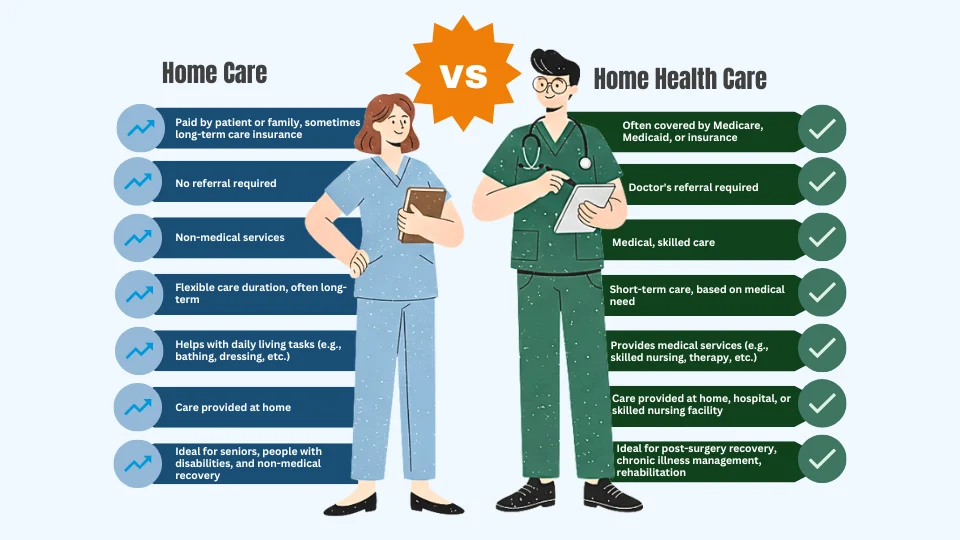
While home care and home health care sound similar, they serve distinct needs: home care provides non-medical assistance with daily living activities (bathing, meal preparation, companionship), while home health care delivers clinical medical treatments prescribed by a physician (wound care, physical therapy, skilled nursing).
Key Overview: Comparing In-Home Care Models
- Scope of Service: Home care handles non-medical assistance with activities of daily living (ADLs), whereas home health care handles skilled medical treatments.
- Provider Qualifications: Home care is delivered by Personal Care Aides (PCAs) and Home Health Aides (HHAs); home health care requires Registered Nurses (RNs), Physical Therapists (PTs), or clinical specialists.
- Prescription Requirements: Home care requires no medical referral and can begin immediately; home health care requires a formal doctor's order and medical diagnosis.
- Payment & Coverage: Home care is typically funded out-of-pocket through private pay home care, Medicaid waiver programs, or long-term care insurance. Home health care is usually covered by Medicare or private medical insurance for short-term recovery.
What is Non-Medical Home Care?
Home care focuses on supporting seniors, individuals with disabilities, or adults recovering from illness with daily non-medical routines so they can remain safely independent at home.
Agencies like Cottage Home Care Services specialize in non-medical home care, tailoring care plans around personal hygiene, safety supervision, and housekeeping without requiring medical prescriptions or insurance wait times.
Core Home Care Services Include:
- Personal Care Assistance: Hands-on aid with bathing, dressing, grooming, toileting, and mobility support.
- Homemaking Services: Nutritious meal preparation, light housekeeping, laundry, and grocery shopping.
- Companion Care: Meaningful social engagement, emotional support, and recreational activities to combat senior isolation.
- Medication Reminders: Prompting clients to take self-administered medications accurately on schedule.
- Transportation Support: Escorting clients to doctor appointments, social events, and community outings.
What is Clinical Home Health Care?
Home health care involves skilled medical treatments provided in a home setting to treat an illness, injury, or medical condition under a physician's direct supervision.
Core Home Health Care Services Include:
- Skilled Nursing: Registered nurses administering IV medications, complex wound care, tube feedings, and health monitoring.
- Rehabilitative Therapies: Physical, occupational, and speech therapy designed to restore physical mobility and functional communication.
- Clinical Diagnostics: In-home blood work, lab testing, and medical vitals tracking.
- Medication Administration: Direct clinical management and administration of complex prescription drug regimens.
Side-by-Side Comparison: Home Care vs. Home Health Care
Understanding the operational and service differences helps families choose the correct level of care based on health needs and insurance eligibility.
| Feature / Service |
Home Care (Non-Medical) |
Home Health Care (Clinical) |
| Primary Objective |
Assistance with daily living activities and personal safety |
Medical recovery, clinical treatment, and rehabilitation |
| Doctor's Prescription Needed? |
No — Can be requested directly by family at any time |
Yes — Mandatory physician order and diagnosis required |
| Care Providers |
Personal Care Aides (PCAs), Home Health Aides (HHAs) |
Registered Nurses (RNs), Physical Therapists (PTs) |
| Personal Hygiene & Bathing |
Yes — Core daily service focus |
Limited — Only if secondary to skilled medical treatment |
| Wound Care & Injections |
No — Restricted from medical procedures |
Yes — Performed by licensed clinical nurses |
| Housekeeping & Meals |
Yes — Light chores, laundry, and meal prep included |
No — Homemaking tasks are not covered |
| Duration of Care |
Ongoing long-term care or flexible hourly schedules |
Short-term, episode-based recovery periods |
| Payment & Funding |
Private pay, Medicaid Home Help / Waivers, Long-Term Care Insurance |
Medicare, Medicaid, and private health insurance plans |
How to Select the Right In-Home Care Solution
Choosing between home care and home health care depends on your loved one's specific physical, medical, and lifestyle requirements.
- Evaluate Daily Needs: If your relative struggles with bathing, dressing, cooking, or staying safe alone, non-medical home care is the appropriate choice. If they require wound dressings, post-surgical therapy, or IV medications, seek medical home health care.
- Check Insurance Eligibility: Review Medicare or health insurance coverage for clinical orders. For long-term non-medical help, explore private pay care plans or Medicaid community waivers.
- Combine Services if Needed: Many families utilize both service types simultaneously—receiving short-term physical therapy from a home health agency while retaining a home care aide for daily personal care and meal assistance.
Get Started with Cottage Home Care Services
Cottage Home Care Services delivers trusted, personalized non-medical care that enables seniors and disabled individuals to thrive safely at home. Contact our care team today to schedule a free in-home consultation.
Interested in healthcare employment options? Learn more about healthcare roles by exploring our guide on the differences between CNA and CMA career paths or visit our caregiver careers page to apply today.
|
|


 Sabine DurgaramDPS/RN