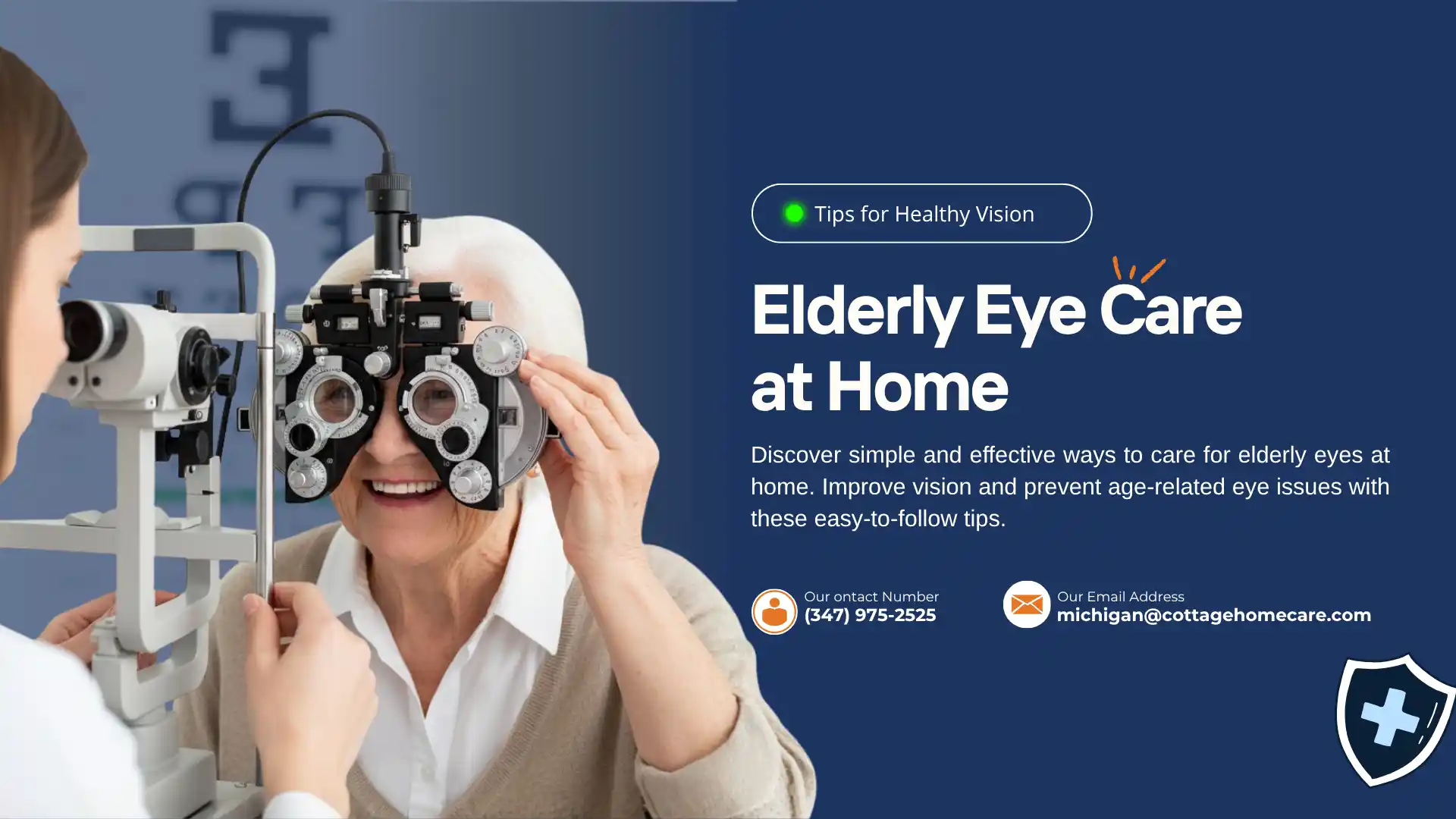
Senior Eye Care at Home: Essential Tips & Vision Health Guidelines
Key Takeaways
- Early Prevention & Awareness: Age-related vision conditions like cataracts, macular degeneration, glaucoma, and diabetic retinopathy affect millions of seniors; early detection and daily home care help preserve sight.
- Essential Eye Nutrients: Diets rich in Vitamin A, Vitamin C, Omega-3 fatty acids, lutein, and zeaxanthin protect retinal health and reduce dry eye symptoms.
- Home Safety & Lighting: Diffused task lighting, nightlights in hallways, and glare reduction significantly lower fall risks for seniors with declining vision.
- Daily Eye Routines: Simple habits like the 20-20-20 rule, hydration, wearing 100% UV-blocking sunglasses, and managing blood pressure and blood sugar protect optic nerves and blood vessels.
- In-Home Personal Care Support: Cottage Home Care Services helps aging adults in New York, New Jersey, Connecticut, Maryland, and Michigan maintain safe daily routines, nutrition, and home safety when vision loss makes independent living difficult.
Why Eye Care Is Critical for Aging Seniors
Maintaining vision health is one of the most effective ways to preserve independence and quality of life in older adults. Age-related changes in vision can make essential daily activities—such as reading medication labels, preparing meals, navigating stairs, and walking safely—increasingly challenging.
While routine visits to an optometrist or ophthalmologist are essential for monitoring eye health, establishing a consistent, supportive home care routine plays an equally vital role in preventing strain, injury, and sudden vision decline.
Common Senior Eye Conditions & Daily Home Management
Understanding common age-related vision changes helps family caregivers recognize symptoms early and adapt the home environment accordingly:
| Eye Condition |
Primary Symptoms |
Recommended Home Support Strategy |
| Cataracts |
Cloudy, blurred vision, faded colors, and sensitivity to glare. |
Increase bright, non-glare task lighting for reading; keep walkways clear of clutter. |
| Macular Degeneration (AMD) |
Loss of central vision, distortion of straight lines, difficulty recognizing faces. |
Prepare meals high in lutein and zeaxanthin (spinach, kale); use high-contrast household labels. |
| Glaucoma |
Gradual loss of peripheral vision; elevated intraocular eye pressure. |
Ensure strict adherence to prescribed daily eye drop schedules; schedule regular doctor checks. |
| Dry Eye Syndrome |
Stinging, burning sensations, redness, feeling of grit in eyes. |
Promote daily fluid hydration; use room humidifiers and over-the-counter lubricating artificial tears. |
| Diabetic Retinopathy |
Floating spots, dark areas in vision, fluctuating clarity linked to blood sugar. |
Maintain strict daily blood sugar monitoring, timely balanced meals, and blood pressure control. |
10 Practical Strategies for Caring for Senior Eyes at Home
1. Serve Eye-Healthy, Nutrient-Dense Meals
A balanced diet provides essential vitamins and antioxidants that protect delicate eye tissues and micro-blood vessels:
- Vitamin A: Supports corneal health and night vision (found in sweet potatoes, carrots, and dark leafy greens).
- Vitamin C: Protects against oxidative damage and supports blood vessel health (found in citrus fruits, bell peppers, and strawberries).
- Omega-3 Fatty Acids: Essential for retinal health and reducing dry eye inflammation (found in salmon, walnuts, and flaxseeds).
- Lutein & Zeaxanthin: Filter harmful high-energy blue wavelengths to shield the retina (found in kale, spinach, and broccoli).
2. Practice Daily Eye Exercises & Rest Habits
Simple daily routines help reduce eye muscle fatigue, especially for seniors who read or watch television frequently:
- The 20-20-20 Rule: Every 20 minutes, take a 20-second break to look at an object at least 20 feet away.
- Gentle Palming: Warm your hands by rubbing them together, then gently cup your palms over closed eyes for 30 seconds to relax surrounding eye muscles.
- Slow Eye Movements: Slowly roll the eyes in smooth circular motions to stimulate natural blood circulation.
3. Optimize Home Lighting & Prevent Glare
Aging eyes require higher illumination levels to see clearly, but harsh glares can cause eye strain and disorientation:
- Use bright, diffused LED lighting rather than exposed, harsh bulbs.
- Position dedicated reading lamps directly over reading materials or craft areas.
- Install motion-sensor nightlights in hallways, staircases, and bathrooms to prevent tripping or falls at night.
4. Schedule Comprehensive Annual Eye Exams
Seniors should undergo annual dilated eye examinations to detect conditions like glaucoma, macular degeneration, and diabetic retinopathy before permanent vision loss occurs. Key diagnostic tests include visual acuity tests, eye pressure measurements (tonometry), and retinal dilated evaluations.
5. Focus on Hydration and Restful Sleep
Dehydration exacerbates dry eye symptoms. Encourage aging loved ones to drink water regularly throughout the day. Getting 7 to 8 hours of restful sleep allows tear ducts to replenish natural moisture layers and repairs delicate eye tissues.
6. Wear 100% UV-Blocking Polarized Sunglasses
Cumulative ultraviolet (UV) exposure accelerates cataract development and macular damage. Seniors should wear wraparound sunglasses that block 100% of UVA and UVB rays whenever outdoors, even on overcast days. Polarized lenses are ideal for reducing blinding glare off sidewalks and car windshields.
7. Use Lubricating Artificial Tears for Dryness
As tear production naturally decreases with age, over-the-counter preservative-free artificial tears help soothe burning, itching, and dryness. If dry eye symptoms persist despite daily drops, consult an eye specialist for targeted therapies.
8. Manage Digital Screen Exposure
Staring at smartphones, tablets, or televisions reduces natural blink rates, leading to digital eye strain. Adjust screen brightness to match room lighting, increase device text size to prevent squinting, and enforce regular screen breaks.
9. Monitor Blood Sugar and Blood Pressure Levels
Systemic conditions like hypertension and diabetes directly affect eye health. Uncontrolled blood sugar can damage tiny retinal blood vessels, while high blood pressure increases the risk of hypertensive retinopathy. Ensure daily medications, healthy diets, and blood pressure checks are maintained consistently.
10. Use Soothing Natural Comfort Remedies
For mild eyelid puffiness or temporary tiredness, simple home comfort measures can provide quick relief:
- Cool Cucumber Slices: Placing chilled cucumber slices over closed eyes for 10 minutes helps soothe swollen eyelids.
- Chilled Chamomile Tea Bags: Steeped, cooled chamomile tea bags placed gently over closed eyes can help ease mild irritation.
When to Seek Immediate Professional Medical Attention
While home routines support daily eye comfort, certain symptoms require urgent evaluation by an eye care specialist or emergency physician:
- Sudden loss or blurring of vision in one or both eyes
- Severe, persistent eye pain or deep ache around the eye socket
- Sudden appearance of numerous new flashes of light or dark floaters
- Redness, swelling, or unusual discharge indicative of an infection
- Double vision or seeing colored halos around lights
How Cottage Home Care Services Assists Seniors with Vision Loss
When age-related vision changes make daily household tasks difficult, Cottage Home Care Services provides compassionate, nonmedical personal care to keep seniors safe, comfortable, and independent at home. Our personal care aides assist families across New York City (The Bronx, Brooklyn, Manhattan, Queens, Staten Island), Long Island (Nassau and Suffolk counties), Westchester, Newark, Jersey City, Paterson, Elizabeth, Edison, Columbia, Baltimore, Hartford, and Detroit.
In-home aides assist with:
- Meal Preparation: Cooking nutrient-dense meals rich in eye-healthy vitamins and antioxidants.
- Medication Reminders: Prompting seniors at exact times to take daily prescriptions or eye drops.
- Home Safety & Mobility Support: Guiding seniors safely around the home to prevent falls caused by impaired vision.
- Personal Hygiene & Daily Living: Assisting with bathing, dressing, and grooming when low vision makes self-care challenging.
Contact Cottage Home Care Services
To find out whether your family may be a strong candidate for Medicaid-funded home care services, contact Cottage Home Care Services today:
Disclaimer: Cottage Home Care Services solely provides nonmedical personal care services. Medicaid may cover care at no cost to you, if you qualify for full Medicaid coverage. Licensed as a residential service agency by the Maryland Department of Health, Office of Health Care Quality (RSA License No. 02496).
|
|


 Sabine DurgaramDPS/RN