30 Activities for Dementia Patients at Home
Simple, familiar activities you can try today, with easy ways to adapt each one as needs change.
Key Takeaways
- Simple, familiar tasks often work better than complicated games. Folding towels, listening to music, or looking at photos all count as real activities.
- Match the activity to the person, not to a diagnosis label. What works depends on their interests, current abilities, and energy that day.
- It is okay if an activity does not go exactly as planned. Watching, listening, or trying for a few minutes still counts as taking part.
- Follow your relative's pace. Stop or take a break if they seem tired, upset, or no longer interested.
- Choose activities and materials that fit the person's abilities today. Remove hazards specific to that activity, like small objects, sharp tools, or extreme heat.
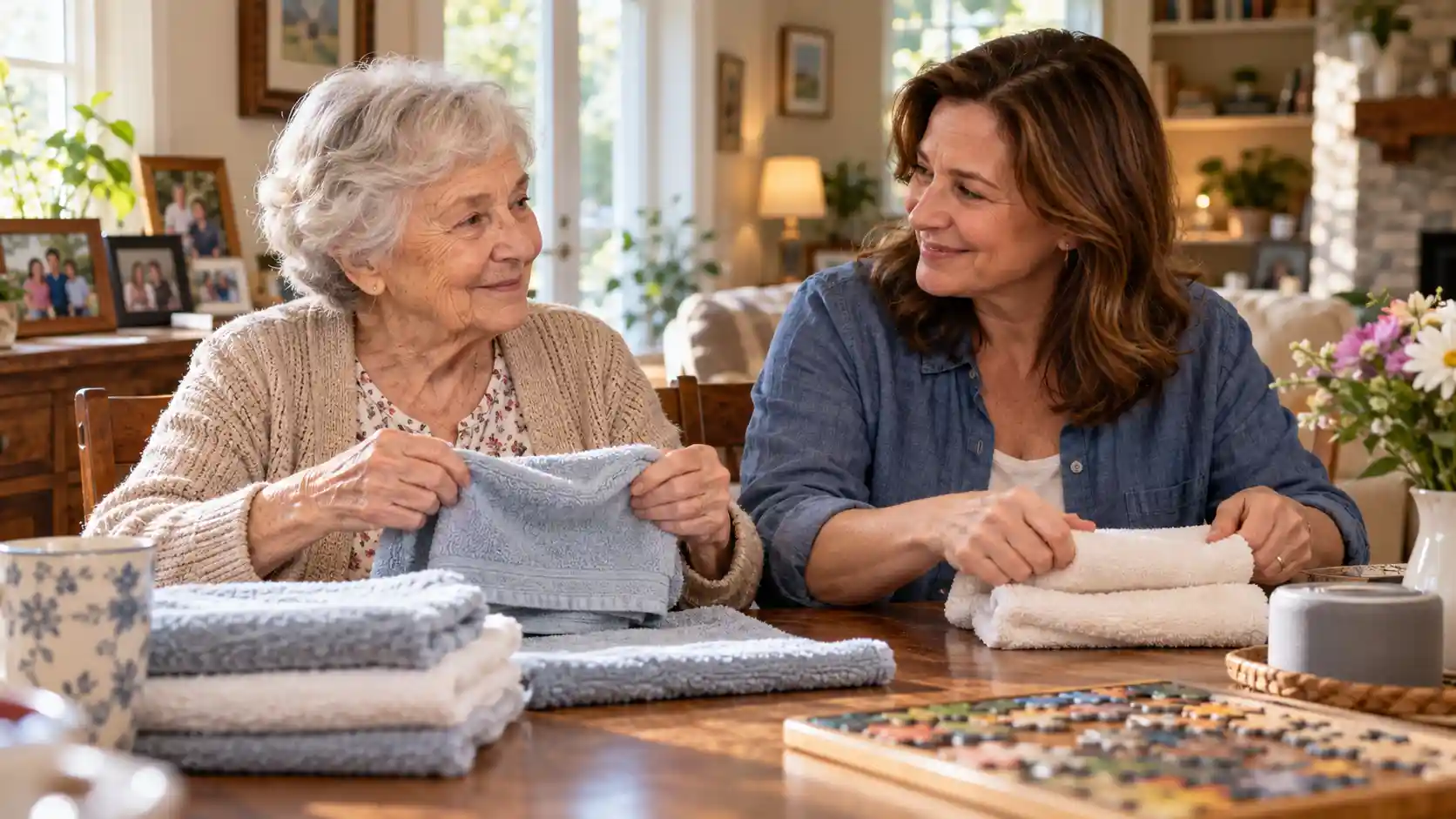
Good activities for dementia patients at home are simple. They use familiar tasks that match what your relative can do today. You do not need fancy games or costly kits. Try folding towels, playing a favorite song, or looking at old photos together.
Finding the right activity takes some trial and error. Some days nothing seems to click. This guide has 30 activities for dementia patients at home. Each one has clear steps and an easy way to make it simpler. You will also find a quick way to pick today's activity, a daily plan you can adjust, and tips for when something isn't working.
Choose an Activity That Fits Today
There is no single right activity for dementia. The best choice depends on your relative. Think about their interests, what they can do right now, and their energy today. The Alzheimer's Association suggests matching activities to what the person can still do, then adjusting as you watch them respond. Use the list below to start. It is not a test.
If your relativeEnjoys music or used to sing
TryListening to a chosen song (6), Singing together (7)
Helpful adaptationUse headphones if background noise is distracting
If your relativeLikes feeling useful or was once a homemaker
TryFolding hand towels (1), Matching socks (2)
Helpful adaptationHand over one item at a time
If your relativeEnjoys being outdoors or gardened in the past
TryWatering an accessible plant (19), Watching birds from a window (20)
Helpful adaptationBring the activity indoors near a window on hard days
If your relativeHas limited vision
TryListening activities (6, 22), Large picture cards (15)
Helpful adaptationUse high-contrast, large-print materials
If your relativeHas limited hand strength or grip
TryArranging magazines (5), Tapping to music (16)
Helpful adaptationChoose lightweight items with no fine clasps
If your relativeSeems anxious or restless
TryFamiliar walk with assistance (18), Handling soft fabric (21)
Helpful adaptationKeep the setting calm and quiet first
If your relativeEnjoys nostalgia or family stories
TryLooking at family photos (8), Browsing a cookbook (27)
Helpful adaptationLet them lead the conversation; do not quiz
If your relativeHas low energy or is tired today
TrySitting together quietly (25), Gentle hand contact if welcomed (24)
Helpful adaptationKeep the session to a few minutes
If your relativeHas a faith or cultural practice
TrySharing a prayer, reading, or tradition (30)
Helpful adaptationFollow what the person already practices
This list is a starting point, not a safety check or a formal test. Not every activity fits every person, and what works can change day to day. For home hazards not tied to one activity, like loose rugs or stove knobs, see the Alzheimer's Association's home safety guidance.
Simple Activities Using Things You Already Have
These five activities use ordinary household items. They work well for daily living skills and give a sense of being useful.
1. Folding Hand Towels
Sit together at a table. Use a stack of clean towels. Start folding one yourself. Hand over the next one. Ask, "Could you help me with these?" Your relative can fold, smooth, or stack. If steps feel hard, hand over one towel at a time. The towels do not need to look perfect. The time together matters most.
2. Matching Socks
Empty a basket of clean, mixed socks onto a table. Start pairing two together. Ask your relative to find a match. To make it easier, use just four or five pairs with clearly different colors. Keep small, loose items like buttons off the table. These can be a choking risk.
3. Placing Napkins for a Meal
Before a meal, hand your relative a small stack of napkins. Ask them to put one at each place. Fold the napkins ahead of time to make it easier. Do this right before a meal they are about to eat. It gives the task a clear purpose.
4. Wiping a Clear Table With a Damp Cloth
Clear the table first. Hand over a damp cloth. Ask your relative to wipe it down. Use plain water, not a cleaning spray, since the cloth may end up near their face. This is a good one-step task for a day when longer activities feel like too much.
5. Arranging Magazines
Gather a small stack of magazines or catalogs. Ask your relative to stack them neatly, sort them by size, or flip through the pictures. If cutting is part of the activity later, use safety scissors and stay nearby.
Music, Photos, and Time Together
Music and memory can reach your relative even when words are hard to find. The Alzheimer's Association notes that connection can continue in later stages. A person may still respond to favorite music, old photos, and familiar touch.
6. Listening to a Chosen Song
Play a song tied to a happy memory, maybe a wedding or a favorite year. Just listening counts as taking part. Your relative does not need to sing or talk. Keep the volume moderate. Watch for songs tied to loss or hard memories, and switch songs if they seem upset instead of pleased.
7. Singing Together
Pick a song your relative knows by heart, like a hymn or a childhood tune. Sing it together. If they forget a verse, keep going gently rather than correcting them. This is different from just listening, since it invites your relative to join in. Offer both, and let them choose.
8. Looking at a Few Family Photos
Pick a small stack of photos, not a whole album at once. Sit together. Make a gentle comment instead of testing names. Try "That garden has lovely flowers." Or try "What a sunny day in this one." Your relative might tell a story differently than you remember it. Let it stand. The goal is connection, not accuracy. Photos of someone who has died can bring up grief. Follow your relative's lead, and be ready to shift to another photo.
9. Reading a Familiar Poem or Short Passage
Choose something your relative already knows well, like a psalm or a favorite poem. Read it aloud together, or read it to them if that is easier. Use large print if their vision has changed.
10. Sharing a Brief Family Call or Recorded Greeting
Set up a short video or phone call with family, or play a recorded greeting if a live call isn't possible. Keep it brief, and pick a calm time of day. A surprise call or a crowd of faces on screen can feel overwhelming. One familiar voice at a time usually works best.
Creative Activities and Simple Games
11. Making a Collage With Pre-Cut Pictures
Cut pictures from old magazines ahead of time, around a theme like flowers or travel. Let your relative glue them onto paper however they like. Use a glue stick, not liquid glue. Loose pieces may not be safe if your relative puts objects in their mouth. Try looking through a book of large pictures together instead (23). There is no wrong way to arrange them.
12. Painting With a Broad Brush
Set out washable, non-toxic paint, a large brush, and thick paper on a covered table. Suggest a simple subject, like a tree or a flower. Talk about the colors as you go. Do not judge the result; a few brushstrokes is enough. To make it easier, try one change at a time. Offer just two or three colors. Use a brush with a thick, easy-grip handle. Or let your relative pick the colors while you paint.
13. Coloring a Simple Adult-Themed Design
Offer a coloring page with bold, simple outlines, like nature scenes or patterns. A cartoon image works fine if your relative enjoys it; let their own taste guide the choice. Thick crayons or markers are easier to grip than thin ones. To make it easier, pick a design with larger spaces. Or let your relative choose colors while you color. Staying inside the lines does not matter.
14. Working Together on a Suitable Puzzle
Choose a puzzle with large, simple pieces and a photo your relative will recognize. Start with a piece count that feels manageable. Adjust based on how they respond. No single count fits everyone. Start a corner or edge together, then let your relative place pieces as they are able. To make it easier, work on just one small section together. Or set aside a few pieces you know fit. Loose puzzle pieces may not be safe if your relative puts objects in their mouth. Try looking at a large picture together instead (23).
15. Matching Large Picture Cards
Use a small set of cards with clear, large pictures, like pairs of animals or fruit. Ask your relative to find two that match. Keep the set small, just six to eight cards, so the task stays manageable, not frustrating.
Gentle Movement and Nature at Home
These activities should feel light and comfortable, not like a workout. Skip anything that asks for deep bends, balance challenges, or unsupported standing.
16. Tapping or Clapping to Music
Play a song with a clear beat. Tap your hands on your knees, or clap along. Invite your relative to join. This works seated and needs no equipment. Keep the pace gentle if arthritis or joint pain is a factor.
17. Comfortable Seated Movement
Sit in a sturdy chair. Lead a few slow arm raises, shoulder rolls, or ankle circles, matching what feels comfortable for your relative that day. Stop any movement that causes pain or dizziness. Never push past what they want to do.
18. A Familiar Walk With Appropriate Assistance
Walk a short, familiar route, like the yard or a hallway. Use whatever mobility aid, like a cane or walker, is normally recommended for your relative. Give only the kind of help you have been shown how to provide. Check the path first for loose rugs or cords. If you are unsure how much support your relative needs, ask their doctor or physical therapist first. On a day when walking does not seem right, try a seated option instead. Comfortable seated movement (17) or watching birds from a window (20) both work well.
19. Watering an Accessible Plant
Hand over a small, lightweight watering can. Ask your relative to water one or two indoor plants. Stay close if they tend to put things in their mouth. Skip this if a plant in the home is toxic if eaten. To make it easier, let your relative choose which plant to water. You hold and pour from the can.
20. Watching Birds or Garden Activity From a Window
Set up a comfortable chair near a window, ideally with a bird feeder or garden view. Sit together for a while. This is a calm, easy option for a day when going outside is not practical.
Calming and Sensory Activities
In late-stage Alzheimer's, the Alzheimer's Association points to connection continuing through the senses: touch, sound, sight, taste, and smell. Think familiar music or an old photo. These activities do not need much movement or memory, and they are not a treatment for agitation or sundowning. They simply offer familiar sounds, comfortable touch if welcomed, and simple visual experiences.
21. Handling a Familiar Soft Fabric
Offer a soft blanket, scarf, or piece of fleece to hold and touch. Choose fabric without loose buttons or beads. These can come off and pose a choking risk.
22. Listening to Quiet Nature Sounds
Play gentle rain, ocean waves, or birdsong at a low volume in a quiet room. Stick to one sound at a time. Too many sounds at once can overwhelm instead of soothe.
23. Looking Through a Book With Large Pictures
Choose a book with large, simple images, like nature or animals. Turn the pages together slowly. Avoid books with small, removable tabs or stickers if mouthing objects is a concern.
24. Gentle Hand Contact if Welcomed
Offer a light hand massage with mild, unscented lotion, or simply hold your relative's hand. Always ask first and watch their reaction. If they pull away, stop; touch should never be forced, even when it is meant kindly.
25. Sitting Together in a Quiet, Comfortable Place
Sometimes the activity is simply being present. Sit together somewhere calm and well-lit, with no task at all. This counts as real time together, and it is enough on its own.
Activities Linked to Familiar Interests and Roles
These build on what a person already enjoyed or was known for. Follow the person's own preferences rather than assuming a hobby based on their gender, culture, or career.
26. Arranging Pre-Trimmed Flowers in an Unbreakable Container
Trim the stems ahead of time. Use a lightweight, shatter-resistant plastic container, not glass or ceramic. Let your relative arrange the flowers however they like. Remove flowers with thorns, and skip this if your relative tends to put plant material in their mouth. To make it easier, hold out two flowers and let your relative pick one; you do the arranging.
27. Browsing a Cookbook
Set out a cookbook with pictures, ideally one with recipes your relative used to make. Look through it together, and talk about favorite dishes. If your relative follows a modified diet or has a swallowing precaution, keep this to looking and talking. Skip preparing or tasting new foods.
28. Sorting Large Fabric Swatches
Use a set of large fabric squares, at least a few inches wide. Ask your relative to sort them by color or texture. Keep pins, needles, and small swatches out of reach.
29. Arranging Postcards or Papers
Gather old postcards, cards, or letters. Ask your relative to sort or arrange them by color, place, or whatever grouping makes sense to them. There is no wrong answer. To make it easier, skip the sorting and just look at one card together, talking about the picture.
30. Sharing a Chosen Prayer, Reading, or Cultural Tradition
Follow whatever faith or tradition is already part of your relative's life, like a familiar prayer or a holiday custom. Keep it low-pressure and led by what your relative already knows, rather than introducing something new.
How to Adapt Activities as Support Needs Change
Dementia stages are broad guides, not a fixed script. No single puzzle-piece count fits everyone, and no fixed session length fits everyone either. One 2017 study looked at activities planned by occupational therapists for 56 families. Therapists tended to pick shorter sessions as needs grew. Sessions averaged about 28 minutes for milder needs and about 15 minutes for more advanced needs. These are planning times from one study, not a measured attention span and not a rule for everyone. Your relative's own energy that day matters more than any number.
ActivityPhotos
More independentLooks through an album alone. Tells stories.
One-step supportYou hand over one photo at a time. You ask an open question.
Sensory participationYou talk softly. Your relative looks and listens.
ActivityTowels
More independentFolds a stack alone.
One-step supportYou hand over one towel at a time.
Sensory participationYou fold. Your relative touches the fabric.
ActivityMusic
More independentPicks the song. Sings along. Claps the rhythm.
One-step supportYou start the song. You invite your relative to tap along.
Sensory participationYou play familiar music softly. Your relative listens.
For hearing changes, face your relative and speak clearly, not louder. For vision changes, use large print and strong color contrast. For a weaker grip, choose light items with no small clasps or buttons.
A Flexible Daily Activity Plan
This is one example. Adjust it to fit your relative. Keep the same basic shape, and time activities around what works for your relative. The Alzheimer's Association suggests building a routine around when the person works best. This is not the same for everyone.
Morning
Breakfast and personal care. Then a familiar task, like folding towels (1) or watering a plant (19), if mornings work well for your relative. Some people do better with a quiet task early, then more activity later. Build around what fits them.
Midday
A social or creative activity, like looking at photos (8) or a simple puzzle (14). Follow this with a period of rest.
Afternoon
Gentle movement, like a short walk (18) or seated movement (17). Then try a quieter option if energy drops, like sitting together (25) or handling soft fabric (21).
Evening
Familiar music (6) or a calm routine before bed. Keep the setting calm and well-lit. This can ease late-day confusion.
Caregiver Preference and Handoff Template
Copy this into a notebook or shared note so any caregiver, family or professional, can pick up where you left off.
Enjoys:
Prefers to avoid:
Helpful time or setting:
Support that worked:
Signs it was time to stop:
What we might try next:
What to Do When an Activity Is Not Working
What you noticeDeclining to start
What to checkIs it the wrong time of day? Does the task feel pointless?
What to tryOffer it later, or connect it to a role they value: "Could you help me?"
What you noticeConfusion about instructions
What to checkAre there too many steps or too many choices at once?
What to tryBreak it into one step. Show, don't just tell.
What you noticeFrustration
What to checkIs the task too hard today, or does it need memory they don't have right now?
What to tryTry something simpler, or move to soft fabric (21) or music (6).
What you noticeFatigue
What to checkHow long has this session run? Did it follow a tiring task, like bathing?
What to tryEnd the activity. Rest matters more than finishing.
What you noticeDistress from memories or sensory input
What to checkDid a photo, song, or smell bring up something upsetting?
What to tryStop. Offer comfort. Move to a calm, familiar activity.
What you noticeA sudden change in behavior or ability
What to checkDid this happen quickly, with no clear cause?
If your relative does not want to do something, do not force it. A gentle, honest invitation works best: "Would you like to try this with me?" This respects them as an adult. It is always fine if the answer is no.
When Your Family Needs More Help at Home
Many families manage these activities alone for a long time. Some reach a point where outside help makes daily life easier. Nonmedical home care, the kind Cottage Home Care offers, can include:
- Companionship and shared activities. A caregiver does things with your relative, not just for them.
- Help keeping up routines, like a steady morning schedule or a daily walk.
- Personal care support within scope, like help with bathing, dressing, or grooming.
- Family communication, so everyone stays informed about the day.
- Relief for family caregivers. Even a few hours a week helps you rest.
This kind of support is different from skilled nursing or other clinical care. Those need a different type of provider. See our home care vs. home health care guide for the difference. Does your relative need wound care or medication management? Ask about the right level of care for that need.
A Note on Paid Family Caregiving
Some Medicaid programs let a family member provide paid care for a relative. CMS calls this self-direction. Rules vary by state and by program. Some programs allow spouses to be paid. Others do not. Both your relative and the caregiver must meet their own requirements. A dementia diagnosis alone does not qualify anyone for payment, and neither does helping with activities like these. Your state Medicaid agency is the official source on which programs exist and how to apply. Ask your local Cottage Home Care office which services and programs it supports.
Frequently Asked Questions
Is it okay to repeat the same activity often?
+
Yes. Repetition can feel comforting and familiar. Many people with dementia enjoy the same song, task, or photo again and again. You do not need to rotate activities for variety.
Do dementia activities need special equipment?
+
No. Most of the 30 activities above use things already in your home. Think towels, photos, music, or a deck of large cards. Special kits are not required.
Can TV be part of the routine?
+
Yes, in moderation. A familiar, calm show can relax your relative. A favorite old movie works well too, especially in the evening. Use it as one option among several, not the only activity of the day.
Are printable worksheets suitable for everyone?
+
Not always. Printed puzzles and worksheets work well for some people in earlier stages. They can feel frustrating or childish for others. Watch your relative's reaction, and switch to a hands-on or sensory activity if a worksheet is not working.
Can someone enjoy an activity even if they do not remember it later?
+
Yes. The value is in the moment itself: connection, calm, or a sense of accomplishment. It does not depend on memory. Forgetting an activity afterward does not mean it did not matter.
Want to talk through your family's routine, or wonder what kind of in-home support might help? Cottage Home Care is ready to answer questions, with no pressure to commit to anything.


 Sabine DurgaramDPS/RN