PCA & HHA Program Eligibility Requirements: Who Qualifies to Be a Paid Family Caregiver?
Can you really get paid to care for someone you love? In New York, the answer is yes—but the rules surprise most families. There is no single "paid family caregiver" benefit the state hands out. Payment flows only through Medicaid-funded programs, and each one decides who qualifies. At Riverside Select Services, LLC DBA Cottage Homecare Services, families ask us this every day. This guide breaks down exactly who qualifies as a Personal Care Aide (PCA) or Home Health Aide (HHA), who is excluded, and how to start—updated for 2026.
Table of Contents
What "Paid Family Caregiver" Really Means in New York
Quick Summary: Paid family caregiving in New York is delivered through Medicaid agency pathways (PCA or HHA programs). Caregivers are employed by a Licensed Home Care Services Agency (LHCSA) like Cottage Home Care.
New York does not offer a general benefit that simply pays family members for helping a loved one. Instead, paid home care is delivered through two Medicaid-funded, agency-based pathways: the Personal Care Aide (PCA) program and the Home Health Aide (HHA) program. In both, a Licensed Home Care Services Agency (LHCSA) such as Cottage Home Care employs the caregiver, handles training, scheduling, and payroll, and assigns care based on the patient's approved plan.
Why does this matter? Because families often chase the wrong idea of how paid caregiving works. Understanding the agency pathway upfront is the difference between getting approved and hitting a dead end.
The Golden Rule: Eligibility Starts With the Person Receiving Care
Here is the single most important thing to understand: eligibility is based on the person who needs care, not the caregiver who wants to provide it. Your willingness to help, financial hardship, or the fact that you are already helping does not qualify you on its own.
The person receiving care must:
- Have active New York Medicaid: Medicare, Social Security, and private insurance do not pay caregivers for long-term home care.
- Show medical necessity: A state assessment must confirm the person needs help with daily activities such as bathing, dressing, eating, mobility, or medication reminders.
- Be approved for home care hours: The number of authorized hours comes from the assessment, not from how much help the family wants to give.
If these boxes aren't checked, no paid caregiving option opens up—no matter the relationship.
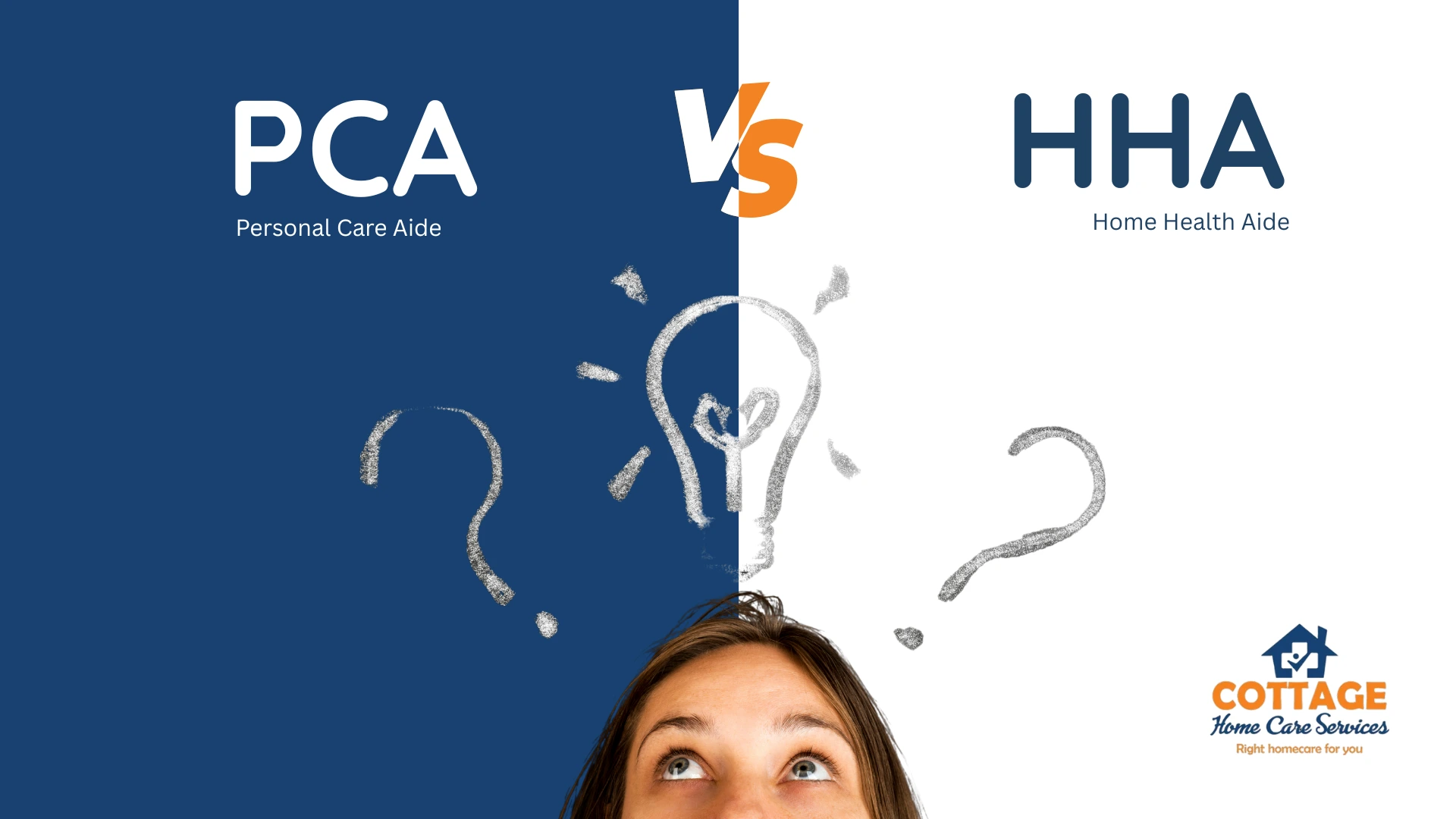
PCA vs. HHA: What's the Difference?
PCA — Personal Care Aide: Provides non-medical daily care—help with bathing, dressing, grooming, mobility, meals, and light household support. Requires a state-approved 40-hour training program. Best suited for people who need ongoing daily support but not skilled medical care.
HHA — Home Health Aide: Provides everything a PCA does, plus limited health-related tasks under nurse supervision, such as helping with prescribed exercises or monitoring basic health changes. Requires a longer 75-hour training program. Best suited for people who need a bit more clinical support at home.
What they share: Both are funded by Medicaid at no cost to the eligible consumer, both are delivered through a licensed agency, and both require state certification, a background check, and a health screening.
Who Qualifies as the Care Recipient?
The loved one receiving care must meet these conditions before any caregiver can be paid:
- Active Medicaid enrollment: They must be approved and financially eligible for New York Medicaid.
- A documented need for help: Chronic illness, physical disability, or a condition that requires assistance with daily living.
- A completed state assessment: The assessment confirms medical necessity and sets the approved hours.
- Enrollment in a participating health plan: The plan must work with a licensed home care provider to authorize services.
Who Qualifies as the Caregiver?
To be paid as a PCA or HHA through a Licensed Home Care Services Agency like Cottage Home Care, the caregiver must:
- Be legally authorized to work in the U.S. and meet the legal working age.
- Complete state-approved certification: A 40-hour PCA program or a 75-hour HHA program.
- Pass a competency evaluation: A written test plus a hands-on skills demonstration.
- Clear a background check and health screening: Including a pre-employment physical.
- Be listed on the New York State Home Care Registry: This confirms the aide is cleared to work.
- Keep up with annual in-service training: Ongoing education keeps certification active.
Family Member Rules: The Part Everyone Gets Wrong
This is where most families are surprised. Under the PCA and HHA programs, your relationship to the person you care for can disqualify you. The caregiver cannot be the patient's:
- Spouse
- Parent
- Son or daughter
- Son-in-law or daughter-in-law
So who can be a paid family caregiver? Many relatives still qualify—siblings, grandchildren, nieces, nephews, cousins, and other extended family—as long as they complete certification and meet all requirements. Trusted friends may qualify too. One of the benefits of working with Cottage Home Care's agency is that you may be able to bring your own caregiver, as long as they meet New York State requirements and are not in the excluded relationships above.
Training & Certification Requirements
Not certified yet? That is not a roadblock. Many Licensed Home Care Services Agencies offer free, state-approved training so qualified applicants can become certified aides.
- PCA Basic Training: A minimum of 40 hours covering personal care, safety, and daily living support.
- HHA Core Training: A minimum of 75 hours that adds limited health-related tasks under nurse supervision.
- PCA-to-HHA upgrade: Already a PCA? A shorter upgrade course moves you into an HHA role.
- Competency evaluation: Pass the written and skills test, and your name is added to the Home Care Registry.
Becoming a PCA first is often a smart stepping stone—it is faster to complete and opens the door to HHA certification training later.
How to Get Started: Step by Step
- Step 1 — Confirm Medicaid: Make sure your loved one has active New York Medicaid, or apply for it.
- Step 2 — Request an assessment: The state assessment confirms care needs and sets authorized hours.
- Step 3 — Confirm eligibility: Check that your relationship to the patient is allowed under PCA/HHA rules.
- Step 4 — Get certified: Complete free PCA or HHA training if you are not already certified.
- Step 5 — Complete onboarding: Background check, health screening, and paperwork.
- Step 6 — Start getting paid: Payment begins only after approval and onboarding are complete.
How Much Do Paid Caregivers Earn in 2026?
New York's home care minimum wage for 2026 is $19.65 per hour, with additional wage parity benefits in certain counties. While standard non-medical caregiver starting rates typically range from $18 to $21 per hour, Cottage Home Care Services offers the highest competitive compensation based on state guidelines and caregiver experience. Total income also depends significantly on the number of authorized care hours approved in the patient's plan.
Common Disqualifiers & Mistakes to Avoid
- No active Medicaid: Without it, no program will pay a caregiver.
- An excluded relationship: A spouse, parent, son, daughter, or in-law cannot be the paid PCA or HHA for that patient.
- Expecting back pay: There is no retroactive pay for caregiving you already provided. Payment starts only after approval.
- Skipping certification: For PCA and HHA roles, certification and registry listing are required—no exceptions.
- Assuming a job title pays more: Authorized hours and experience drive your real income, not the label alone.
Frequently Asked Questions
Can I get paid to care for my spouse?
+
No. Spouses are excluded from the PCA and HHA programs as paid caregivers under New York Medicaid rules.
Can I get paid to care for my parent?
+
Not as their PCA or HHA—sons and daughters are excluded from these agency programs. However, other relatives such as grandchildren, siblings, nieces, or nephews may qualify if they meet all certification requirements.
Do I need experience to become a caregiver?
+
Not necessarily. Many agencies offer free training. If you are already certified, showing recent experience or formal training may let you start sooner.
Does it cost anything to receive care?
+
No. PCA and HHA services are Medicaid-funded with no cost to eligible consumers. For families paying out of pocket, explore our private pay home care solutions.
What if I'm not a relative?
+
A trusted friend or extended family member can often qualify as a PCA or HHA, as long as they meet all New York State certification and eligibility requirements.
 Sabine DurgaramDPS/RN