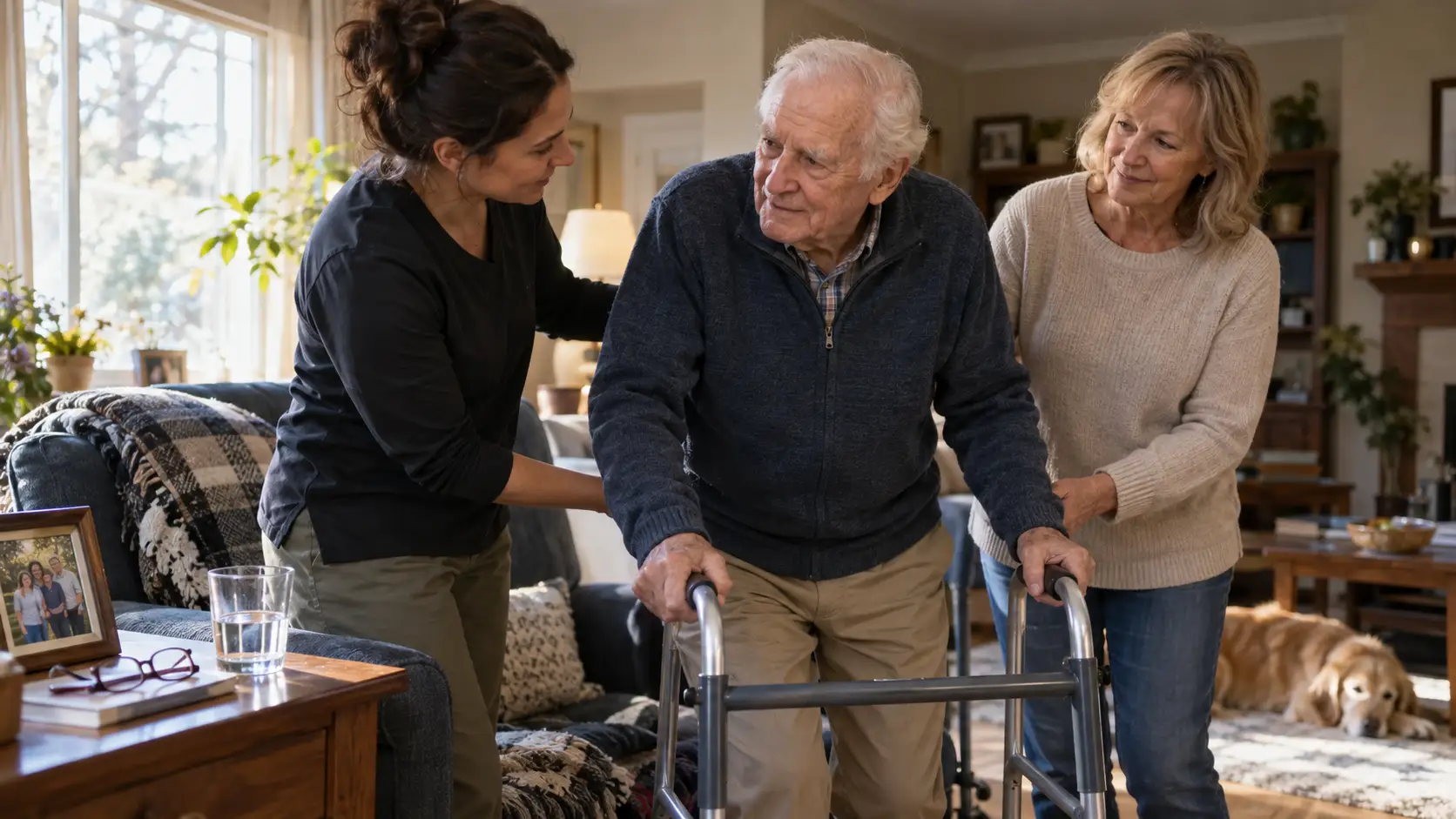
Imagine a hospice nurse stopping by on a Tuesday afternoon. She checks symptoms, reviews the care plan, and addresses clinical concerns before leaving notes for the rest of the hospice team. Then she's gone. The rest of the day is still there: a shower that needs help, lunch that needs making, a trip to the bathroom that isn't quite safe alone anymore.
That gap between clinical visits is where a lot of families find themselves on October 10, 2026, when the world marks World Hospice and Palliative Care Day. This year's theme, set by the Worldwide Hospice Palliative Care Alliance, is "Pain Management: An Essential Part of Palliative Care." Clinical pain assessment and treatment belong to qualified hospice, palliative, and other medical professionals. The rest of what happens during a day at home still has to happen, often with a family member, sometimes with a nonmedical caregiver working alongside them.
What is World Hospice and Palliative Care Day? It's a global day of action, observed on October 10, 2026, that raises awareness of hospice and palliative care and the people who provide it. This year's theme focuses on pain management. For families, it's also a practical moment to sort out what a hospice or palliative team manages medically and what still needs hands-on help at home.
Key Takeaways
- World Hospice and Palliative Care Day falls on October 10, 2026, the second Saturday of the month.
- This year's global theme, from the Worldwide Hospice Palliative Care Alliance, is "Pain Management: An Essential Part of Palliative Care."
- Hospice and palliative teams manage pain, symptoms, and medical care. They typically visit on a schedule rather than staffing a home around the clock.
- Bathing, dressing, meals, and mobility help are usually still needed between clinical visits. That's the gap nonmedical home care can fill.
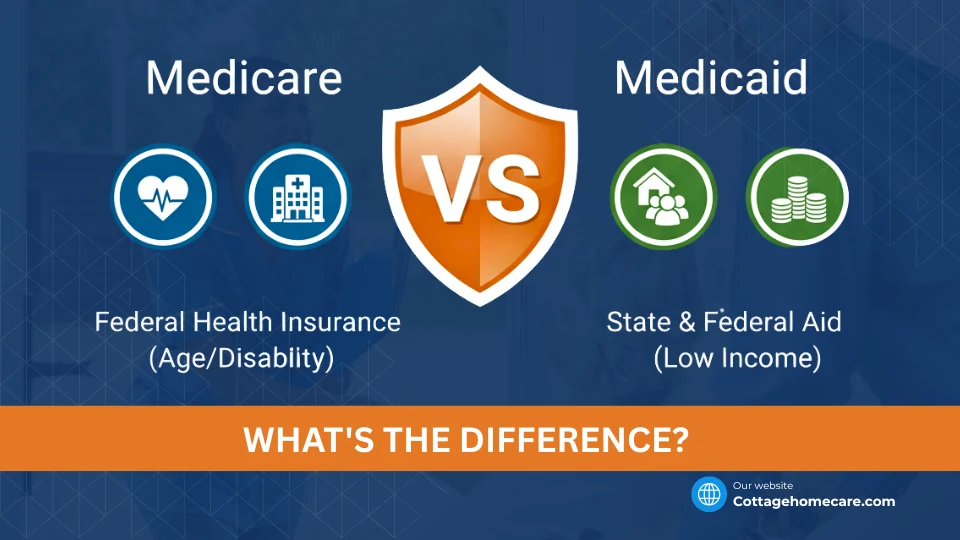
- Medicare's hospice benefit covers specific levels of care, but it isn't the same as paying for an unrelated private caregiver around the clock.
- Cottage Home Care provides nonmedical support only. It doesn't manage pain or provide hospice, nursing, or palliative medical treatment.
World Hospice and Palliative Care Day 2026
World Hospice and Palliative Care Day falls on the second Saturday of October every year. In 2026, that's October 10. The Worldwide Hospice Palliative Care Alliance has run the day since 2005, giving hospice and palliative organizations around the world a shared date to raise awareness.
This year's theme is "Pain Management: An Essential Part of Palliative Care." Pain isn't only physical. It can affect sleep, appetite, mood, and a person's ability to take part in daily life. The theme pushes for pain to be treated as seriously as any other part of a care plan, rather than managed quietly in the background.
Treating pain is clinical work. It belongs to doctors, hospice nurses, and the rest of the medical team. Everything else is a separate conversation, but a necessary one for any family trying to figure out what a day at home will actually require.
What Does Palliative Care Mean?
Palliative care is medical care focused on comfort and quality of life for someone with a serious illness. It can start early, often alongside treatment aimed at curing or controlling the disease itself. Someone going through chemotherapy, for instance, might also see a palliative care team for pain, nausea, or fatigue.
Hospice is different. It's a specific kind of end-of-life care for people who meet certain eligibility requirements and who've chosen comfort-focused care over curative treatment for a terminal illness. Every hospice patient is receiving a form of palliative care. Not every palliative care patient is in hospice.
What Hospice Care at Home Actually Looks Like
A hospice team usually includes a nurse, a doctor, a social worker, and often a chaplain or a home health aide. They visit on a schedule, not around the clock. Most hospice care is billed under what Medicare calls routine home care, the level used when a person is getting hospice where they live and isn't receiving continuous home care. Visits happen according to the plan of care, not a fixed schedule everyone follows the same way. Either way, it doesn't mean a hospice employee is in the home around the clock.
There's a separate level called continuous home care, used only during a brief medical crisis. Under current Medicare guidance, it generally requires at least 8 hours of predominantly nursing care within a day, though that time doesn't have to run as 8 straight hours. It isn't routine, round-the-clock custodial caregiving, and it isn't how most hospice days actually work.
Between visits, families may still need to arrange help for the parts of the day the person cannot manage safely alone. A lot of families aren't quite ready for how much that turns out to be.
The Part Families Still Handle Between Hospice Visits
Hospice nurses, aides, and other team members visit according to the individual plan of care. The rest of the time belongs to whoever's in the house. That usually includes:
- Getting in and out of bed safely.
- Bathing and getting dressed.
- Help in the bathroom.
- Meals, even on the days appetite is low.
- Moving around the house without a fall.
- Laundry and basic household upkeep.
- Just being there, especially in the evening or overnight.
None of that is nursing. All of it is real work, and it adds up fast on top of a job, a household, or kids of your own.
Clinical Comfort and Everyday Comfort Are Different
Pain medication and symptom management are clinical decisions. They come from a doctor's order, get adjusted by a nurse, and stay inside the hospice or palliative plan of care. A nonmedical caregiver doesn't make those calls, and a responsible one won't try to.
Everyday comfort is a different thing. A clean set of sheets. A warm meal. Help shifting position when that's part of the caregiver's role and the care instructions. Someone nearby who'd notice if something seemed wrong. These tasks do not treat pain, but they may help a person feel more settled and supported while the clinical team manages symptoms.
Neither kind of comfort replaces the other. A hospice team can manage someone's pain well. That same person can still feel genuinely uncomfortable if nobody's helped them get washed or repositioned in hours.
Services vary by hospice provider, plan of care, and individual circumstances, but here's the general split:
| Need |
Hospice/Palliative Clinical Team |
Nonmedical Home Care |
| Pain and symptom management |
Assessed and treated by the hospice or palliative team |
Not provided |
| Medication management |
Ordered and adjusted by the medical team |
Not provided |
| Clinical assessment |
Performed by nurses and physicians |
Not provided |
| Bathing and dressing |
Sometimes supported by a hospice aide, depending on the plan of care |
Can be a core part of daily support |
| Meals |
May include limited aide or homemaker support under the plan of care, but not ongoing meal preparation |
Can be a core part of daily support |
| Mobility and positioning |
Guided by the clinical team when medically needed |
May assist with routine mobility or position changes within the caregiver's permitted role and established care instructions |
| Companionship |
Hospice staff or volunteers may provide supportive visits, but continuous companionship isn't standard staffing |
Can be a core part of daily support |
| Household routines |
May be included on a limited basis through hospice homemaker services, depending on the plan of care |
Can be a core part of daily support |
| Family caregiver relief |
Limited, mainly through inpatient respite stays |
Can provide ongoing, scheduled relief |
How Nonmedical Home Care Can Complement Hospice
Nonmedical home care doesn't replace a hospice or palliative team, and it isn't a substitute for pain management or clinical oversight. It fills a different role: the everyday routines that continue whether or not anyone's scheduled to visit that day.
Cottage Home Care provides nonmedical home care. It doesn't provide hospice, nursing, pain management, or palliative medical treatment. Alongside a hospice or palliative plan, it can support the personal care and household side. Think bathing, dressing, meals, mobility help, companionship, and the routines that keep a home livable.
Families should let the hospice or palliative team know what nonmedical help is being used at home, especially if daily routines or safety needs change. A Michigan home care team can talk through what's already being handled clinically and where nonmedical help might fit around it.
When the Family Is Providing Most of the Daily Care
Hospice support doesn't erase the work still happening in the house. Many family caregivers are also working full time, raising their own kids, or managing their own health, on far less sleep than they need.
Missed shifts. Interrupted nights. The quiet pressure of being the only person who can help with a bathroom trip at 2 a.m. None of that shows up on a hospice care plan, but it's real. Asking for relief isn't giving up on anyone. It's recognizing that one person can only cover so much.
That relief can come from another family member or a volunteer through a hospice's own support program. It can also come from nonmedical home care arranged privately, depending on what's available.
What Medicare Hospice Covers, and What It Doesn't Mean
Medicare Part A can cover hospice care under a few conditions. A hospice doctor, and the person's regular doctor if they have one, must certify a life expectancy of six months or less if the illness runs its normal course. The person also has to formally choose hospice, for care related to the terminal illness and related conditions, over Medicare's standard coverage for that illness, through a hospice Medicare has approved. Medicare can still cover other eligible care for health problems unrelated to the terminal illness.
Coverage runs on four levels. Routine home care is the everyday, intermittent kind most patients receive. Continuous home care is used briefly during a medical crisis. Inpatient respite care gives a caregiver a short break, up to five days. General inpatient care is used when pain or other symptoms can't be managed in another setting. Most hospice days fall under routine home care.
None of that pays for an unrelated private caregiver to sit with someone around the clock. Hospice teams are typically reachable by phone at any hour, but having someone physically in the home full time isn't part of routine coverage. That's a separate arrangement many families make on their own, through nonmedical home care, another family member, or some combination.
Families looking for an actual hospice provider can compare Medicare-certified hospices through Medicare's Care Compare tool or ask their physician for a referral. That's a different search than looking for nonmedical help with the rest of the day.
How Cottage Home Care May Fit Into the Home Plan
Hospice and palliative clinicians stay responsible for the medical side: pain, symptoms, medications, and the overall plan of care. Cottage stays on the nonmedical side: bathing, dressing, meals, mobility help, companionship, and the household routines that continue in between.
If a hospice or palliative team is already involved, it's worth mentioning any nonmedical help to them directly, so everyone's working from the same picture. From there, Cottage can talk through scheduling and what private-pay nonmedical care in Michigan might look like around the hours a hospice team isn't there.
Frequently Asked Questions
What is at-home hospice care?+
At-home hospice care is end-of-life, comfort-focused care delivered wherever someone lives, usually a private home. A hospice team manages pain, symptoms, and medical needs through scheduled visits rather than continuous, in-person staffing.
How do you get hospice care at home?+
A hospice doctor, and the person's regular doctor if they have one, must certify a life expectancy of six months or less. The person then elects hospice through a Medicare-approved provider, which coordinates the at-home visits and plan of care.
Does Medicare cover hospice care at home?+
Medicare Part A can cover hospice care once eligibility and election requirements are met, through a Medicare-approved hospice. Coverage includes routine home visits and, when needed, short periods of continuous or inpatient care, but it doesn't include round-the-clock private caregiving.
Who pays for hospice care at home?+
There's no deductible for hospice under Medicare Part A. Out-of-pocket costs are generally limited to a copayment of up to $5 per prescription for pain and symptom management, and possibly 5% coinsurance for Medicare-approved inpatient respite care. Nonmedical help beyond what hospice provides, like extra hours of personal care, is usually a separate, privately arranged expense unless another benefit covers it.
Is palliative care the same as hospice?+
No. Palliative care can be provided at any stage of a serious illness, often alongside curative treatment. Hospice is a specific form of end-of-life care for people who've chosen comfort-focused care and meet Medicare's eligibility requirements.
Does hospice provide 24-hour care at home?+
Most routine Medicare hospice coverage doesn't place a caregiver in the home around the clock. During a qualifying brief medical crisis, continuous home care may provide at least 8 hours of predominantly nursing care in a day to help keep the person safely at home, but that's different from everyday, ongoing staffing.
Can nonmedical home care be used while someone is receiving hospice?+
Yes, many families use both. Hospice manages the medical and comfort-focused side of care, while nonmedical home care can help with bathing, meals, mobility, and household routines during the hours a hospice team isn't present.


 Sabine DurgaramDPS/RN