Key Takeaways
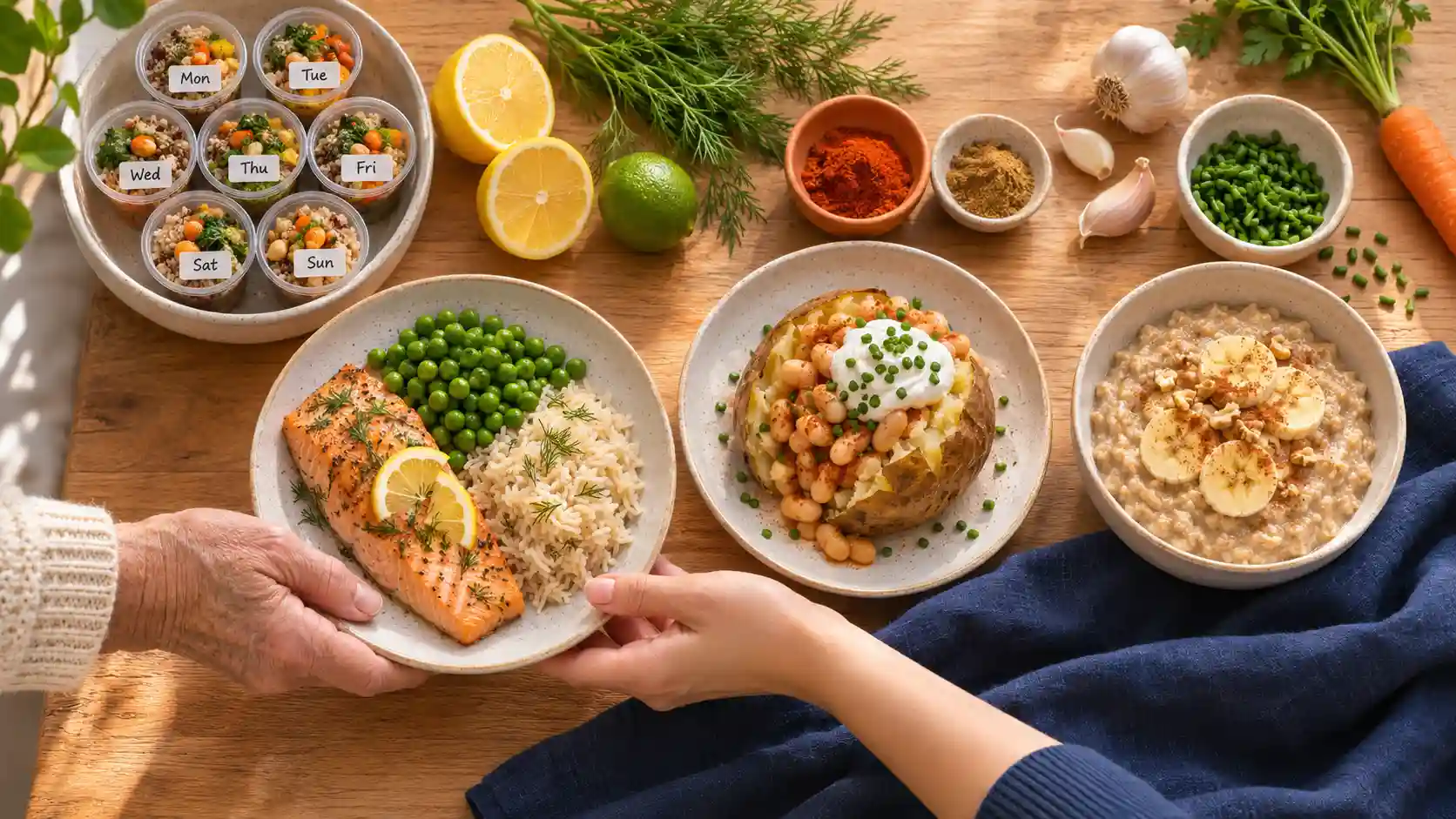
- An easy low-sodium diet meal for one is a baked potato filled with white beans, plain yogurt, and chives. A microwave does most of the work.
- For breakfast, try banana oats. For a cold lunch, mash chickpeas with lemon and olive oil. Buy plain oats and beans marked “no salt added.”
- Check the sodium for the amount you eat. Two slices of bread count as two servings if the label lists one slice.
What sounds good for dinner tonight: a warm bowl of white beans with lemon and dill, or flaky salmon with those same flavors? Both go well with rice and peas. If one person at your table eats vegetarian meals and another enjoys fish or chicken, you can share the sides and give each person a dinner they look forward to.
Whether you cook for yourself or someone you love, you’ll find 15 easy meals for one or two. You’ll learn how to compare sodium on food labels, see how much protein each meal offers, and use one shopping list for the week. On days when chopping or standing at the stove feels tiring, you can still choose the menu and let someone lend a hand with the prep.
In This Guide
Pick a meal by time and effort
How much time do you want to spend on your feet tonight? The black bean bowl takes about four minutes of hands-on work. If you’d like tomorrow’s dinner ready too, the salmon makes two portions with about six minutes of prep. Pick a dinner below to go straight to its recipe.
Looking for a higher-protein, low-sodium meal? Try the salmon with peas and rice for about 30 g of protein per plate. For a vegetarian choice, the ginger tofu skillet has about 22 g with the tofu used in our estimate. Check your tofu label to get a closer count.
Vegetarian or meat and fish? Build dinner around what you enjoy
If you eat vegetarian meals
What do you like best about a bowl of pasta: the sauce or the bite? For a thick sauce, mash a few white beans into the warm tomatoes. For more bite, leave the rest whole. The white bean pasta makes two bowls. If you prefer a dinner with crisp edges, try the ginger tofu skillet. Pat the tofu dry and let one side brown before you turn it.
For a softer lunch, try the red lentil soup with unsalted vegetable broth. If eggs and dairy are part of your diet, the tomato eggs on toast and berry yogurt bowl give you two more choices. For a fully plant-based meal, try the tofu skillet, or top the black bean bowl with mashed avocado and lime in place of yogurt.
If you eat chicken, fish, or beef
Pick the meal that suits tonight. For a warm lunch with little chopping, use drained, no-salt-added tuna in the dill rice bowl. For two dinners from one pan, start with plain chicken and roast it with sweet potato and paprika. If it’s burger night, use plain ground beef and apple slaw. Check the sodium on the bun and any sauce you add.
At the store, compare plain tofu with flavored tofu, or plain chicken with chicken packed in a seasoned solution. Read the sodium for the same weight of each. Then check the broth or sauce you plan to use. Those two checks help you choose where you want the seasoning to come from.
One dinner for two people who eat differently
For two rice bowls, warm 1½ cups cooked plain rice and 1 cup plain frozen peas, cooked as the package directs. Divide between two bowls. Top one with ½ cup warmed, no-salt-added white beans and the other with 3 oz drained, no-salt-added tuna. Use a separate spoon for each topping. Finish each bowl with 1 tsp olive oil, a squeeze of lemon, and dill. You’ve made a vegetarian dinner and a fish dinner with the same sides and no raw meat to handle.
To compare the two bowls, keep the rice, peas, and dressing the same. Read the bean label for ½ cup and the tuna label for 3 oz. The difference between those two amounts is the difference between your bowls. Use your own labels when you make a swap.
15 easy meals for one or two
Cooking for one? Each card tells you how many plates it makes. The sodium figures use example ingredient values and include the sides listed. Open the sodium breakdown to see what each ingredient adds. If you track sodium for your care plan, use the milligrams on your own labels. The examples count plain oil and water as zero and round trace amounts from herbs.
Reading the protein numbers and tags. Protein is estimated from typical ingredient portions, including the sides, and rounded to the nearest gram. Meat and fish weights are measured before cooking, except canned tuna, which is weighed drained. Yogurt style, tofu firmness, bread size, and brand can change the total. Tags apply to the listed ingredients. For a gluten-free meal, choose oats labeled gluten-free and check other packaged ingredients. If cooking for someone with an allergy, check each label and use clean equipment to avoid cross-contact.
Breakfasts
1. Banana peanut butter oats
About 10 g protein per servingVeganDairy-freeGluten-free with labeled oats
Serves 1 · Microwave · 3 minutes hands-on · 7 minutes total.
Gather ½ cup plain rolled oats, 1 cup water, ½ banana, 1 tbsp unsalted peanut butter, and a pinch of cinnamon.
Use a large bowl so the oats have room to bubble. Microwave the oats and water as the package directs, pausing to stir. Mash in the banana while the oats are warm, then swirl the peanut butter and cinnamon through the bowl.
See the sodium example and protein estimate+
Example sodium per serving · Plain oats 0 + banana 1 + nut butter 3 = 4 mg.
Approximate protein in one serving: oats (5.3 g), peanut butter (3.6 g), banana (0.6 g). Rounded total: 10 g.
2. Berry yogurt breakfast bowl
About 24 g protein per servingVegetarianGluten-free with labeled oats
Serves 1 · No cook · 3 minutes hands-on · 3 minutes total.
Gather ¾ cup plain Greek yogurt, ½ cup blueberries, ¼ cup plain rolled oats, and 1 tbsp unsalted nut butter.
Stir the oats and nut butter into the yogurt, then fold in the berries. Like a little bite? Eat it now. For softer oats tomorrow, cover the bowl and chill it overnight.
See the sodium example and protein estimate+
Example sodium per serving · Yogurt 65 + berries 1 + oats 0 + nut butter 3 = 69 mg.
Approximate protein in one serving: Greek yogurt (17 g), oats (2.6 g), nut butter (3.6 g), berries (0.5 g). Rounded total: 24 g.
3. Tomato eggs on toast
About 17 g protein per servingVegetarianDairy-free with milk-free bread
Serves 1 · Skillet · 6 minutes hands-on · 8 minutes total.
Gather 2 eggs, ½ cup diced tomato, 1 tsp olive oil, 1 slice whole-grain toast, and black pepper.
Warm the diced tomato in the oil until it releases a little juice. Beat the eggs in a bowl, pour them into the skillet, and stir until firm. Spoon the warm eggs over your toast and finish with pepper.
See the sodium example and protein estimate+
Example sodium per serving · Eggs 140 + tomato 5 + bread 140 = 285 mg.
Approximate protein in one serving: two eggs (12.6 g), bread (4 g), tomato (0.8 g). Rounded total: 17 g.
4. Warm pear and milk oats
About 10 g protein per servingVegetarianGluten-free with labeled oats
Serves 1 · Stovetop · 3 minutes hands-on · 8 minutes total.
Gather ½ cup plain oats, ½ cup milk, ½ cup water, 1 small ripe pear cut into small pieces, and cinnamon.
Put the pear, oats, milk, and water in a small pot. Simmer for about 5 minutes, stirring until the oats are creamy. Finish with cinnamon. On mornings when chopping feels like work, use drained, unsweetened canned pears.
See the sodium example and protein estimate+
Example sodium per serving · Oats 0 + milk 55 + pear 2 = 57 mg.
Approximate protein in one serving: oats (5.3 g), milk (4 g), pear (0.5 g). Rounded total: 10 g.
Lunches and a light meal
5. Lemon chickpea toast
About 16 g protein per servingVegetarian
Serves 1 · No cook · 5 minutes hands-on · 5 minutes total.
Gather ½ cup drained no-salt-added chickpeas, 1 tbsp plain yogurt, 1 tsp each olive oil and lemon juice, and 2 slices whole-grain bread.
Mash the chickpeas with yogurt, oil, and lemon until the filling spreads easily. For a soft sandwich, use the bread as it is. For crunch, toast it and spoon the filling on just before you eat.
See the sodium example and protein estimate+
Example sodium per serving · Chickpeas 15 + yogurt 5 + bread 280 + lemon 0 = 300 mg.
Approximate protein in one serving: chickpeas (7.3 g), two bread slices (8 g), yogurt (0.5 g). Rounded total: 16 g.
6. White bean and chive potato
About 13 g protein per servingVegetarianGluten-free
Serves 1 · Microwave · 3 minutes hands-on · 12 minutes total.
Gather 1 medium potato, ½ cup drained no-salt-added white beans, 2 tbsp plain yogurt, and 1 tsp chopped chives.
Scrub the potato and pierce the skin with a fork. Microwave it on a plate for 5 minutes. Turn it and heat in short bursts until a fork slips into the center. Warm the beans, split the potato, and tuck them inside. Spoon the cool yogurt and chives on top.
See the sodium example and protein estimate+
Example sodium per serving · Potato 15 + beans 15 + yogurt 11 + chives 0 = 41 mg.
Approximate protein in one serving: potato (4.3 g), white beans (8 g), yogurt (1.1 g). Rounded total: 13 g.
7. Dill tuna and rice bowl
About 28 g protein per servingFishGluten-freeDairy-free
Serves 1 · Microwave · 5 minutes hands-on · 8 minutes total.
Gather 3 oz drained no-salt-added tuna, ¾ cup cooked plain brown rice, ½ cup plain frozen peas, 1 tsp olive oil, 1 tsp lemon juice, and dill.
Heat the rice and peas, following the pea package directions. Flake the tuna over the warm bowl. Stir in the oil and finish with lemon and dill so you can taste them in each bite.
See the sodium example and protein estimate+
Example sodium per serving · Tuna 55 + rice 8 + peas 3 + lemon 0 = 66 mg.
Approximate protein in one serving: tuna (20 g), brown rice (3.8 g), peas (4 g). Rounded total: 28 g.
8. Red lentil and carrot soup
About 17 g protein per servingVegetarianDairy-free with milk-free bread and broth
Serves 2 · One pot · 8 minutes hands-on · 30 minutes total.
Gather ½ cup dry red lentils, 1 cup grated carrots, 1 cup no-salt-added diced tomatoes, 2 cups unsalted vegetable broth, 2 tsp olive oil, ½ tsp cumin, and 2 slices whole-grain bread.
Rinse the lentils. Warm the carrots and cumin in oil for 2 minutes. Add lentils, tomatoes, and broth. Simmer until soft, about 20 minutes. Add water to loosen. Split the pot in half and serve each bowl with one slice of bread.
See the sodium example and protein estimate+
Example sodium per serving · Lentils 3 + carrots 42 + tomatoes 15 + broth 35 + bread 140 = 235 mg.
Approximate protein in one serving: dry lentils (11.5 g), bread (4 g), carrot, tomato and broth (1.8 g). Rounded total: 17 g.
9. Peach and yogurt oat bowl
About 25 g protein per servingVegetarianGluten-free with labeled oats
Serves 1 · No cook · 4 minutes hands-on · 4 minutes total.
Gather ¾ cup plain Greek yogurt, 1 sliced peach, ¼ cup plain oats, 1 tbsp unsalted peanut butter, and cinnamon.
Layer the oats, yogurt, and peach in a bowl. Swirl in the nut butter and finish with cinnamon. For a softer lunch, use drained peaches packed in juice and let the oats sit in the yogurt while you set the table.
See the sodium example and protein estimate+
Example sodium per serving · Yogurt 65 + peach 0 + oats 0 + nut butter 3 = 68 mg.
Approximate protein in one serving: Greek yogurt (17 g), oats (2.6 g), peanut butter (3.6 g), peach (1.4 g). Rounded total: 25 g.
Recipes for low-sodium dinners
10. Lemon-dill salmon with peas
About 30 g protein per servingFishGluten-freeDairy-free
Serves 2 · Sheet pan + microwave · 6 minutes hands-on · 25 minutes total.
Gather Two 4 oz plain salmon fillets, 2 tsp olive oil, 2 tsp lemon juice, ½ tsp dried dill, 1 cup plain frozen peas, and 1½ cups cooked plain rice.
Heat oven to 400°F. Brush fish with oil, lemon, and dill on a lined pan. Bake about 12 to 15 minutes, until the center reaches 145°F. Heat the peas and rice. Divide sides between the fillets.
See the sodium example and protein estimate+
Example sodium per serving · Salmon 65 + peas 3 + rice 8 + lemon 0 = 76 mg.
Approximate protein in one serving: salmon (23 g), rice (3.2 g), peas (4 g). Rounded total: 30 g.
11. Paprika chicken and sweet potato
About 28 g protein per servingChickenGluten-freeDairy-free
Serves 2 · Sheet pan · 10 minutes hands-on · 40 minutes total.
Gather 8 oz plain boneless chicken breast, 1 medium sweet potato, 1 cup plain green beans, 1 tbsp olive oil, and ½ tsp each paprika and garlic powder.
Heat oven to 425°F. Dice potato into ½-inch cubes, coat with half the oil, and roast 12 minutes. Cut chicken into 1-inch pieces on a separate board. Add chicken, beans, spices, and remaining oil. Roast until the chicken reaches 165°F, about 15 to 20 minutes. Divide evenly.
See the sodium example and protein estimate+
Example sodium per serving · Chicken 55 + sweet potato 36 + beans 3 + spices 1 = 95 mg.
Approximate protein in one serving: chicken breast (25.5 g), sweet potato (1 g), green beans (1 g). Rounded total: 28 g.
12. Tomato and white bean pasta
About 17 g protein per servingVegetarianDairy-free with milk-free pasta
Serves 2 · Pot + skillet · 8 minutes hands-on · 22 minutes total.
Gather 4 oz dry whole-wheat pasta, 1 cup drained no-salt-added white beans, 1 cup no-salt-added diced tomatoes, 2 tsp olive oil, and ½ tsp dried basil.
Cook the pasta in unsalted water. While it cooks, warm the oil, beans, tomatoes, and basil in a skillet. Press a few beans against the pan with a spoon to thicken the sauce. Toss with the pasta and divide between two bowls.
See the sodium example and protein estimate+
Example sodium per serving · Pasta 5 + beans 15 + tomatoes 15 = 35 mg.
Approximate protein in one serving: whole-wheat pasta (8 g), white beans (8 g), tomatoes (1 g). Rounded total: 17 g.
13. Ginger tofu rice skillet
About 22 g protein per servingVeganGluten-freeDairy-free
Serves 1 · One skillet · 8 minutes hands-on · 15 minutes total.
Gather 4 oz plain firm tofu, ¾ cup cooked plain rice, ½ cup plain frozen peas, 1 tsp grated ginger, 2 tsp oil, and 1 tsp lime juice.
Pat tofu dry and cut into small cubes. Brown in oil for 5 minutes. Stir in ginger, rice, peas, and a splash of water. Cover and heat through. Squeeze lime over the bowl.
See the sodium example and protein estimate+
Example sodium per serving · Tofu 15 + rice 8 + peas 3 + aromatics 1 = 27 mg.
Approximate protein in one serving: firm tofu (15 g), rice (3.2 g), peas (4 g). Rounded total: 22 g.
14. Home-style burger with apple slaw
About 29 g protein per servingBeef
Serves 1 · Skillet · 10 minutes hands-on · 18 minutes total.
Gather 4 oz plain lean ground beef, 1 whole-grain bun, ½ apple, ½ cup shredded cabbage, 1 tbsp plain yogurt, 1 tsp vinegar, and pepper.
Shape the beef into a thin patty. Cook in a hot skillet, turning once, until the center reaches 160°F. Grate the apple and mix with cabbage, yogurt, vinegar, and pepper. Serve the burger on the bun with slaw.
See the sodium example and protein estimate+
Example sodium per serving · Beef 75 + bun 220 + apple 1 + cabbage 8 + yogurt 5 = 309 mg.
Approximate protein in one serving: lean beef (23 g), bun (5 g), yogurt, cabbage and apple (1.2 g). Rounded total: 29 g.
15. Smoky black bean and corn bowl
About 14 g protein per servingVegetarianGluten-free
Serves 1 · Microwave · 4 minutes hands-on · 9 minutes total.
Gather ½ cup drained no-salt-added black beans, ½ cup plain frozen corn, ¾ cup cooked plain rice, 2 tbsp plain yogurt, ¼ tsp smoked paprika, and 1 tsp lime juice.
Cover the corn loosely and cook as the package directs. Add beans, rice, paprika, and a spoonful of water. Heat through, stir, and top with yogurt and lime.
See the sodium example and protein estimate+
Example sodium per serving · Beans 15 + corn 1 + rice 8 + yogurt 11 + lime and paprika 1 = 36 mg.
Approximate protein in one serving: black beans (7.6 g), corn (2.5 g), rice (3.2 g), yogurt (1.1 g). Rounded total: 14 g.
Prefer a recipe with published nutrition facts? Mayo Clinic lists 63 mg of sodium for one fillet in its roasted salmon recipe and 110 mg for about ¾ cup of its rice and bean salad. Follow those two recipes and the listed portions for a plate with 173 mg before any extras.
Your 7-day low-sodium diet meal plan
Choose one dinner you’re looking forward to, then build the week around it. Monday’s salmon makes two plates. Freeze the second portion that evening and Sunday’s dinner is already started. Each number below is an example for one serving. The last column adds the three dishes shown. Count snacks, drinks, extra portions, and toppings separately, and adjust the menu to your appetite and care plan.
For example, Monday’s three dishes add up to 380 mg. If your milk label says 110 mg per cup and your crackers say 150 mg for six, one cup of milk and six crackers bring that running total to 640 mg. Add anything else you eat. For a full menu with snacks, drinks, portions, and daily nutrient totals, see the NHLBI seven-day DASH guide linked below.
What about snacks and drinks? Try apple slices with unsalted peanut butter, plain yogurt with peaches, or an egg with fruit. For a cool drink, add cucumber slices and a squeeze of lime to water. If you have a fluid limit, count drinks as your care team directs.
A vegetarian version of the seven-day menu
Keep the breakfasts if you eat eggs and dairy. Use unsalted vegetable broth for both soup lunches. Then make these four swaps to cover every meat or fish entry in the weekly table.
- Monday and Sunday dinners: Replace salmon with ginger tofu rice. For the two dinners, buy 8 oz plain tofu. Cook half on Monday and freeze the other half for Sunday according to the package directions.
- Tuesday dinner: Keep the roasted sweet potato and green beans. Leave out the chicken and serve each plate with ½ cup warmed, no-salt-added chickpeas tossed with paprika and olive oil.
- Thursday lunch: Keep the rice, peas, lemon, and dill. Use ½ cup white beans in place of tuna.
- Friday dinner: Keep the bun and apple slaw. Mash ½ cup drained, no-salt-added black beans with lime and smoked paprika, then spoon the warm filling onto the toasted bun.
If you eat meat or fish, follow the main menu as written. For a fish-free week, use leftover cooked chicken in Thursday’s rice bowl and make the chickpea dinner above on the two salmon nights. The sodium examples in the main table apply to the original dishes. Count your chosen ingredients for each swap.
Shop once for meals that share ingredients
You can turn one can of white beans into three meals for one person. Spoon some into a potato today, then simmer the rest with tomatoes for two bowls of pasta. Here’s what to buy and where each ingredient goes. For other meals, keep plain oats, rice, eggs, fruit, and plain frozen vegetables on hand.
| Buy for one person | Use it across three meals | Save the rest |
|---|
| One can no-salt-added white beans, about 1½ cups drained | ½ cup for the chive potato. Use 1 cup for the two-serving pasta. | Serve one pasta bowl today. Freeze the other for a third meal. Check the drained yield on your can. |
| One potato, a small plain yogurt, and chives | Use the potato, 2 tbsp yogurt, and 1 tsp chives at lunch. | Use leftover yogurt with fruit for breakfast. Freeze extra chopped chives. |
| A box of dry pasta and one can no-salt-added diced tomatoes | Use 4 oz pasta and 1 cup tomatoes for both pasta servings. | Keep dry pasta in the pantry. Freeze spare tomatoes for soup. |
| Olive oil and dried basil | Use 2 tsp oil and ½ tsp basil in the pasta. | Save for eggs, soup, or vegetables. |
Make the flavor fit the dish. For one fish fillet, try 1 tsp lemon juice and ¼ tsp dill. For one chicken portion, use ¼ tsp each of paprika and plain garlic powder. For beans, stir 1 tsp lime juice and a pinch of cumin into half a cup. For a quick salsa, chop half a tomato, add lime and cilantro, and spoon it over rice. Garlic salt and seasoned salt both add sodium.
Shopping for the full week for one person
Shopping for the whole week? Check your pantry against this list first. It covers the menu for one person, with each two-serving recipe cooked once. Freeze Monday’s extra salmon for Sunday, and freeze the spare chicken and pasta portions for another week.
- Grains and bread: 2 cups dry oats, 3¾ cups cooked plain rice, 4 oz dry pasta, 8 slices whole-grain bread, and 1 bun. Freeze spare bread in pairs.
- Protein and dairy: 4 eggs, two 4 oz salmon fillets, 8 oz chicken, 4 oz ground beef, 4 oz tofu, 3 oz drained tuna, ½ cup dry red lentils, about 2¼ cups plain yogurt, and ½ cup milk.
- Beans and cans: 1 cup drained chickpeas, 2 cups drained white beans, ½ cup drained black beans, 2 cups no-salt-added diced tomatoes, and 2 cups unsalted broth. Freeze unused beans with a little liquid.
- Produce: 1 banana, ½ cup berries, 1 pear, 1 peach, 1 apple, 2 medium potatoes, 1 sweet potato, 1 cup diced fresh tomato, 1 cup grated carrot, and ½ cup shredded cabbage.
- Freezer and pantry: 2 cups plain peas, 1 cup green beans, ½ cup corn, ¼ cup unsalted nut butter, olive oil, lemon, lime, vinegar, chives, and the salt-free spices named on the cards.
For soup, if your broth has 35 mg per cup, 2 cups add 70 mg to the pot. Divide by two bowls for 35 mg per bowl from broth. Broth with 140 mg per cup adds 140 mg per bowl instead. That single change takes the soup-and-bread example from 235 to 340 mg.
How to read sodium on a label
Pick up the bread you usually buy. How many slices does the label count as one serving? If one slice has 140 mg of sodium, your sandwich starts at 280 mg before the filling. Bread with 90 mg per slice brings the example chickpea sandwich from 300 mg down to 200 mg. Use the same serving size when you compare two loaves.
| Label wording | What it tells you |
|---|
| Low sodium | Generally 140 mg or less per labeled serving. This is a packaged-food claim. A whole dinner has several ingredients. |
| Reduced sodium | At least 25% less than the regular version. Check the remaining milligrams. |
| No salt added | The maker added no salt during processing. The food may still contain sodium. |
| % Daily Value | 5% or less is low. 20% or more is high. Compare the same serving size on both packages. |
Sodium is one part of salt. Eating too much sodium can raise blood pressure. The general US daily limit for most adults is less than 2,300 mg. If your clinician has given you a different daily goal, use that number. Ask before you use a potassium-based salt substitute, especially if you have kidney disease or take medicine that affects potassium.
Cook today and leave a meal for later
If you’re cooking during a visit, put the lentil soup on first. While it simmers, ask your loved one how they like their chickpea toast: soft bread or crisp, extra lemon or a little dill? Make lunch together, then divide the soup into two shallow containers. Label them with the dish and date. Freeze any portion you’ll need after four days.
Refrigerate food within two hours, or within one hour if the room or outdoor temperature is above 90°F. Keep the fridge at 40°F or colder. Use cooked leftovers within three to four days, or freeze them. Reheat leftovers, including cooked rice, to 165°F. Stir halfway through microwaving and check the center.
If chewing is hard, mash beans or cook carrots until fork-tender. Ask which texture feels comfortable. If your loved one coughs or chokes during meals, ask their care team about swallowing before changing food or drink textures. If appetite is low or weight is dropping, ask a dietitian how to keep meals filling while meeting the sodium goal.
A meal note to leave on the fridge
Dish and date __________ · Favorite seasonings __________ · Portion __________ · Sodium from our labels __________ mg · Care-team instructions __________ · Refrigerate or freeze by __________.
If you follow a heart failure care plan, keep the current instructions with this note.
Common questions
What can I eat for dinner on a low-sodium diet?+
Try lemon-dill salmon with plain rice and peas. For a meatless dinner, cook white beans and tomatoes with pasta. Choose plain fish without brine and check the cans for added salt.
Which foods should I eat on a low-sodium diet?+
Build meals around foods you enjoy, such as plain rice, oats, beans, eggs, fresh fish, fruit, and vegetables. Add a protein you like to each plate. For canned foods, compare labels and drain and rinse beans when you can.
Can I eat a hamburger on a low-sodium diet?+
Yes, if it fits your daily goal. Start with plain ground beef. The bun, cheese, pickles, and sauces can add up. At a restaurant, check the posted sodium for the whole burger and ask for sauce on the side.
Which meal has the least sodium?+
It depends on your ingredients. In our worked examples, banana peanut butter oats have the least, at about 4 mg with water and unsalted nut butter. Using milk or salted peanut butter changes that number.
Can I use a frozen dinner when cooking is hard?+
Yes. Read the sodium for the whole tray, including sauce. If the tray holds two servings and lists 350 mg per serving, eating it all gives you 700 mg. Compare that amount with your own daily goal.
What if I have heart failure or kidney disease?+
Follow the sodium and fluid goals your care team gives you. With kidney disease, foods such as potatoes or beans may also need adjusting. Ask your dietitian which recipes fit your lab results, medicines, and appetite.
How a Cottage caregiver can help at mealtime
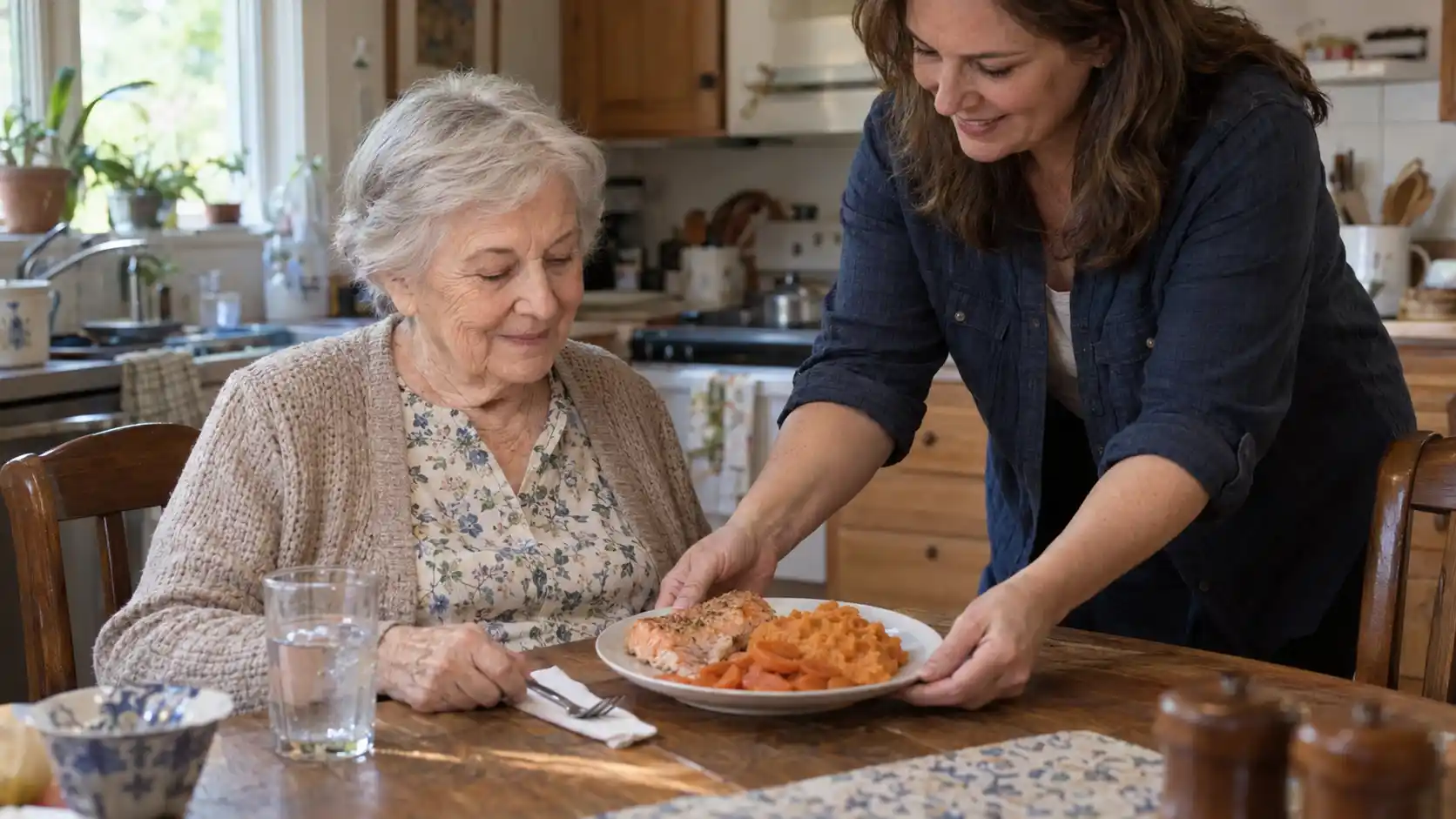
Which part of cooking do you still enjoy? If you love seasoning the soup but chopping carrots tires your hands, a Cottage Home Care caregiver can help with the chopping while you decide how much cumin to add. You keep the part of the meal that feels like yours.
When meal prep is part of your care plan, a caregiver can help you make a grocery list, compare sodium on the foods you buy, and prepare the dishes you choose. If you prefer beans and your spouse likes fish, you might plan rice and peas to share and keep the toppings separate. A caregiver can also label an extra portion with the dish and date so it’s easy to find the next time you want it.
If you or a family member could use that kind of support, start by telling us one meal you want to keep making and one task you’d gladly hand over. We’ll talk through the help available in your area and any written food instructions from your care team.
Sources
Related articles

 Alex TullaoRegistered Nurse