Winter Safety for Adults: A Complete Guide to Prevent Falls, Illness, and Winter Risks
Introduction
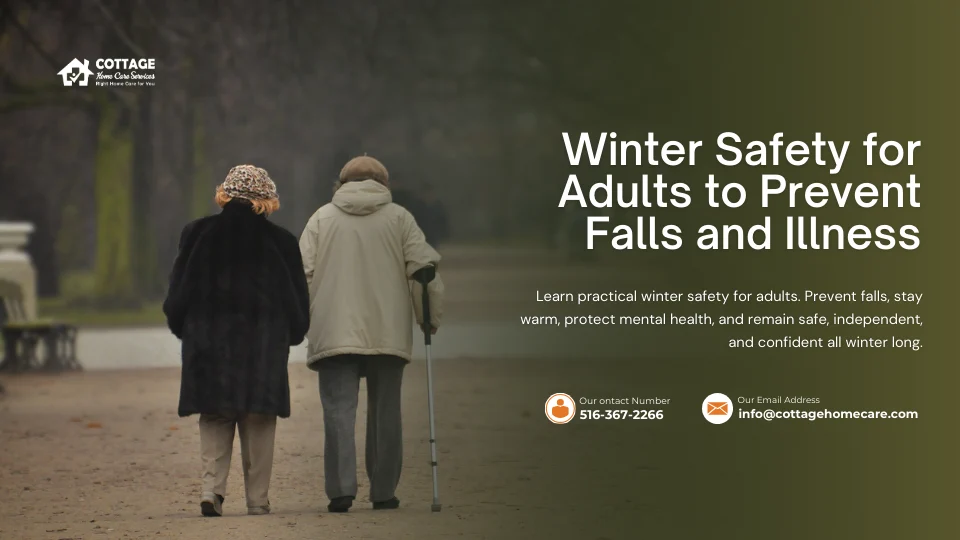
Winter safety for adults comes down to a handful of practical habits that keep you steady, healthy, and independent through the cold months. Winter brings hazards that are easy to underestimate: icy sidewalks, dim hallways, freezing temperatures, and long stretches spent indoors. These risks touch adults of every age, but older adults face a higher chance of falls, illness, and low mood during winter specifically.
A single slip on ice can turn into a broken bone, a hospital stay, or a long recovery. Most of those injuries, though, are preventable with a few consistent habits. This guide walks through how adults can stay safer this winter, whether you're managing your own home, caring for a parent, or working as a home care professional.
How Can Adults Stay Safe During Winter?
Three things matter most: preventing falls, avoiding cold-related illness, and protecting mental health through darker, shorter days. In practice that means non-slip shoes, clear walkways, better lighting, safer heating, and staying active and connected indoors when the weather keeps you in.
Why Winter Safety Matters
Winter is a genuinely riskier season. Ice, snow, and slush turn familiar sidewalks and entryways into hazards, even ones you've walked a hundred times before. As people age, balance, vision, and muscle strength can decline, and cold weather makes it worse: muscles and joints stiffen, reaction time slows, and shorter daylight hours make hazards harder to spot in the first place.
Common Winter Risks
Falls are the leading cause of winter injury, usually from ice-covered sidewalks, wet entryways, loose rugs, or cluttered floors. Cold temperatures also worsen arthritis, heart disease, and breathing problems, and hypothermia can happen indoors too if heating is inadequate. Then there's Seasonal Affective Disorder, or SAD: reduced sunlight can bring on low mood, fatigue, and a lack of motivation that often goes unnoticed until it starts affecting everyday safety and self-care.
Outdoor Winter Safety Tips
- Wear non-slip, rubber-soled shoes
- Walk slowly with short steps on ice
- Keep hands free for balance instead of carrying bags
- Avoid going out during active storms
- Use handrails whenever they're available
Indoor Winter Safety Tips
- Improve lighting in hallways and bathrooms
- Remove loose rugs and clutter from walkways
- Install grab bars in bathrooms
- Use non-slip mats near entrances and tubs
- Keep walkways clear of boxes, cords, and furniture
Staying Warm Safely
- Dress in layers indoors rather than cranking the heat
- Use space heaters with automatic shut-off only
- Keep heaters well away from curtains and furniture
- Never use an oven to heat a room
Nutrition, Hydration, and Mental Health
Many adults drink less water once the weather turns cold, which leads to dehydration without the usual summer warning signs. Regular water and warm, balanced meals help maintain strength and energy through the season. Mental health deserves the same attention: winter can deepen loneliness and low mood, so opening curtains during the day, keeping up social contact, and sticking to a daily routine all help more than people expect.
Staying Active Indoors
- Chair exercises
- Stretching routines
- Walking laps indoors when it's too icy outside
- Gentle yoga or balance exercises
Common Winter Safety Mistakes
- Brushing off a small slip instead of checking for injury
- Overusing space heaters or leaving them unattended
- Staying inactive for long stretches
- Waiting too long to ask for help
Winter Safety Checklist
| Area |
Risk |
Simple Fix |
| Entryway |
Ice slips |
Ice melt and mats |
| Bathroom |
Falls |
Grab bars and mats |
| Heating |
Fire risk |
Safe heaters only |
| Mental Health |
SAD |
Light and routine |
Winter Safety for Seniors, Families, and Home Care
For seniors, winter safety is really about protecting independence. That means fall prevention, medication reviews, an emergency alert system within reach, and regular wellness checks rather than waiting for a problem to show up. Family members can help just by clearing snow and ice, checking that heating systems actually work, calling in regularly, and watching for mood or behavior changes that might signal something's off.
Home care agencies play a role here too, and this is where Cottage Home Care Services comes in. Our aides build winter-specific care into a client's plan: fall prevention support, help staying active and connected indoors, and coordination on things like Personal Emergency Response System (PERS) devices for clients whose Medicaid program covers one. If you're caring for a loved one this winter and want a second set of eyes on their safety at home, reach out to Cottage Home Care Services at 516-367-2266 or info@cottagehomecare.com.
Conclusion
Winter safety for adults, boiled down, is preparation plus a few steady habits: safer footwear, better lighting, daily movement, and staying connected to other people. None of it is complicated. It just has to actually happen, consistently, for the season to stay safe instead of risky.


 Alex TullaoRegistered Nurse