Key Takeaways
- Home care is non-medical help with bathing, dressing, meals, mobility, and daily routines.
- Home health care is skilled care at home, such as nursing or physical therapy, ordered by a doctor or other allowed provider.
- Original Medicare may cover eligible, part-time home health services, but not ongoing personal care when that is all a person needs.
- Medicaid may pay for certain personal care services through state programs when the person and service qualify.
- Some families need both: skilled visits for treatment and regular home care for help between visits.
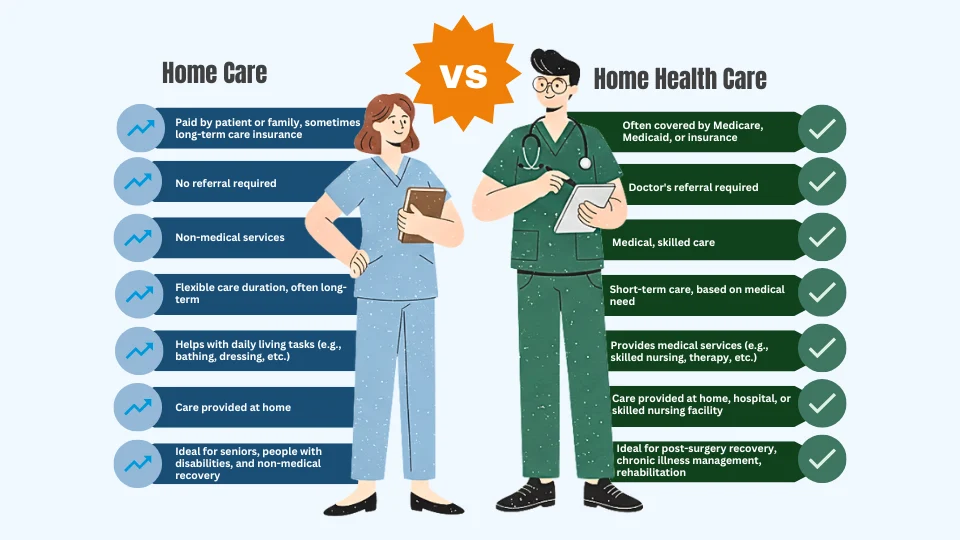
The key difference between home care vs. home health care is the kind of help your relative needs. Home care supports daily life. Home health care treats a medical need. They can work together, but one does not replace the other.
If your parent needs help with a shower and breakfast, start by looking at personal home care. If a nurse must treat a wound, or a therapist must help your parent recover after surgery, ask their doctor about home health care. If both needs are present, you may need two kinds of support.
This guide explains services, costs, coverage, and the questions to ask before you arrange care. You can use it even if you do not yet know which type your family needs.
In This Guide
Home Care vs. Home Health Care at a Glance
What Non-Medical Home Care Includes
What Home Health Care Includes
What Medicare, Medicaid, and Insurance Cover
How Costs and Schedules Compare
How to Choose Care for Your Parent
Using Both Types After a Hospital Stay
What to Check Before You Choose an Agency
What to Prepare for Your First Call
Can a Family Member Be Paid to Help?
Frequently Asked Questions
Home Care vs. Home Health Care at a Glance
Both services take place in your relative's home. The main difference is whether the person needs help with daily tasks or needs skilled medical care.
| Question | Home care (non-medical) | Home health care (skilled) |
|---|
| Main goal | Help a person manage everyday life at home. | Treat an illness, injury, or medical condition at home. |
|---|
| Common help | Bathing, dressing, meals, light chores, companionship, and routine support. | Skilled nursing, wound treatment, and physical, occupational, or speech therapy. |
|---|
| Who provides it | Personal care aides, companions, and other trained home care workers. | Licensed nurses, therapists, and home health aides on an approved plan. |
|---|
| Doctor's order | Usually not needed for private-pay non-medical care. Medicaid-funded services may need an assessment and approval. | Required for Medicare-covered home health services, along with other eligibility conditions. |
|---|
| Typical schedule | A few hours, daily visits, evenings, or longer shifts based on need and availability. | Part-time or intermittent visits set by the medical plan. |
|---|
| Common payment | Private pay, some long-term care insurance, or eligible Medicaid programs. | Medicare, Medicaid, or health insurance if medical and plan requirements are met. |
|---|
| Can they work together? | Yes. Home care can help between skilled visits. | Yes. Medical staff can focus on treatment and therapy. |
|---|
Quick way to decide
Ask: Does my relative need help living at home, help treating a health condition, or both? The answer points you toward the right kind of service.
What Non-Medical Home Care Includes
Non-medical home care helps with tasks a person does each day. It can help a parent stay at home when family members work, live far away, or cannot be there for every routine.
- Personal care: bathing, grooming, dressing, toileting, and moving safely from one place to another.
- Meals and home tasks: preparing food, light housekeeping, laundry, and help with a daily routine.
- Companionship: conversation, hobbies, walks when safe, and help staying involved in familiar activities.
- Daily reminders: reminders for medicines the person takes on their own, when allowed under the care plan and state rules.
- Family relief: scheduled help so a family caregiver can attend work, rest, or handle other needs.
A non-medical caregiver does not replace a nurse. They should not give injections, change wound dressings, make medical decisions, or change a medication dose unless they are separately authorized and qualified for a specific task under applicable rules.
If bathing or dressing is the main challenge, see personal care help with daily tasks. If the person needs company and simple daily support, companion care at home may also fit.
What Home Health Care Includes
Home health care is medical care given in the home. A doctor or another allowed health professional orders care based on the person's needs. A qualified home health team follows that care plan.
- Skilled nursing: wound care, injections, or care for certain medical conditions when ordered and within the nurse's role.
- Physical therapy: exercises and treatment to help with strength, balance, and movement.
- Occupational therapy: help with skills used for everyday tasks, such as getting dressed or moving around the home.
- Speech therapy: support for speech, swallowing, or related needs when medically appropriate.
- Home health aide visits: some personal care tasks, such as bathing, may be part of a qualifying skilled home health plan.
A home health aide is not the same as a registered nurse. The aide's duties follow the care plan and applicable rules. Nurses and therapists provide the skilled clinical treatment.
A person does not have to stay in a hospital first to qualify for Medicare home health care. They do need to meet the coverage rules. The services may continue while those rules are met, so home health is not always limited to a fixed number of weeks.
What Medicare, Medicaid, and Insurance Cover
Original Medicare: Skilled care under set conditions
Original Medicare may cover home health when your relative is homebound, needs qualifying part-time or intermittent skilled care, has an approved care plan, and uses a Medicare-certified home health agency. A doctor or other allowed provider must assess and order the care.
If your relative qualifies, Medicare says covered home health services have no out-of-pocket charge. Medical equipment may have a separate cost: after the Part B deductible, the person generally pays 20% of the Medicare-approved amount for covered equipment.
Original Medicare does not pay for 24-hour care at home, meal delivery, or ongoing personal care and housekeeping when those are the only services needed. A home health aide may provide limited personal help as part of a qualifying skilled plan, not as a stand-alone long-term benefit.
Use the official Medicare home health coverage guide to check each condition. If your relative has Medicare Advantage, ask the plan about its network, prior authorization rules, and any extra home support benefits.
Medicaid: Some states cover help with daily life
Medicaid can cover personal care and other home and community-based services for people who meet their state program's rules. Some programs have limits on hours, age, care needs, or available enrollment places. A state assessment may be needed.
These benefits are not the same as Medicare home health. Start with your state Medicaid office or the official Medicaid home care overview to learn which programs exist.
Private pay and long-term care insurance
Private pay means you or your family pay the agency directly. You can ask about the care schedule you need without waiting for a Medicaid approval. Staffing, minimum shifts, and start dates still need to be confirmed.
Long-term care insurance may pay for some personal care if the policy conditions are met. Ask the insurer whether you need an assessment, a licensed agency, or a waiting period. See private-pay home care options for the type of support Cottage discusses with families.
How Costs and Schedules Compare
Home care is often priced by the hour or shift. A home health provider usually bills for covered skilled care under the person's health plan, or gives a quote when the care is not covered. Comparing a weekly home care bill with one nursing visit can be misleading because the services and hours are different.
Ask for a written cost breakdown
- Home care: What is the hourly or shift rate? Is there a minimum visit length? Do evenings, weekends, or holidays cost more?
- Home health: Is the agency in the plan network? Does Medicare or the insurer cover the ordered visits? What services are excluded?
- Changes: What happens if care hours increase, the caregiver is absent, or a family member needs to cancel?
- Other costs: Are transportation, supplies, or equipment included? Are there any fees beyond the quoted care rate?
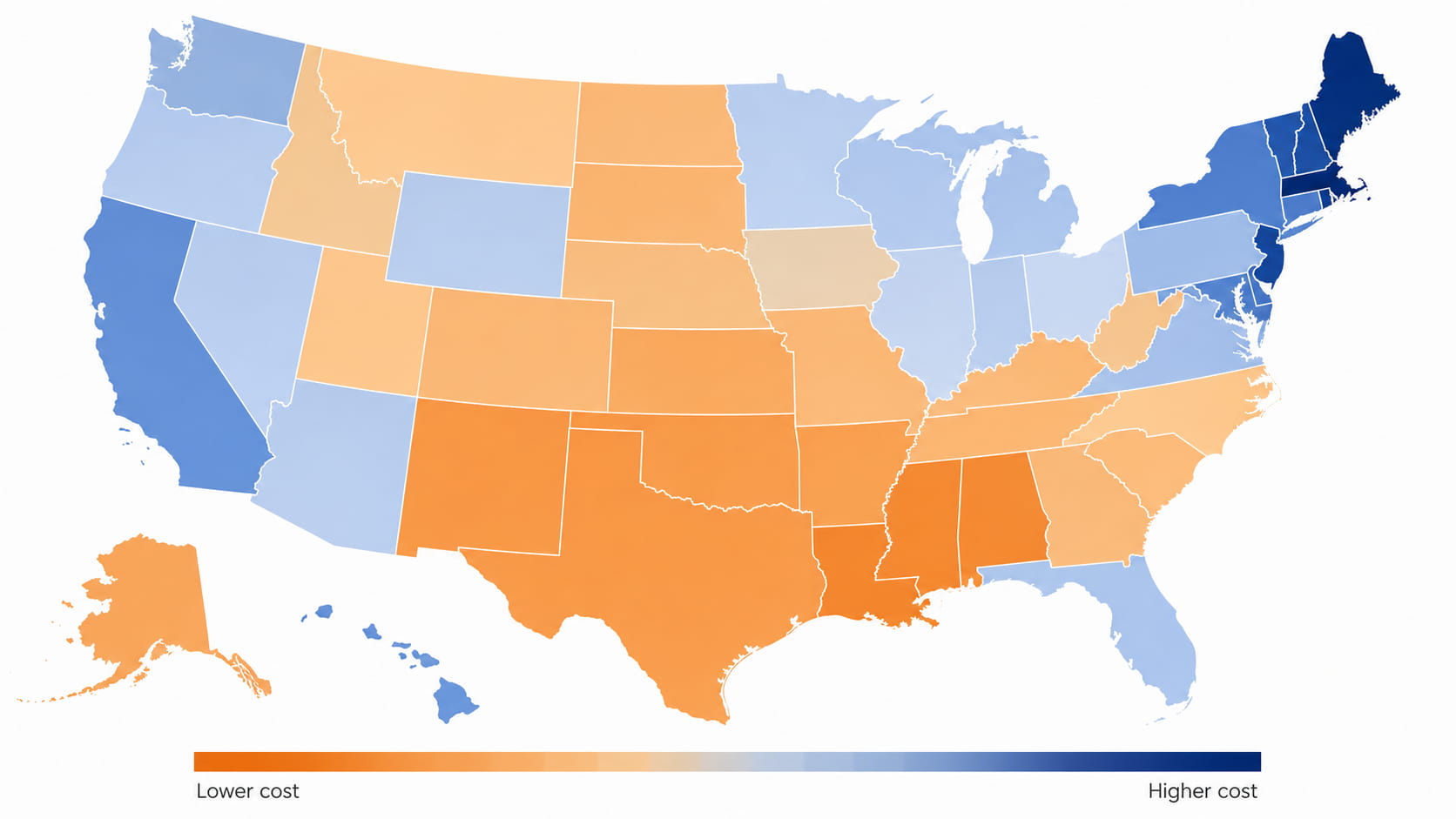
For a useful estimate, write down the hours of help needed in a normal week, then multiply those hours by the agency's written rate. Do not rely on a nationwide average as your family's price. Ask your insurer and each agency to confirm costs before care begins.
How to Choose Care for Your Parent
Think about the task that is hardest for your relative to do safely. These common situations can point you toward the right first call.
| Your relative needs... | Best first step | Why |
|---|
| Help bathing, dressing, cooking, and getting to the bathroom. | Ask a non-medical home care agency about personal care. | These are daily living tasks, not medical treatment. |
|---|
| A nurse to check a wound or give an ordered injection. | Ask their doctor about skilled home health care. | A licensed professional must provide the clinical service. |
|---|
| Physical therapy after surgery and help with meals each day. | Ask the doctor about home health and ask a home care agency about daily help. | Therapy visits do not cover every daily task. |
|---|
| Help keeping a routine with dementia, plus a new medical concern. | Discuss the medical concern with a clinician and ask about non-medical daily support. | The two needs may call for different workers. |
|---|
| Care overnight because they cannot be left alone. | Discuss a longer home care schedule and what coverage is available. | Medicare home health visits are not 24-hour supervision. |
|---|
If your parent has new chest pain, major trouble breathing, stroke signs, or another life-threatening problem, call 911. Home care and routine home health visits do not replace emergency medical care.
Using Both Types After a Hospital Stay
A hospital discharge often shows why families may need two services. A skilled home health nurse may visit to check a wound. A therapist may come on set days. Your relative may still need help getting dressed, cooking, or moving around in the morning and evening.
Example: Two kinds of support
A doctor orders home health visits after surgery. A nurse handles the medical care and a therapist works on safe movement. A separate non-medical caregiver helps with breakfast, bathing, and the evening routine. Family members keep the discharge instructions and know whom to call about medical changes.
Before the person leaves the hospital
- Ask the discharge planner which care tasks require a nurse or therapist.
- Ask whether a home health referral was placed and when the first visit is expected.
- Write down which daily tasks your relative still cannot do alone.
- Choose who will cover meals, bathing, toileting, and transportation between visits.
- Keep the discharge summary, medication list, and follow-up appointment dates easy to find.
If the care gap includes nights or full-day supervision, read the 24-hour home care planning guide. Coverage for those extra hours must be checked separately.
What to Check Before You Choose an Agency
Choosing an agency is about more than finding an open slot. Ask how care will work for your family on an ordinary day, and what the agency does if the plan changes.
- License: What license or registration applies to the agency in your state, and how can you verify it?
- Staff: What training, screening, and supervision are used for the tasks your relative needs?
- Care plan: Who writes it? Can your family explain needs, routines, language, and safety concerns?
- Backup: What happens if the assigned worker is sick or unable to come?
- Medical care: If your relative needs wound care, injections, or therapy, is the provider a qualified home health agency?
- Cost and coverage: Can the agency explain rates, benefits, and any services the family must pay for?
For Medicare-certified home health agencies, the federal Care Compare home health directory lets families check certified providers and quality information. For a non-medical home care agency, use your state's licensing or consumer protection resources.
What to Prepare for Your First Call
A little preparation can make the first call much clearer. You do not need a perfect care plan. Bring the main facts and explain what your relative can and cannot do alone.
- Location: State, county, and ZIP code where care is needed.
- Daily help: Tasks such as bathing, meals, dressing, mobility, or company.
- Medical needs: A doctor's order or recent discharge instructions, if skilled care is needed.
- Schedule: Which days and hours are hardest for the family to cover.
- Payment: Medicare, Medicaid, long-term care insurance, or private-pay plans.
- Preferences: Language, mobility needs, caregiver preferences, and the best person to contact.
Cottage Home Care can discuss non-medical personal assistance, care schedules, private-pay options, and whether a state-funded program might be worth checking where services are available. Our team cannot replace a clinician or approve an insurance benefit.
Need help planning non-medical care at home?
Tell Cottage your relative's county, daily needs, and the hours your family needs help. You can ask what services are available, how intake works, and what costs or eligibility checks apply. There is no need to decide on a full schedule before you call.
Ask Cottage about care options | 516-367-2266
Can a Family Member Be Paid to Help?
Some state Medicaid or self-directed care programs may allow an eligible family member to provide approved personal care for pay. The person receiving care must qualify. The worker may need screening, training, or enrollment, and some family relationships and hours are not allowed. Getting paid is not automatic.
A paid family caregiver is not the same as a Medicare home health nurse. Ask the state program about the type of work allowed, who may be hired, how payment works, and the date approved hours could begin. If you are applying for agency work, ask the employer about current openings, training needs, and the actual pay rate before applying.
Frequently Asked Questions
What is the main difference between home care and home health care?+
Home care is non-medical help with daily tasks. Home health care is skilled medical care, such as nursing or therapy, ordered by an authorized health professional. A person can need both.
Does Original Medicare cover non-medical home care?+
Usually no. Original Medicare does not pay for ongoing personal care, meal prep, or housework when those are the only needs. It may cover limited home health aide help as part of a qualifying skilled home health plan. See
Medicare coverage rules.
Can a home health aide help with bathing?+
Yes, a home health aide may help with bathing or grooming when that help is part of a qualifying skilled home health plan. Original Medicare does not cover personal care alone as a long-term home health benefit.
Do you need a hospital stay before home health care?+
No. A hospital stay is not required for Medicare home health coverage. The person must meet the medical need, homebound, order, and agency conditions.
Can home care and home health care be used together?+
Yes. For example, a nurse may treat a wound during a planned visit while a non-medical aide helps with meals and getting dressed on other days. Ask each provider to explain its own tasks.
Does Medicaid pay for personal care at home?+
It can. Medicaid programs in some states cover personal care or home and community-based services for eligible people. The care needs, available services, and worker rules depend on the specific state program.
What costs should I compare?+
For home care, ask about the hourly rate, minimum shift, weekend fees, and how many hours are needed. For home health, ask whether each ordered visit is covered and what supplies or equipment could cost extra.
Is home care or home health better for a person with dementia?+
That depends on the need. Non-medical home care may help with routine, meals, and supervision. Skilled home health may be needed if a doctor identifies a separate medical need. One does not replace the other.
Does home health care include overnight or 24-hour help?+
Medicare-covered home health care is normally part-time or intermittent, not 24-hour supervision. Ask about separate home care options if your relative needs someone there overnight.
Can I get paid to care for a parent or relative?+
Some Medicaid or other programs permit pay for certain relatives and approved tasks. Family relationship limits, training, and permitted hours vary. Check with the state program; payment is not guaranteed.
The Next Step for Your Family
Start by writing down what your relative needs help with this week. Put medical tasks in one group and daily living tasks in another. Ask the doctor about skilled care and ask a home care agency about personal help. If the lists overlap, build a plan for both.
For daily non-medical support, contact Cottage Home Care to discuss the county where care is needed, the tasks your family wants help with, and the possible schedule. We can explain our care options and the next intake step without promising a start date or coverage result.
Official coverage sources: Medicare home health services and Medicaid home and community services. Review your own plan and state rules before making payment decisions.

 Sabine DurgaramDPS/RN