Key Takeaways
- Home care supports daily living: it may include hands-on help with bathing, dressing, meals and light household tasks.
- Home care is different from home health: skilled nursing and therapy are medical services delivered by licensed professionals.
- Care plans depend on the person: the right tasks, schedule and caregiver should match actual needs.
- Coverage is program-specific: Medicare and Michigan Medicaid Home Help have different eligibility and service rules.
- Start with practical questions: ask about caregiver responsibilities, qualifications, schedules, and backup coverage.
When a parent needs help getting dressed or preparing meals, it can be hard to know what type of care to ask for. What is home care, exactly? This guide explains what it means, what a caregiver can do, what is different about skilled home health care, and where Michigan families can start.
What Is Home Care? Quick Answer
Home care means support provided where someone lives. In everyday use, nonmedical home care helps with bathing, dressing, meals, light household needs, and other daily tasks. Skilled home health care is different: it involves medical services from licensed professionals. The right choice depends on the person’s needs.
In This Guide
- What Is Home Care?
- What Does Home Care Look Like in Real Life?
- Home Care vs. Home Health Care: What Is the Difference?
- Who Might Need Home Care?
- How Does Home Care Work?
- How Can Michigan Families Arrange and Pay for Home Care?
- What Do Family Members Still Do?
- Questions to Ask Before Starting Home Care
- Frequently Asked Questions
Need help understanding care at home?
Tell the Michigan team which daily tasks are difficult. We can discuss nonmedical care and explain how families can explore available payment options.
Call Cottage: (313) 762-4272
What Is Home Care?
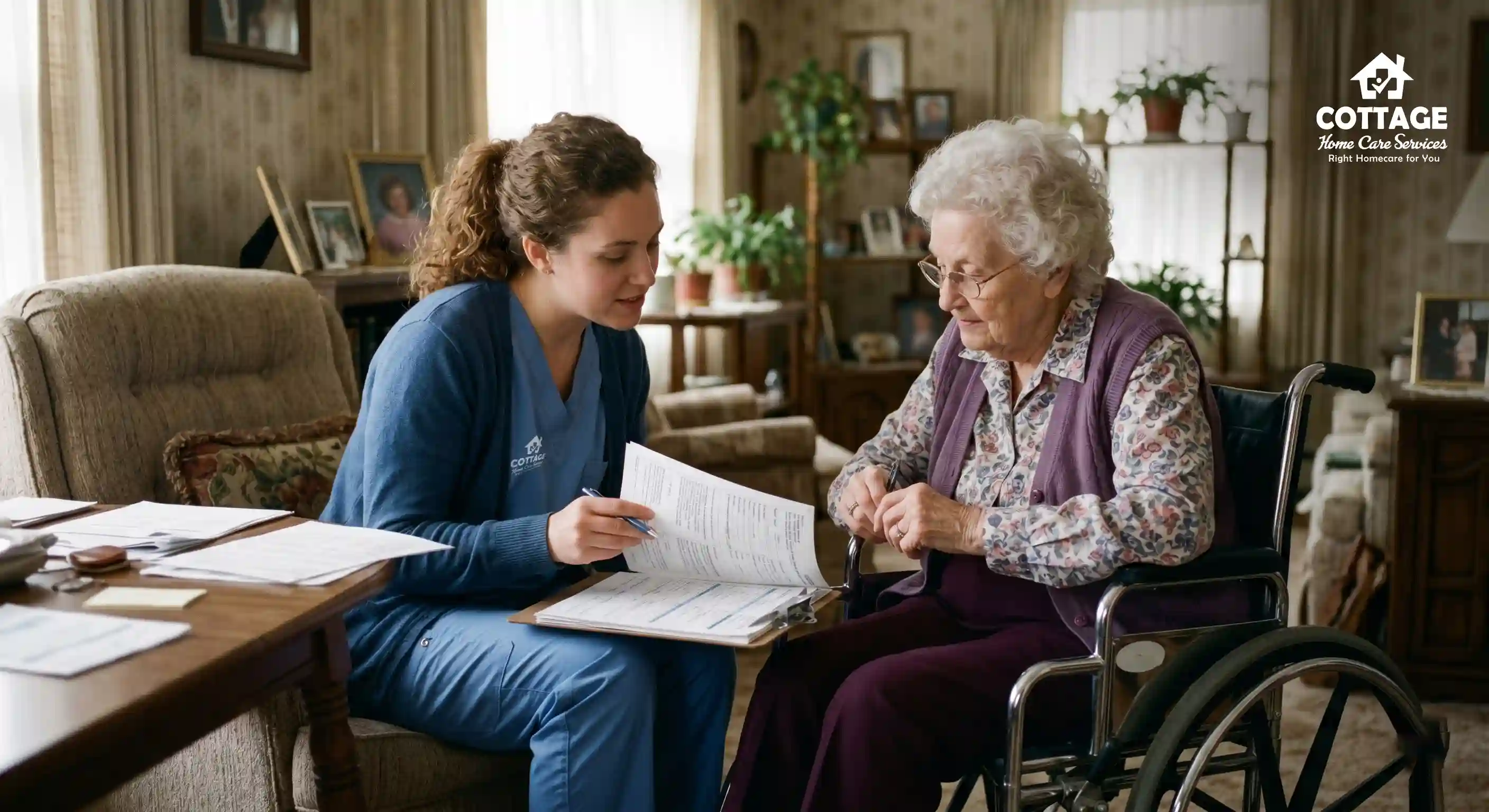
Home care is help delivered in a person’s own home so they can manage daily life. It can be as simple as help getting dressed, preparing lunch, or doing laundry. Some people also receive medical services at home, but those are usually called home health care and involve licensed clinicians.
The National Library of Medicine’s MedlinePlus home care guide describes home care as support that helps older adults, people living with disabilities, or people with ongoing health needs stay at home. In everyday conversation, most families mean a caregiver helping with personal needs and household routines.
For example, a daughter may notice her father skips meals because standing at the stove is difficult. A home caregiver might help him prepare food and get ready for the day. That is different from a nurse treating a wound.
What Does Home Care Look Like in Real Life?
Think of home care as help with the parts of the day that have become difficult. The right plan is based on what a person can still do and where they need hands-on support.
| Everyday situation | Possible home-care help |
|---|
| Mom feels unsteady while bathing. | Help with bathing, dressing, and safe movement during the routine. |
| Dad can no longer stand long enough to cook. | Meal preparation and help with eating if needed. |
| Clothes and bedding are piling up. | Light laundry and basic household tasks. |
| A relative needs help getting from bed to a chair. | Hands-on transfer assistance within the caregiver’s training and care plan. |
| A person lives alone and wants more company. | Conversation and companionship through an appropriate private-pay plan. |
Not every caregiver or funding program covers every task. Ask the provider what is included before care begins.
Home Care vs. Home Health Care: What Is the Difference?
The names sound alike, but the services are not the same. Nonmedical home care supports daily living. Home health care provides skilled medical services when they are needed and ordered or approved through the appropriate clinical process.
| Question | Nonmedical home care | Skilled home health care |
|---|
| Who provides it? | Personal care aides or other qualified caregivers | Licensed nurses, therapists, or other clinicians |
| What is the main goal? | Help with everyday activities | Treat or monitor a medical need |
| Common examples | Bathing, dressing, meals, light household help | Skilled nursing, wound care, physical therapy |
| Does Medicare cover it? | Generally not when this is the only care needed | Some services when Medicare rules are met |
Medicare explains its requirements on the official home health services coverage page. Home care is not a replacement for urgent medical treatment, nursing services, or emergency response.
Who Might Need Home Care?
Home care is not just for older people. It may help an adult living with a disability, a person whose strength has changed after an illness, or a family managing long-term daily support.
Consider asking about home care when someone:
- Needs another person’s help to bathe, dress, use the bathroom, or eat.
- Has trouble completing meals, laundry, or basic daily tasks.
- Can stay home but needs help during parts of the day.
- Relies heavily on family members who are struggling to cover daily care needs.
If confusion, weakness, or a change in behavior appears suddenly, seek medical advice promptly rather than assuming a caregiver alone can fix it. To recognize patterns over time, see our guide to signs someone may need home care.
How Does Home Care Work?
Home care is usually built around a person’s specific needs rather than a fixed list of chores. Here is what a typical setup looks like:
- Talk about the needs. Write down what is hard to do, when help is needed, and what the person wants to keep doing independently.
- Choose the right type of help. Decide whether the main need is hands-on personal care, household support, clinical care, or a combination.
- Check payment options. Ask about private pay, applicable insurance benefits, or Michigan Medicaid programs.
- Review the proposed care plan. Confirm tasks, timing, caregiver qualifications, and a backup plan if a visit cannot happen.
- Revisit the plan. Needs can change after an illness, a fall, or a change in family schedules.
For provider interview questions, use our Michigan home-care agency checklist.
How Can Michigan Families Arrange and Pay for Home Care?
Michigan families may use private pay or, when eligible, publicly funded support. The programs below have different rules, assessments, and covered services.
Michigan Medicaid Home Help
The Michigan Department of Health and Human Services (MDHHS) Home Help program supports certain eligible people who need help with daily activities. Eligibility and the approved tasks and hours are determined through the state’s process. Some household tasks may be included when authorized. Companionship alone, reminders, transportation, and general supervision are not Home Help covered services. See Cottage’s Michigan Medicaid home-care information for help exploring this path.
Other options
Some people may qualify for other Michigan long-term support programs, depending on their circumstances. Private-pay care is another route for families who want to arrange suitable help directly. Our Michigan home-care cost guide explains the questions to ask about pricing and payment.
Do not assume a program will pay for every type of support or that eligibility guarantees immediate services. Ask the program or care provider to review your specific situation.
What Do Family Members Still Do?
Home care can share the daily work, but families often remain involved. They may help with appointments, make decisions with the person receiving care, and tell the care team when routines change.
Before the first visit, prepare a simple note with preferred meals, communication needs, mobility concerns, emergency contacts, and a list of tasks the caregiver has agreed to do. This gives everyone a clearer start.
A caregiver should not be asked to perform medical procedures or handle medicines beyond their training, role, and authorized care plan.
Questions to Ask Before Starting Home Care
- Which tasks can the caregiver help with, and which are not included?
- Is the help nonmedical, or do we need a separate home health provider?
- What training and experience match our family member’s needs?
- Can the caregiver communicate in our preferred language?
- What happens if the assigned caregiver is unavailable?
- How will changes in needs or schedules be handled?
- What will Medicaid, insurance, or private pay actually cover?
These questions help families understand the service before making a commitment. For a deeper look at service categories, visit Home Care Services in Michigan.
Frequently Asked Questions
Is home care the same as having a nurse at home?
No. Nonmedical home care focuses on daily living tasks. Skilled home health care involves medical services provided by licensed professionals.
What is an example of home care?
A caregiver helping an older adult get dressed, prepare breakfast, and complete light laundry is a common example.
What is the main purpose of home care?
The purpose is to provide the right help at home for daily needs while supporting the person’s choices and routines.
Is home care only for seniors?
No. Adults of different ages may need home care because of disability, illness, or trouble with daily tasks.
What is the difference between personal care and companion care?
Personal care usually includes hands-on support with daily activities such as bathing and dressing. Companion care focuses on company and social connection.
Does Medicare pay for everyday home care?
Medicare generally does not cover custodial or personal care when it is the only care needed. Eligible skilled home health services follow separate Medicare rules.
Can Medicaid pay for home care in Michigan?
Michigan Medicaid Home Help may cover state-authorized assistance for eligible people. MDHHS reviews eligibility and approved tasks.
Does Michigan Home Help cover reminders and companionship?
No. MDHHS lists prompting, reminders, supervision and transportation among services not covered by Home Help.
Can a family member provide paid Home Help care?
In some cases, eligible family members can be enrolled to provide authorized care. State enrollment rules and exclusions apply.
How do I know whether my parent needs home care or home health?
Ask whether the need is help with daily activities or treatment from a licensed medical professional. A doctor can advise on medical needs.
Find out what home care could look like for your family
Cottage helps Michigan families explore nonmedical daily support and learn about the Michigan Home Help process. Call to discuss the next step for your situation.
Call Cottage: (313) 762-4272
Official reference information: MedlinePlus: Home Care Services · Medicare: Home Health Services · MDHHS: Home Help.


 Alex TullaoRegistered Nurse