Key Takeaways
- Hourly cost: Maryland home care is about $35 an hour based on CareScout's 2025 median.
- Monthly cost: At $35 an hour, 20 hours a week is about $3,033 a month. At 40 hours a week, it is about $6,067 monthly, before added agency fees.
- Payment: Families may use private pay or approved Medicaid services. Medicare has limits on personal care.
- Medicaid: Community First Choice (CFC) has no waitlist, but a person needs full Medicaid and a state care assessment. The Community Options Waiver has a registry.
- Family caregivers: Some relatives can be paid after approval and hiring checks. This is not automatic.
- Next step: List the daily tasks your relative needs help with, then check coverage and talk through your options.
Home care in Maryland costs about $35 per hour based on CareScout's 2025 state median for non-medical care. At that rate, 20 hours a week is about $3,033 a month. This guide explains rates, payment options, and what may change your costs.
Your actual cost may be higher or lower based on the schedule, location, care needs, and provider. Start by listing how many hours of help are needed each week. Then compare the monthly estimate, coverage options, and agency quote before choosing care.
What Does Home Care Mean in Maryland?
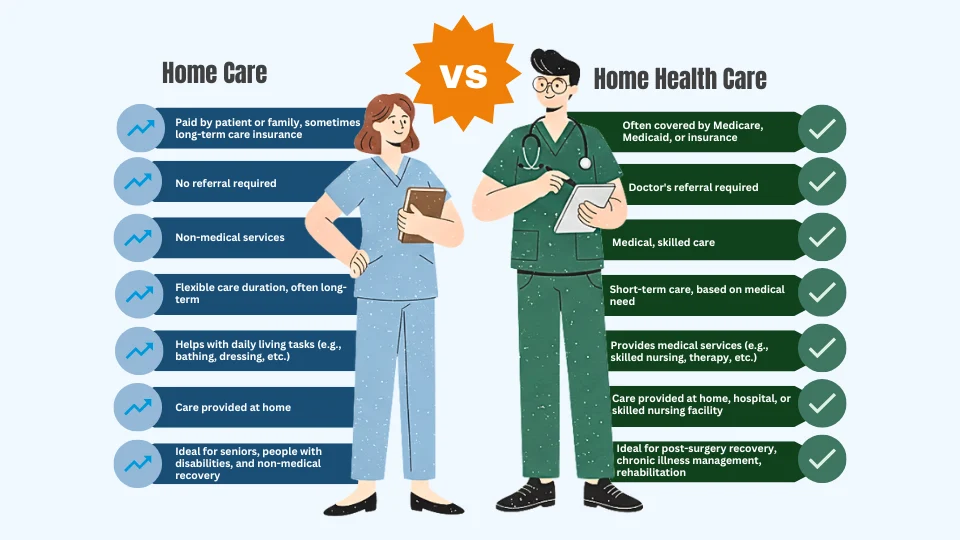
Quick answer: Home care is help with daily life in your own home. A caregiver can help with personal care and routine tasks. Skilled home health care is different. It includes medical care, such as nursing or therapy, when a person qualifies.
You may hear two short terms when you talk with a care agency or Medicaid office:
- ADLs (daily living tasks): Bathing, dressing, using the toilet, eating, and moving from a bed to a chair.
- IADLs (home tasks): Meals, shopping, light chores, and other tasks that help a person live at home.
In Maryland, Residential Service Agencies (RSAs) are licensed and overseen by the Office of Health Care Quality (OHCQ). An RSA may provide different levels of care based on its license and staff. Ask what your caregiver is trained and allowed to do. Read Maryland's RSA oversight rules.
What Services Can a Home Caregiver Provide?
Quick answer: Most families start with help for a few daily tasks. The care plan should name what is needed, how often visits happen, and who to call if needs change.
- Help with bathing, dressing, grooming, and using the toilet.
- Help moving safely from room to room or getting out of bed.
- Meal preparation and support at mealtimes.
- Light housekeeping linked to the person's needs.
- Companionship and routine safety check-ins.
- Medication reminders when allowed by the care plan.
- Respite visits so an unpaid family caregiver can take a break, when offered or covered.
Help with dementia can be part of a care plan. Tell the agency if your relative gets confused, wakes at night, or may leave the home alone. Ask what support is available and what the caregiver can safely do.
A personal care aide is not the same as a nurse. If your relative needs wound care, injections, or other medical work, ask a health professional which skilled services are needed. Care plans, service limits, and staffing depend on the provider and payment method.
How Much Is Home Care in Maryland in 2026
Quick answer: Home care in Maryland is about $35 per hour from CareScout's 2025 state median for non-medical care. At 40 hours a week, that's about $6,067 a month. The table below is for planning, not a Cottage price quote.
Home care
$6,067
Est. monthly cost at $35/hour for 40 hours a week.
Assisted living
$7,172
2025 Maryland median monthly rate; one-bedroom private unit.
Nursing home
$12,927
2025 Maryland median per month; semi-private room.
At the same $35 hourly median, 20 hours of care each week is about $3,033 a month. The CareScout survey uses 44 hours a week for its full-month figure of $6,673. We show 40 hours above because it is easier to plan a standard workweek. Both figures use 52 weeks divided by 12 months.
These costs are not direct substitutes. Assisted living and nursing home care have different services and living costs. The right choice depends on care needs, not just price.
Ask each agency for a written quote. Check the minimum visit length, weekend rates, extra fees, cancellation rules, and what happens when a caregiver is away. For the original figures, see the CareScout 2025 Maryland state tables (PDF).
How Do Maryland Families Pay for Home Care?
Quick answer: You may pay from your own funds, use an approved Maryland Medicaid program, or use a long-term care insurance benefit if your policy covers it. Medicare covers certain skilled home health services. It does not pay for personal care alone.
Private Pay
With private pay home care in Maryland, your family pays the agency. You can ask for a schedule based on the tasks and hours you need. Care can begin after the agency confirms staff, the plan, and the price. Medicaid approval is not needed for private pay.
Medicare
Medicare may cover part-time skilled nursing, therapy, and some aide services for people who meet its home health rules. It does not cover ongoing help with bathing, dressing, or meals when that is the only care needed. Read Medicare's official home health coverage guide to check the rules.
Maryland Medicaid: Community First Choice and Community Options
These programs are not the same. Both can help some eligible people stay at home, but each has its own rules.
Community First Choice (CFC)
Who may qualify: People with full Medicaid who live in the community and meet an assessed institutional level of care.
Waitlist: No separate CFC waitlist. Assessment and approval are still needed.
What it may cover: Approved personal assistance, nurse monitoring, home access aids, and other listed benefits.
Learn more: CFC program details
Community Options Waiver
Who may qualify: Adults 18 or older who meet nursing-facility level of care and the other program rules.
Waitlist: Most community applicants join a statewide registry. A nursing-facility route can differ.
What it may cover: Extra services, such as assisted living support and other waiver benefits, when approved.
Learn more: Community Options Waiver details
Need a starting point? Call Maryland Access Point at 844-627-5465. Ask about CFC or the Community Options registry. Cottage can also help you review which Maryland care programs may fit your relative.
If your relative has full Medicaid but does not meet the CFC level-of-care rule, ask about Community Personal Assistance Services (CPAS). That is a separate program with different eligibility rules.
What About Medicaid Income and Savings?
Do not judge eligibility from one income number online. The income and asset rules can differ by Medicaid category and waiver route. If one spouse needs care, ask about rules that may protect some resources for the spouse at home. A Maryland Medicaid eligibility worker can review your exact situation.
Can a Family Member Get Paid to Provide Care?
Quick answer: Sometimes. An adult child, sibling, or another trusted person may qualify as a paid caregiver under an approved care plan. The person getting care must qualify first. The caregiver must also meet worker rules.
If you already help your parent, tell the agency what tasks you do each day. Ask whether a family member can be hired for the approved care. A relative who acts as the person's legal representative may face extra limits. Spouse and parent rules must be checked for the exact program and service model.
Caregiver pay depends on the job terms and approved work hours. You should not count on a set wage or a paid start date before the state and agency review is complete.
For a step-by-step explanation, read our Maryland family caregiver pay guide. That page covers family worker roles in more detail, so this cost guide does not repeat every rule.
What If Your Parent Does Not Want Help?
Quick answer: Ask what kind of help your parent would accept first. Small, clear choices can feel easier than a full new care schedule.
- Ask what matters most. Your parent may want to keep making meals or getting dressed on their own. Find out what they want to keep doing.
- Begin with one task. Ask if help with a meal, laundry, or one daily routine would make the day easier.
- Offer a say in the plan. Ask what time visits would work and what kind of caregiver they would feel at ease with.
- Review the plan after a visit. Talk about what helped and what did not. Adjust the plan with the agency when possible.
If your relative is coming home from the hospital, tell the care team what help is needed for a safe return home. Some support may need to be arranged before discharge. Do not wait for a crisis to ask about the right kind of care.
How Can You Check a Maryland Agency License?
Quick answer: Look up the provider in the Maryland OHCQ Residential Service Agency list. Then ask about caregiver screening, nurse oversight, schedules, and costs.
- Find the agency name and license type in the state directory.
- Ask who hires, trains, and supervises the person who comes to your home.
- Ask which daily tasks the caregiver can do and which need a nurse.
- Ask who you call if the caregiver misses a visit or your needs change.
- Get a clear written rate, minimum shift, and cancellation policy.
- Ask how the agency handles concerns and updates the care plan.
Use the official Maryland OHCQ licensee directories to review Residential Service Agencies. Cottage Home Care Maryland's site lists its Maryland RSA license. You can verify it in the state records before arranging care.
Five Steps to Get Home Care Started
Quick answer: A short list of care needs, current coverage, and questions about cost can make the first call much easier.
- List daily care needs. Note bathing, meals, dressing, safe movement, and when someone must be there.
- Check current coverage. Find out if your relative has full Medicaid, Medicare, long-term care insurance, or no coverage for personal care.
- Ask about the right route. For Medicaid programs, start with Maryland Access Point or the program office. For private pay, ask an agency for an estimate.
- Review the care plan. Confirm approved tasks and hours for Medicaid, or the proposed schedule and fees for private pay.
- Confirm next steps. Ask who will call back, what forms are still needed, and when a caregiver could begin if approved and available.
Cottage Home Care Maryland can explain its intake steps, review care needs, help with paperwork, and discuss caregiver options. The state makes Medicaid eligibility and service decisions. Call (667) 400-0648 or use the Maryland contact page to talk through your situation.
Frequently Asked Questions
What is the difference between home care and home health care in Maryland?+
Home care helps with daily tasks, like bathing, meals, and getting dressed. Home health care includes skilled medical care for people who qualify. Ask the provider which tasks its staff can do.
Is there a waitlist for Medicaid home care in Maryland?+
Community First Choice does not have its own waitlist. A person still needs full Medicaid, a state care assessment, and an approved plan. The Community Options Waiver has a registry for most people applying from the community.
Is Maryland home care about $35 per hour?+
CareScout's 2025 Maryland median is $35 an hour for non-medical home care. At 40 hours a week, that is about $6,067 a month. Ask your agency for a current price quote today.
Does Community First Choice cover home changes?+
CFC lists accessibility adaptations as a covered service. A ramp or other change must fit the person's needs and be approved under the program rules. It is not an automatic home improvement benefit.
Can I get paid to care for my parent in Maryland?+
Possibly. Your parent must qualify for the program, and you must meet its worker rules. Your role as a legal representative may affect whether you can be paid. Ask the agency to check your case.
What happens to my spouse's savings if I apply for Medicaid?+
Some long-term care Medicaid routes have rules that protect certain resources for a spouse who stays at home. The amount and rules depend on the type of Medicaid. Ask a Maryland Medicaid eligibility worker before moving money or applying.
How can I tell if a home care agency is licensed?+
Check the agency in Maryland's OHCQ Residential Service Agency directory. You can also ask for the license number and what services the agency may provide.
Does Medicare pay for home care in Maryland?+
Medicare may cover skilled home health care for people who meet its rules. It does not pay for personal care alone when a person only needs help with daily tasks.
Not Sure Which Care Option Fits?
Tell our Maryland team what help your relative needs, which Medicaid or insurance coverage they have, and whether a family member hopes to provide care. We can explain Cottage's service options, paperwork support, and what to do next.
For Medicaid questions, you can also call Maryland Access Point at 844-627-5465. The state reviews eligibility and approves covered services.
|
|

 Alex TullaoRegistered Nurse