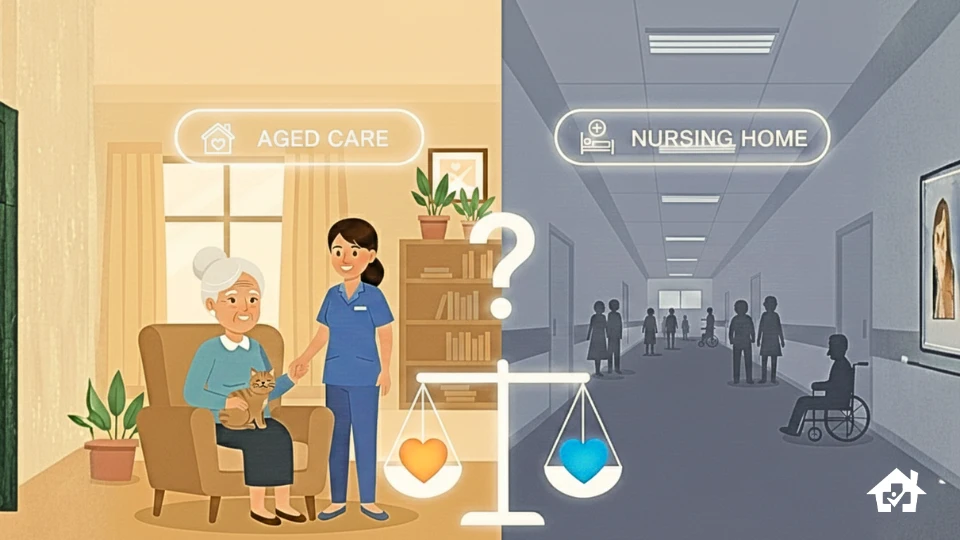
Get Paid to Care for a Family Member in Maryland
Key Takeaways
- Some Maryland families can get paid for care they already give. But payment is never automatic. The person receiving care must qualify. The relative giving care must be an eligible worker.
- Community First Choice (CFC) is a Maryland Medicaid route for eligible personal-assistance services. The Community Options Waiver works alongside it for people who need nursing-facility-level care.
- Who can be the paid worker depends on the program, the service plan, and whether that person is the participant's representative. Spouse eligibility must be checked case by case.
- Pay depends on the hourly wage and the hours Medicaid approves. It does not cover every hour you spend helping a relative.
- Whatever you need to get paid to care for your relative, Cottage Home Care Maryland can help, from your first call to the final step. Maryland Access Point can help too.
Some Maryland families can get paid to care for a parent, spouse, or other relative, but the state does not pay every family caregiver. The person getting care must qualify for the right Medicaid program, and the relative must meet its worker rules. Medicaid and Medicare differ: Medicaid can pay for ongoing personal-assistance care at home. Medicare covers certain home health services if you qualify. It does not cover personal care when that is the only care you need, and it is not a wage program for family caregivers. This guide covers both.
How Do CFC and Community Options Relate to Family Caregiver Pay?
Community First Choice pays for personal assistance at home. To qualify, a person needs full Medicaid and must live in the community. A state assessment must also show they need the institutional level of care CFC requires (COMAR 10.09.84.04).
The Community Options Waiver is different: it serves adults 18 and older who need nursing-facility-level care, and it adds extra waiver services on top of the personal assistance CFC already covers.
| Program |
Who can receive it |
Connection to paid personal assistance |
Application route and a key limit |
| Community First Choice (CFC) |
Full Medicaid, a community or home setting, and an assessed institutional level of care. No age limit. |
Can include a qualified family member as the paid worker through a Medicaid-enrolled agency. |
Contact Maryland Access Point or the CFC program office about CFC services. If Medicaid coverage is still needed, apply through the route for the person's eligibility category. No separate CFC waitlist. |
| Community Options Waiver |
Adults 18+ who need nursing-facility-level care and meet the waiver's technical and financial rules. |
Participants also receive CFC personal assistance, plus extra waiver services. |
Join the registry through Maryland Access Point. Wait for an invitation. This does not apply if you are already in a nursing facility with 30 days of Medicaid-paid care. |
Community First Choice
CFC is a Medicaid state-plan benefit, not a waiver. That means there is no statewide waitlist. A person needs full Medicaid and must live in the community. They must also be assessed as needing the institutional level of care CFC requires.
CFC has no age limit. A 40-year-old with a disability can qualify. So can a 90-year-old with dementia, if they meet the same tests.
Once approved, CFC covers personal assistance with bathing, dressing, toileting, eating, and moving around the home. Meal preparation and light household tasks are covered too, but only alongside personal care (COMAR 10.09.84.14). CFC is not a standalone housekeeping benefit. Cottage's Community First Choice home care page explains what this looks like day to day.
Community Options Waiver and Its Connection to CFC
The Community Options Waiver is also called HCBOW. It serves adults 18 and older who need nursing-facility-level care and want to stay in the community. Because it is a waiver, Maryland limits how many people can enroll. New community applicants join a registry through Maryland Access Point and wait for an invitation.
There is one exception. Anyone already in a nursing facility with 30 days of Medicaid-paid care can use a separate route. The facility's social worker can help with this.
A spot on the registry is not an approval. Reaching the front of the line still means going through assessment and authorization.
Turning 65 does not place someone in this waiver automatically. CFC also does not require a Community Options spot first. Cottage's Community Options Waiver care options page covers this route in more detail.
Can You Be Paid to Care for Your Parent, Spouse or Child?
Whether a relative can be the paid worker depends on the program, the service plan, and whether that person is the participant's representative.
Maryland's rule is clear on one point. A CFC agency cannot assign the participant's representative to be that participant's paid worker (COMAR 10.09.84.06). Spouse eligibility must be checked case by case.
| Who wants to provide care |
What this means for agency-based CFC personal assistance |
What to confirm next |
| Adult child, sibling, or other relative |
Depends on this person's role and the program's rules, not the relationship alone. |
Ask whether this person is the representative and meets the agency's hiring rules. |
| Spouse |
Must be checked for the specific arrangement. A spouse is not automatically included or excluded. |
Ask whether the spouse is acting as the representative. |
| Parent of a dependent minor |
Counts as the child's representative under Maryland's rules. Cannot be the paid worker for that child. |
Ask who else in the household could be the paid worker. |
| Legal guardian or other representative |
An agency cannot assign this person to be the paid worker for the participant they represent. |
Consider another eligible family member, friend, or agency worker. |
| Friend or neighbor |
Depends on standard hiring, screening, and program rules. |
Ask about the agency's hiring steps and background check. |
Helping for free right now does not make you a paid worker. Becoming one means going through the agency's hiring steps. It also means confirming program eligibility.
Adult Children, Siblings and Other Relatives
An adult child, sibling, or other relative may become the paid worker. First, the care recipient must be approved for CFC. Second, the relative cannot be acting as that participant's representative. Third, the relative must clear the agency's normal hiring steps, including a state criminal background check.
Choosing a relative does not make this self-employment. A Medicaid-enrolled agency still handles the nurse assessment, worker screening, and training.
Spouses and Parents Caring for Children
Maryland's representative definition is specific (COMAR 10.09.84.02). It covers anyone authorized to represent the participant, and anyone who signs the care plan on the person's behalf or makes related decisions for them. A legal guardian counts too, as does the parent or foster parent of a dependent minor.
A spouse is not automatically on this list. But that alone does not mean every spouse can be the paid worker. Confirm the service model and the spouse's role with the agency and the supports planner.
A parent of a dependent minor is different. Maryland's rules count this parent as the child's representative. So this parent cannot be the child's paid worker. Another relative or household member might still qualify.
When You Are Also the Person's Representative
An agency cannot assign the participant's representative to be that participant's paid worker (COMAR 10.09.84.06). Not everyone who helps with paperwork becomes a representative. The role depends on things like signing the care plan on the person's behalf, or making related decisions for them. It also covers a legal guardian or the parent of a dependent minor.
If you act as your relative's representative, plan for someone else to give the paid, hands-on care. This could be another family member, a friend, or an agency employee. Confirm your role with the agency. Do not assume either way.
How Much Can a Family Caregiver Be Paid in Maryland?
Your pay depends on two things: the hourly wage your agency agrees to, and the hours Medicaid approves in the plan of service. No single wage applies to every Maryland paid family caregiver, so a published agency offer or a Medicaid reimbursement schedule is not a guaranteed wage for your case.
Your Wage and Approved Hours Determine Earnings
Gross pay for a pay period equals the agreed hourly wage multiplied by the payable hours you actually worked inside the authorized plan, before taxes, other deductions, or overtime rules. Approved hours set the ceiling, but your pay still depends on the hours you actually work within them.
A Medicaid-funded care budget covers approved services; it is not cash a family can spend however it likes. The Department must approve the case in advance and enroll it before it can pay for any hours (COMAR 10.09.84.22).
Questions to Ask Before Relying on Caregiver Income
Before you count on this income, ask a few questions. Who employs and pays the worker? What is the agreed hourly wage?
How many hours per week does the plan authorize? What happens if the worker gets sick?
Approved hours do not cover informal help given before enrollment. Confirm the authorized effective date. If you think there is an error, ask about it, but do not assume earlier care becomes payable.
Tax treatment depends on the arrangement. Ask a payroll provider or tax professional. Do not assume every payment is tax-free.
How to Start the Maryland Intake and Family-Caregiver Review Process
First, check your relative's coverage and daily care needs. Then apply for or confirm Medicaid, complete an assessment and supports plan, and onboard the proposed worker with an agency. These steps often overlap instead of happening one after another, and the order can shift depending on whether your relative already has Medicaid.
Check the Care Recipient's Coverage and Prepare Documents
Confirm whether your relative already has full Medicaid, Medicare, or both. Gather their current Medicaid or Medicare information, ID, and proof of Maryland address. Add any income or benefit statements their eligibility category needs.
Write down their daily care needs in plain terms. Examples include bathing, dressing, or help getting to appointments.
Contact the Program and Complete Assessment and Supports Planning
Reach out to Maryland Access Point or the relevant Medicaid office. Start or confirm an application. A state assessment looks at your relative's needs.
A supports planner helps the participant build the plan of service. MDH or its authorized designee then reviews and authorizes this plan (COMAR 10.09.84.15). No single nurse visit awards a set number of hours on its own.
Confirm the Relative's Eligibility and Complete Agency Onboarding
Once the care recipient is approved, the agency reviews the proposed worker. This includes checking for any representative role. The agency also completes hiring steps, such as a background check and training for specific duties.
Not every role needs a CNA certificate. But Maryland does require specific certification for anyone doing delegated nursing tasks.
Confirm Authorization, the Start Date and Timekeeping
An approved Medicaid application, a registry listing, and an authorized start date are three different things. None of them happens on a fixed schedule. Confirm the exact start date before the arrangement begins, and confirm how hours will be tracked.
Consider an adult daughter who already helps her father with bathing and meals. She could confirm his Medicaid status and contact Maryland Access Point about CFC. She could also ask Cottage's intake team about becoming his paid worker, once his plan is approved and her role is confirmed. This is a hypothetical illustration, not a promise about timing, hours, or pay.
If your relative already has an active application, a registry spot, or a supports planner, contact that resource directly. There is no need to start over.
What If Your Relative Has Medicare or Limited Medicaid Coverage?
CFC requires full Medicaid. Having only Medicare, or only a partial Medicaid benefit, does not meet this requirement by itself.
This does not rule CFC out completely, though: the sections below cover why Medicare alone is not enough, and what to do if your relative has only limited Medicaid coverage.
Why Medicare Alone Does Not Establish CFC Eligibility
Medicare can cover home-health-aide services, like help with bathing or dressing. But this only happens alongside a qualifying, intermittent skilled-nursing or therapy need. The person must also meet Medicare's homebound and certification rules (Medicare.gov).
Medicare excludes personal or custodial care on its own. It was never built as a wage program for a relative giving informal care.
What to Do About QMB-Only, SLMB-Only or Missing Medicaid
Some people only have a Medicare Savings Program. Examples are Qualified Medicare Beneficiary (QMB) and Specified Low-Income Medicare Beneficiary (SLMB) coverage. These help with specific Medicare costs, but they are not the same as full Medicaid (Medicare Savings Programs).
Some people actually have both. Ask the eligibility office to check full coverage rather than assuming CFC is out of reach.
If your relative applies based on being aged, blind, or disabled, use a different route. That application goes through Maryland Benefits, your local Department of Social Services, or the mailed application. It does not go through the general Maryland Health Connection marketplace (MDH application guide).
If Medicaid-funded care is not available right now, there is still an option. Cottage's private-pay home care in Maryland covers services without a family-caregiver paycheck attached. Maryland Access Point can also point you toward other programs outside this guide.
Where to Find Family Caregiver Help in Maryland
Maryland Access Point (MAP) is the state's starting point for aging and disability services, including CFC and Community Options questions. The statewide number is 844-627-5465, and the MDH office overseeing CFC and long-term services and supports is 410-767-1739.
Local offices can help too. Baltimore City residents can call 410-396-2273, and Baltimore County residents can call 410-887-2594. Every other county in Maryland, plus Baltimore City, has its own MAP contact in the statewide directory.
Before your first call, prepare one clear question. Which program and service plan fit your relative? Could you be the paid worker, given your relationship and your role in their care?
How Cottage Home Care Can Help Your Family Explore Care
Cottage Home Care Maryland is a Medicaid-enrolled personal-assistance agency. It works with families on Community First Choice and Community Options intake.
Its documented services include reviewing your relative's coverage and helping gather application documents. Cottage also connects you with local Medicaid application help. It follows up on your case and coordinates service once care is approved.
Cottage can also review whether a specific family member might be the paid worker. This depends on that person's relationship to the participant. It also depends on any representative role they hold.
None of this replaces the state's own decisions. The state eligibility office decides Medicaid coverage. An independent supports planner helps build the plan of service.
MDH or its authorized designee authorizes the CFC services in that plan. Cottage cannot guarantee approval, a set number of hours, or a start date.
Looking for care for a relative is different from looking for caregiving work. If you want a caregiving job, see the Cottage Maryland careers page. Applying for a job there does not make a relative eligible for a paid family-caregiver arrangement.
To talk through your family's situation, call Cottage Home Care Maryland at (667) 400-0648 or visit the Maryland contact page.
Frequently Asked Questions
Can I Be Paid for Care I Provided Before Approval?
+
Generally, no. Paid hours usually start on the plan's authorized start date, not from whenever informal caregiving began. If you think the effective date is wrong, ask your supports planner to check it. Do not assume earlier care becomes payable.
Do I Need a CNA License to Care for a Family Member?
+
It depends on the duties involved. Maryland does not require a CNA or GNA certificate for standard personal-assistance tasks. But the law does require specific certification for anyone doing delegated nursing tasks. The agency tells you which rules apply during onboarding.
Do I Have to Live With My Relative?
+
It depends on the program and the schedule in the plan of service. There is no single statewide rule. Many arrangements work fine with a caregiver who lives elsewhere and comes for scheduled shifts. Ask your agency if your plan has any residency rules.
Can I Keep Another Job While Providing Paid Care?
+
Often, yes. Your caregiving hours just cannot overlap with your other job. You also need to complete the duties in the authorized plan. There is no rule letting you bill for care while working elsewhere at the same time.
Can Cottage Help With My Relative's Medicaid Application?
+
Yes. Cottage can review coverage information, help prepare paperwork, and connect families with the right Medicaid application resources. Cottage does not decide eligibility. The state eligibility office makes that call.
Is Joining the Community Options Registry the Same as Approval?
+
No. The registry is a waitlist for an invitation to apply. Reaching the front of the list starts the application and assessment process. It does not authorize services or set a start date by itself.
Sources
- Maryland Department of Health, Community First Choice
- Maryland Department of Health, Community Options Waiver
- COMAR, 10.09.84.02, Community First Choice Definitions
- COMAR, 10.09.84.04, Participant Eligibility
- COMAR, 10.09.84.06, Specific Conditions for Provider Participation
- COMAR, 10.09.84.14, Covered Personal Assistance Services
- COMAR, 10.09.84.15, Supports Planning
- COMAR, 10.09.84.22, Conditions for Reimbursement
- Medicare.gov, Home Health Services Coverage
- Maryland Department of Health, Medicare Savings Programs
- Maryland Department of Health, How to Apply for Medicaid
- Maryland Department of Aging, Maryland Access Point Directory
Research reference date: September 28, 2026. Program rules and contact details can change; confirm current details with Maryland Access Point, MDH, or Cottage Home Care Maryland before relying on them.


 Sabine DurgaramDPS/RN