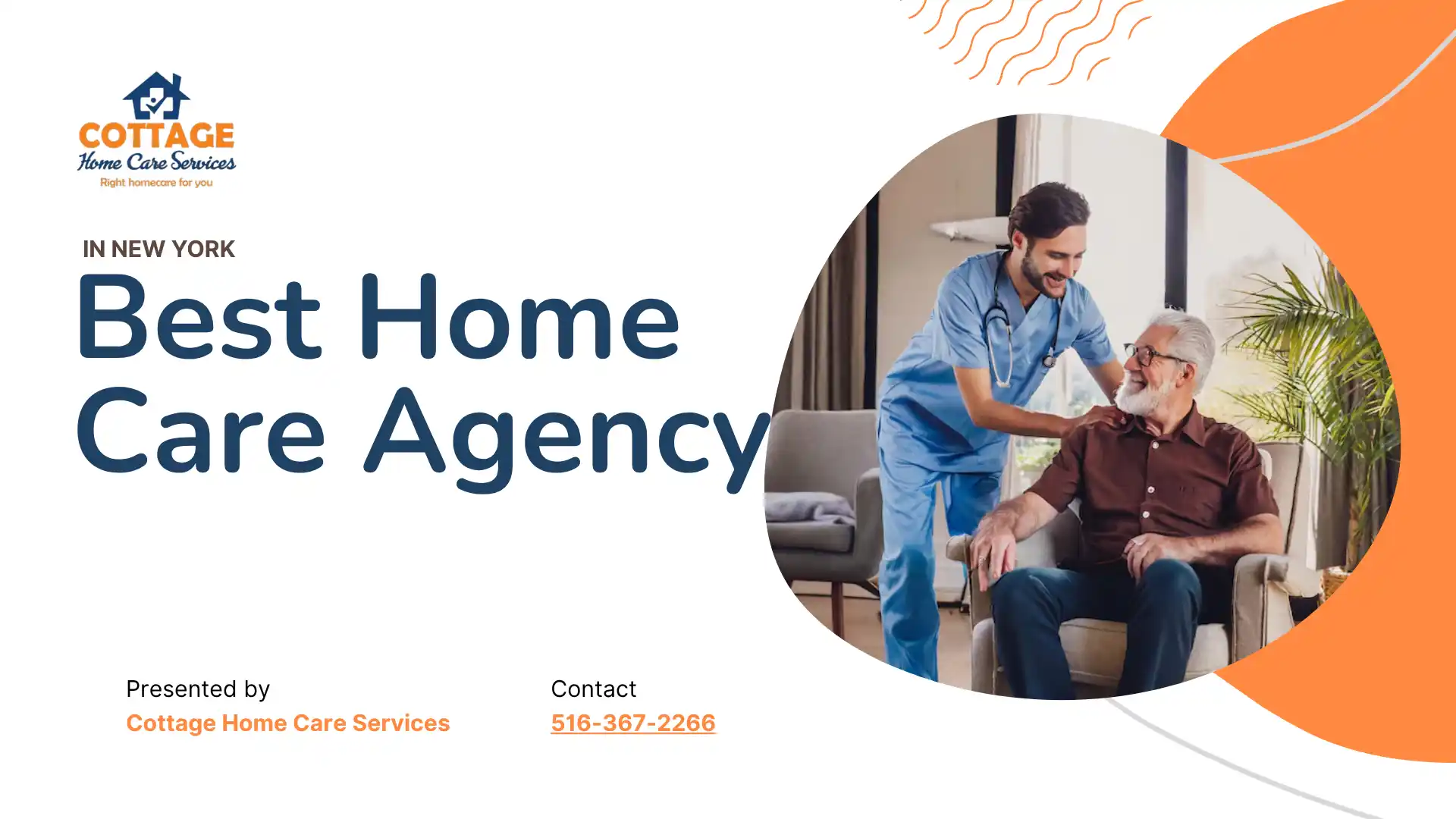
Home Care Services in New York from Cottage Home Care
Finding home care for someone you love rarely happens on your schedule. It's usually a
phone call after a fall, or a hard conversation after a hospital discharge. Cottage Home
Care Services sends trained Home Health Aides and Personal Care Aides to homes in Nassau,
Suffolk, and Westchester Counties, and across the Bronx, Brooklyn, Manhattan, Queens, and
Staten Island.
Have a question right now? Call 516-367-2266
anytime. We'll walk you through your options right on the phone.
Key Overview: Home Care in New York at a Glance
- What we do: We send Home Health Aides and Personal Care Aides to help with daily life at home.
- Where we work: Nassau, Suffolk, and Westchester Counties, plus the NYC five boroughs.
- How it's paid for: Most families use a Managed Long-Term Care (MLTC) plan. We also take private pay.
- Who handles nursing care: Your MLTC plan's nurse, or a partner nursing agency, manages skilled nursing visits.
- How to start: Call 516-367-2266 anytime and we'll tell you what to do next.
A few more details worth knowing up front: Cottage was founded in 2019 and runs out of
294 West Merrick Road, Suite 12, in Freeport. New York requires every home care agency to
hold a license from the State Department of Health, and we hold ours. Our focus stays on
Home Health Aide and Personal Care Aide staffing, along with helping families set up
CDPAP, while skilled nursing and therapy get routed through a partner nursing agency when
a case calls for it.
What Home Care Looks Like With Cottage
Every family's needs look a little different. Some want a few hours of help a day.
Others want someone in the home most of the time.
Home Health Aide (HHA) Services
An HHA helps with bathing, dressing, medication reminders, light cleaning, and cooking.
Sometimes that's only needed for a few weeks, right after someone comes home from the
hospital. Sometimes it stretches into years. The goal stays the same either way: keep your
loved one safe and comfortable at home.
Personal Care Aide (PCA) Services
A PCA covers the physical side of the day: getting dressed, moving around the house,
grooming, meals. It's a good fit for someone who's steady on their feet but worn out, or
who needs more hands-on help managing day to day. A lot of the families we talk with chose
this route specifically so a parent could stay home instead of moving into assisted
living.
Nursing Home Transition and Diversion (NHTD) Support
NHTD is a New York State Medicaid program, run by the state. It helps someone leave a
nursing home and get back to their own home, or stay in the community from the start.
Cottage's role is narrower than the program itself: we provide the in-home aide named in
the approved plan.
Private Pay Home Care
Prefer to arrange care privately? That works too, and it's simpler than people expect. You
tell us the schedule and the kind of support you're after. We staff it.
Who Actually Shows Up at Your Door
Every Cottage caregiver is a Home Health Aide or Personal Care Aide, and each one clears a
background check and a health screening before we place them with a family. We're a home
care staffing agency focused on aide-level support, so when a case needs skilled nursing or
therapy, we bring that in through the client's MLTC plan or a partner nursing agency.
If you're on PCA services through an MLTC plan, expect a nurse from that plan to visit
once when services start, then again roughly every six months. There can be extra visits
outside that schedule too, say after a hospital stay, a fall, or a gap in care. The exact
rules depend on your specific plan, so it's worth asking them directly if you want the full
picture.
Which Medicaid Program Pays for What
New York runs more than one Medicaid path for home care, and the names blur together
fast. This breaks down the main ones.
| Program |
What it's for |
Who manages your caregiver |
| MLTC |
Ongoing daily help at home |
Your plan approves the hours; an agency like Cottage staffs the aide |
| NHTD |
Leaving or avoiding a nursing home |
A state-approved coordinator runs the plan; an agency like Cottage can staff the aide |
| CDPAP |
Choosing and managing your own caregiver, sometimes a family member |
You manage the caregiver yourself |
| TBI Waiver |
Care for a qualifying brain injury |
A specially licensed waiver provider |
Cottage staffs aides through MLTC and NHTD, and we also help families set up CDPAP,
connecting you with the fiscal intermediary and paperwork needed to get a self-directed
caregiver approved. If the TBI waiver looks closer to your situation, call us and we'll
point you toward the right resource.
How Do I Know If I Qualify?
Eligibility depends on your income, what you own, and how much help you need day to day.
Those numbers move over time, so these steps get you a real answer instead of a guess:
find out if you already have Medicaid, or apply through your county's Department of Social
Services (NYC residents go through HRA); ask your MLTC plan what its current income and
asset limits actually are; request a needs assessment, since that decides how many aide
hours you'd be authorized for; and have your ID, proof of income, and proof of NY
residency ready ahead of time so the assessment doesn't stall on paperwork.
Stuck on where to start? Call 516-367-2266.
We field calls like this all day, any time you're ready.
Common Misconceptions About Home Care in New York
"Any home care agency can provide skilled nursing" comes up a lot, and it's usually not
true. Home care agencies are typically licensed for aide-level, non-medical support, even
when a website's language makes it sound more clinical. Skilled nursing and therapy come
from a certified nursing agency or from your MLTC plan's own clinical team instead. If an
agency claims its own nurses manage your care, ask what license they hold. The answer
tells you a lot.
The other common one: people assume Medicaid pays for home care the same way everywhere
in New York. It doesn't, not really. Coverage shifts depending on your county or borough,
which MLTC plan you're on, and how much help you're assessed as needing. Nassau County
rules and Bronx rules can end up different even under the same program name, which trips
families up more than you'd think.
Ready When You Are
Home care decisions rarely happen on a convenient schedule. Whether it's the middle of the
day or the middle of the night, call 516-367-2266 or
reach out online. We'll answer your
questions, explain how MLTC or private pay would work for you, and start matching you with
a caregiver right away.
Frequently Asked Questions
What's the difference between an HHA and a PCA?
An HHA handles a bit more than a PCA, including basic health tasks like checking vital
signs. A PCA sticks to non-medical help such as bathing and meals. Both need a state
certification.
Does a home care agency need to be licensed in New York, and what's the NHTD waiver?
Yes to the licensing question, no exceptions; every agency needs a license from the State
Department of Health. NHTD is a separate thing entirely, a New York State Medicaid program
that helps people leave a nursing home, or stay in the community, by covering care at home
instead.
Do I need Medicaid to get home care through Cottage?
We work with MLTC and Medicaid, and we also take private pay, so both paths are open. Call
us either way, and we'll figure out what actually fits your situation.
Is home care covered by Medicare or Medicaid?
Medicare covers short-term nursing or therapy at home after a hospital stay, and that's
about the extent of it. Ongoing daily help from an HHA or PCA is typically a Medicaid
matter, usually arranged through MLTC.
What's the difference between MLTC and CDPAP, and does Cottage help with CDPAP?
MLTC puts your caregiver in the hands of an agency like Cottage, once your plan approves
the hours. CDPAP flips that: you manage the caregiver yourself, and that person can
sometimes be a family member. Cottage staffs aides through MLTC and NHTD, and we help
families get set up with CDPAP too, handling the paperwork so you don't have to sort it
out alone.
How often does a nurse check in on a PCA case?
Once at the start, then roughly every six months. A hospital stay or a fall can trigger an
extra visit outside that schedule.
Related Reading

 Sabine DurgaramDPS/RN