
Cottage Care Blog
Winter Safety for Adults: Prevent Falls & Illness

By Cottage Home Care Services
0Comment
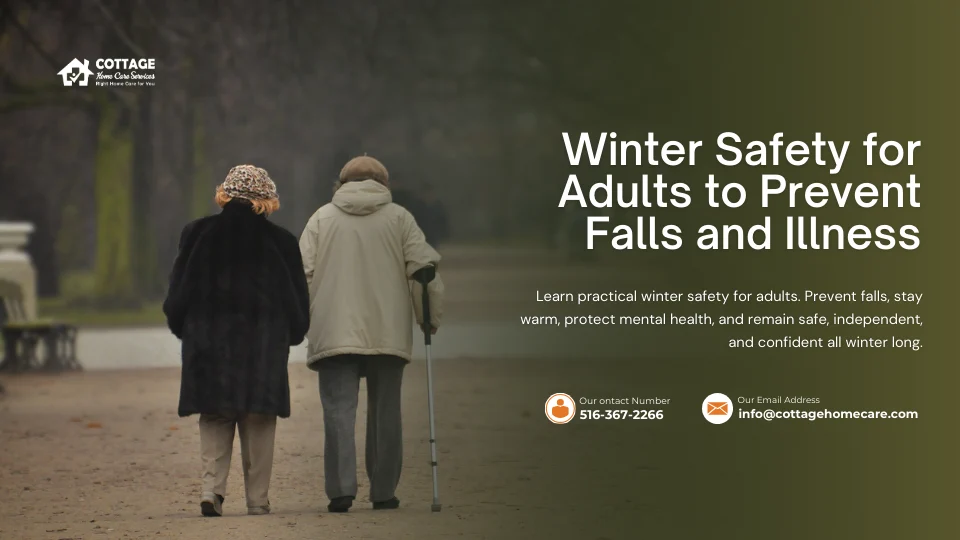
Simple winter tips to stay safe, steady, and healthy at home
Winter Safety for Adults: A Complete Guide to Prevent Falls, Illness, and Winter Risks
Introduction
Winter Safety for Adults means taking smart, simple steps to stay safe, healthy, and independent during cold and icy months. Winter brings hidden dangers such as slippery sidewalks, poor lighting, freezing temperatures, and long periods spent indoors. These risks affect adults of all ages, but older adults face higher chances of falls, illness, and depression.
With years of experience writing about adult care, seasonal safety, and home health topics, I’ve seen how one small winter accident can quickly turn into a major life change. A simple slip may lead to broken bones, hospital stays, or long recovery periods. The good news is that most winter injuries are preventable.
This guide explains how adults can stay safe in winter, avoid common mistakes, and protect both physical and mental health. Whether you are an adult aging at home, a family caregiver, or a home care professional, this article will help you face winter with confidence.
How Can Adults Stay Safe During Winter?
Winter Safety for Adults focuses on preventing falls, avoiding cold-related illness, and protecting mental health during winter months. Adults can stay safe by wearing non-slip shoes, keeping walkways clear of ice, improving indoor lighting, removing tripping hazards, and using safe heating methods. Staying active indoors, eating balanced meals, staying hydrated, and maintaining social connections help prevent weakness and winter depression.
Why Winter Safety for Adults Matters
Winter is one of the most dangerous seasons for adults. Emergency rooms report a sharp increase in fall-related injuries during winter months. Ice, snow, and slush make even familiar areas unsafe.
As adults age, balance, vision, and muscle strength may decline. Cold weather tightens muscles and joints, increasing stiffness and slowing reaction time. Shorter daylight hours reduce visibility, making hazards harder to see.
Common Winter Risks for Adults
Slips, Trips, and Falls
Falls are the leading cause of winter injuries. Ice-covered sidewalks, wet entryways, loose rugs, and cluttered floors increase fall risk.
Cold-Related Illness
Cold temperatures can worsen arthritis, heart disease, and breathing problems. Hypothermia can occur indoors if heating is poor.
Seasonal Affective Disorder (SAD)
Reduced sunlight can cause low mood, fatigue, and lack of motivation. SAD often goes unnoticed but affects daily safety.
Outdoor Winter Safety Tips for Adults
- Wear non-slip, rubber-soled shoes
- Walk slowly with short steps on ice
- Keep hands free for balance
- Avoid going out during storms
- Use handrails whenever possible
Indoor Winter Safety Tips
- Improve lighting in hallways and bathrooms
- Remove loose rugs and clutter
- Install grab bars in bathrooms
- Use non-slip mats
- Keep walkways clear
Staying Warm Safely
- Dress in layers indoors
- Use space heaters with automatic shut-off
- Keep heaters away from curtains
- Never use ovens to heat rooms
Winter Nutrition and Hydration
Many adults drink less water in winter, leading to dehydration. Drink water regularly and eat warm, balanced meals to maintain strength and energy.
Protecting Mental Health During Winter
Winter can increase feelings of loneliness and depression. Open curtains during the day, stay socially connected, and maintain a daily routine.
Staying Active Indoors
- Chair exercises
- Stretching
- Walking indoors
- Gentle yoga or balance exercises
Common Winter Safety Mistakes
- Ignoring small slips
- Overusing space heaters
- Staying inactive for long periods
- Waiting too long to ask for help
Winter Safety Checklist for Adults
| Area | Risk | Simple Fix |
|---|---|---|
| Entryway | Ice slips | Ice melt and mats |
| Bathroom | Falls | Grab bars and mats |
| Heating | Fire risk | Safe heaters only |
| Mental Health | SAD | Light and routine |
Winter Safety for Seniors
For seniors, winter safety supports independence. Fall prevention, medication reviews, emergency alert systems, and regular wellness checks are essential.
Winter Safety for Families
Families can help by clearing snow, checking heating systems, calling regularly, and watching for mood changes.
Winter Safety for Home Care Agencies
Home care agencies should use winter-specific care plans, fall prevention training, emergency preparedness, and client education.
Conclusion
Winter Safety for Adults is about preparation, awareness, and confidence. With simple steps such as safer footwear, better lighting, daily movement, and social connection, adults can stay safe, healthy, and independent throughout winter.
Recent Posts
Categories
Related Topic
Winter Safety for Adultswinter safety tips for adultsfall prevention in winterwinter fall prevention for seniorscold weather safety for adultssenior winter safetywinter home safety tipsprevent slips and falls winterwinter health tips for adultsseasonal safety for seniorswinter safety checklist for adultswinter depression adultsseasonal affective disorder seniorswinter home care safetyadult fall prevention tipswinter caregiver safety tipswinter safety for seniors near mehome care winter safety near mesenior fall prevention near mewinter home safety services near mecaregiver support in winter near me
0comments
COMMENT SECTION

![[Valid RSS]](https://www.rssboard.org/rss-validator/images/valid-rss-rogers.png "Validate my RSS feed")
Copyright © 2026 Cottage Home Care - All Rights Reserved.