Key takeaways
- Personal care services for elderly adults help with hands-on daily tasks such as bathing, dressing, eating and moving safely around the home.
- In Michigan, Medicaid Home Help has specific medical-need, Medicaid and in-home assessment rules; being older or needing chores alone does not establish eligibility.
- Original Medicare does not usually pay for ongoing nonmedical personal care by itself.
- Private-pay care is another option, but families should ask for a written quote, service list and schedule.
- The right care plan depends on the person’s needs, safety, choices and approved services.
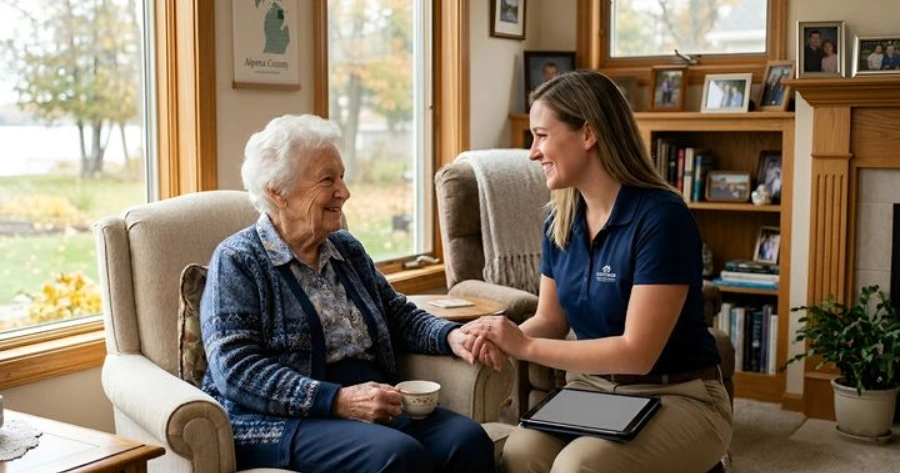
Does your parent need help bathing, dressing, or getting around at home? Many Michigan families want help but do not know where to start. Personal care services for elderly adults can support daily routines while helping them remain involved in decisions about their own care.
This 2026 Michigan guide explains what personal care includes, what it does not include, common costs, Michigan Medicaid Home Help rules, and how to compare providers. It is designed for families in Detroit, Wayne County, Oakland County, Grand Rapids, Lansing, Flint, and communities across Michigan.
On this page
What Are Personal Care Services for Elderly Adults?
Quick answer: Personal care is hands-on help with everyday activities that a person has difficulty doing alone. A suitable caregiver may assist with bathing, getting dressed, grooming, toileting, eating, and safe movement, based on an assessment and the agreed care plan.
A parent who once managed every task alone may now need help washing their hair, putting on shoes, or getting to the bathroom. Personal care can make these tasks less stressful, while preserving privacy and independence wherever possible.
- Bathing and hygiene: Help with washing and personal cleanliness.
- Dressing and grooming: Help choosing and putting on clothes, combing hair, and daily grooming.
- Toileting: Support with bathroom routines and hygiene.
- Eating: Assistance with meals when a person needs physical help.
- Mobility: Safe assistance with walking or moving inside the home, as appropriate to the care plan.
- Transfers: Assistance changing positions only with an assessed safe method, trained workers and any required equipment.
Household tasks such as meal preparation, laundry and shopping may also be included in some care arrangements. A family should ask what is actually authorized or written into the service agreement rather than assume all tasks are covered.
Personal Care vs. Companion Care vs. Home Health Care
These services can overlap in daily life, but they are not interchangeable. The best choice depends on whether your loved one needs social company, hands-on personal help, or medical treatment.
| Comparison | Companion care | Personal care | Home health |
|---|
| Main need | Company, conversation, routine support | Hands-on assistance with daily living | Clinical care ordered or supervised under applicable rules |
| Examples | Conversation, hobbies, light chores when offered | Bathing, dressing, toileting, eating assistance | Skilled nursing, wound treatment, prescribed therapy |
| Best fit | A person who can manage personal tasks but wants company | A person who needs physical help with daily care | A person who meets the requirements for clinical services |
For example, a companion may share a meal with your parent. A personal care aide may help your parent eat if they need physical assistance. A nurse handles clinical tasks only within the nurse’s professional role and applicable orders. Do not assign skilled medical work to a nonmedical caregiver.
Signs Your Parent May Need More Help at Home
A useful starting point is to look at specific activities, not age alone. Talk with your parent about which tasks feel difficult and what help they would welcome.
- Bathing or putting on clean clothes has become difficult.
- Getting up from a chair or moving to the bathroom takes physical help.
- Preparing food is hard, or the person needs assistance eating.
- A family member is providing more hands-on help than they can safely manage.
- The person wants to remain at home but needs regular help with personal routines.
Safety first: A fall with injury, sudden confusion, chest pain, trouble breathing, or another medical emergency calls for immediate medical help, not simply a new home care schedule. Call 911 for emergencies. Never move or lift a person without a safe assessment and appropriate support.
How Much Do Elderly Personal Care Services Cost in Michigan?
There is no single statewide personal care price for every Michigan family in 2026. The total depends on the type of assistance, where the person lives, how many hours are needed, the provider’s rates, and whether the care is private pay or an authorized program benefit.
An agency quote is not the same as a caregiver’s wage. Before choosing a schedule, ask the agency for a written estimate with all of these details:
- Hourly or per-visit charge and any minimum visit length.
- Weekday, evening, weekend or holiday rate differences.
- Which personal care and household tasks are included.
- Transportation, mileage or other possible extras.
- Cancellation terms, backup coverage and schedule changes.
To estimate a simple weekly budget, multiply the quoted hourly rate by the hours per week. For example, at an illustrative quote of $30 per hour, 10 hours would cost $300 per week before any extra charges. This is a math example, not a verified statewide rate or Cottage price. Use the written quote for a real budget.
Who Pays for Personal Care in Michigan?
1. Michigan Medicaid Home Help
Michigan’s Home Help program may cover approved hands-on personal care for eligible people. MDHHS reviews the person’s eligibility and needs and decides which tasks and hours to authorize. The program pays for eligible approved services; no agency can promise approval. Read the official Michigan Home Help overview.
2. Original Medicare
Original Medicare does not generally pay for ongoing nonmedical personal care or custodial help when that is the only support needed. Some Medicare-covered home health services have separate medical eligibility rules. Read Medicare’s long-term care coverage explanation.
3. Private pay and other benefits
Families may choose to pay directly for care. Long-term care insurance, veterans benefits or other programs may help some people, but benefits depend on the policy or program and an individual review. Ask the actual insurer, VA office or plan administrator before counting on payment.
Michigan Medicaid Home Help: Who May Qualify?
Quick answer: Michigan Home Help generally requires qualifying Medicaid coverage, a certified medical need, and physical assistance with at least one activity of daily living. An MDHHS adult services worker assesses the person at home and determines approved services.
For Home Help, a person usually needs physical help with at least one task such as bathing, dressing, eating, grooming, toileting, moving within the home, or transferring. Help with chores alone does not meet this hands-on need requirement.
The state may also approve certain other daily tasks when the person qualifies for assistance with personal care, such as laundry, light housework, meals, shopping for essential items, or permitted medication assistance. Each task depends on the approved plan and state rules.
What Michigan Home Help does not pay for
The state lists important exclusions such as supervision by itself, verbal reminders, heavy cleaning, yard work, home repairs, and ordinary transportation. Do not assume that being alone during the day means the person qualifies for paid Home Help hours.
Can a family member provide Home Help care?
Some eligible adult family members or trusted caregivers may provide approved care after meeting the program’s enrollment requirements. Under 2026 MDHHS policy, Home Help does not pay a spouse to care for a spouse or a parent to care for their minor child. Caregiver eligibility and payment rules are program-specific. See the MDHHS Home Help caregiver policy.
How to ask about Home Help
- Write down which daily activities require hands-on help and any safety concerns.
- Check the person’s Medicaid status and ask about the program rules for their coverage.
- Contact the local MDHHS adult services office or the MI Options information and referral service at 1-800-803-7174.
- Discuss the medical certification and in-home assessment process with the appropriate state staff.
- Review any written decision, authorized tasks and hours before care starts under the program.
Families can also ask Cottage about Michigan care options. Cottage can explain its service process, but the state and applicable plan make Medicaid eligibility, approval and authorization decisions.
How to Choose Personal Care Services for an Elderly Parent
A good provider should make it easy to understand the plan before you sign anything. Ask clear questions and write down the answers.
- What tasks can you provide? Ask for a written list of personal care duties and any service limits.
- How do you assess safe movement? Discuss transfers, fall risks and equipment before starting.
- How are workers screened and supervised? Ask what standards apply to the service offered.
- What if a caregiver is absent? Learn the actual backup and notification process, not a blanket promise.
- What does care cost? Request rate details, minimum hours and cancellation terms.
- Can we change the plan? Ask who to contact as your parent’s needs change.
Michigan families can compare care options for their exact county. Cottage’s Michigan home care hub describes state care pathways and offers county information. Availability must be confirmed for the requested address and schedule.
How to Get Started With In-Home Personal Care
Three practical steps: Tell us what help is needed, explore the appropriate care and payment pathway, then review the actual services, schedule and written terms before care begins.
- Talk about needs. List the daily tasks your loved one wants help with, their Michigan county and preferred schedule.
- Review options. Discuss private-pay services or ask the appropriate state office about Medicaid Home Help and a required assessment.
- Confirm the plan. Review the type of assistance, worker role, availability, cost or authorization, and changes process.
Cottage Home Care Michigan can discuss available nonmedical care options and help you identify a sensible next step. Call (313) 762-4272 or use the contact options on the Michigan hub. No payment, eligibility, staffing or start-date guarantee is implied.
Frequently Asked Questions
What are personal care services for elderly people?+
They are hands-on support with daily routines such as bathing, dressing, eating, grooming, toileting and moving within the home. The care plan and worker’s permitted duties determine what help is provided.
What is the difference between personal care and companion care?+
Companion care focuses on company and lighter routine support. Personal care includes physical help with daily living activities. Neither is a substitute for skilled medical treatment.
Does Medicare cover personal care for seniors in Michigan?+
Original Medicare does not usually pay for ongoing nonmedical personal care when it is the only help needed. Medicare-covered home health care is subject to separate medical rules.
Does Michigan Medicaid pay for personal care at home?+
Michigan Home Help may cover approved services for eligible people who need physical assistance with at least one daily living activity. MDHHS determines eligibility, authorized tasks and hours.
Can a spouse get paid for caregiving through Home Help?+
No. Michigan Home Help does not pay a spouse to care for a spouse. Other caregiver relationship restrictions also apply.
Can I get personal care if I only need housekeeping?+
You can ask about private-pay household help. Michigan Home Help generally requires qualifying physical assistance with an activity of daily living; household chores alone do not establish eligibility.
How much does in-home personal care cost in Michigan?+
Costs vary by provider, service needs and schedule. Ask for an itemized written quote rather than using a statewide price as a promise.
Is help getting out of bed part of personal care?+
Assistance with transfers may be appropriate after assessment, using trained help and necessary equipment. Do not assume that a caregiver can safely lift or transfer someone alone.
Can seniors receive care in any Michigan county?+
The care options and provider availability vary by location. Share the exact county and care address to confirm service options, and check applicable program coverage with the proper agency.
How can my family begin?+
Write down the help needed and call Cottage Home Care Michigan at (313) 762-4272 to discuss options. For Home Help eligibility and approvals, contact MDHHS or MI Options.
Talk With Our Michigan Home Care Team
Tell us what daily tasks your loved one needs help with. We can discuss nonmedical service options and the next steps that fit your family.
Call (313) 762-4272


 Alex TullaoRegistered Nurse