516-367-2266info@cottagehomecare.cominfo@cottagehomecare.com
Follow Us :
  • Facebook
  • Instagram
  • LinkedIn
  • YouTube
Cottage Home Care homeCottage Home Care logo
  • Contact Us
Free Consultation

Why Cottage Homecare Agency?

Since 1992, families have trusted Cottage to raise the bar for home-based care — better health for our clients, real peace of mind for their families.

REQUEST CARE516-367-2266Find care near me
Join Our Care Community

Join Our Care Community

Receive weekly inspiration, expert health advice, and heartwarming stories from our sanctuary families.

Cottage Home Care Services

We provide personalized care. Each of our patients receives one-on-one attention and a care plan tailored to their specific needs.

Home Care

  • Companion Care
  • Personal Care
  • Specialized Care
  • Pediatric Care
  • Private Pay
  • Home Health

Company

  • Our Team
  • Blog
  • Press
  • Careers
  • Locations
  • About Us
  • Sitemap

Useful Links

  • FAQs
  • Terms & Conditions
  • Privacy Policy
  • Disclaimer
  • Contact Us
  • Our Story

Contact

516-367-2266
516-367-1067
info@cottagehomecare.cominfo@cottagehomecare.com
294 West Merrick Road, Suite 12, Freeport, NY 11520, United States (HQ)
REQUEST CARE516-367-2266
Cottage Home Care on FacebookCottage Home Care on InstagramCottage Home Care on LinkedInCottage Home Care on YouTube
Validate RSS feed[Valid RSS]

Cottage Home Care is a fully licensed home care services agency providing trusted, high-quality care across 25+ states,
including New York,New Jersey, Michigan, Maryland, Florida, Connecticut and more.

© 2026 Cottage Home Care. All Rights Reserved.

FAQs|Terms & Conditions|Privacy Policy|Disclaimer|Contact Us|Our Story

Back to blogs
22 min readBLOG

Guide to Senior Home Care Government Benefits

Cottage Home Care

Cottage Home Care

Editorial Team • Published Jul 28, 2026

Guide to Senior Home Care Government Benefits

Government Benefits for Seniors: The Full 2026 Guide

Most of these benefits are not secret. They are just spread out. One office handles Social Security. Another handles Medicaid. A third handles help with energy bills. None of them send you a list of what you might be missing. Every year, people miss out on real help. It is not because the help is fake. It is because no one puts the pieces together for them.

This guide puts the pieces together. We will cover the main federal programs. We will cover state Medicaid programs that can pay for home care. We will cover a new 2026 tax break that almost no one knows about yet. We will also show you how to spot a scam. Families ask us almost every day, “How do we pay for Mom’s care?” We wrote this guide the way we would answer that question in person.

Table of Contents

1.What Counts as a “Government Benefit for Seniors”2.The Full Menu of Benefits in 20263.Help Paying Your Medicare Premium4.Medicaid's Asset Limit and the 5-Year Look-Back5.Free and Low-Cost Extras6.Property Tax Relief for Seniors7.More Tax Breaks for Seniors and Caregivers8.Funeral and Burial Benefits9.Can a Family Member Get Paid to Be a Caregiver10.Common Mistakes and Myths11.Your Step-by-Step Checklist12.FAQ

Quick Self-Check

Answer three questions. This gets most people most of the way there.

  1. How old is the person who needs help? Age 55 opens job-training help. Age 60 opens meal and chore help. Age 62 opens early Social Security and senior housing. Age 65 opens Medicare and most Medicaid help.
  2. What is the monthly household income? Under about $1,350 to $1,816 a month for one person often points to help with Medicare costs. Under your state’s Medicaid limit often points to help paying for home care.
  3. What state does the person live in? Program names and rules change from state to state. The same age and income can qualify in one state and not in another.

This is a quick check, not a final answer. Only your state’s Medicaid office or Social Security can confirm what you truly qualify for.

What Counts as a “Government Benefit for Seniors”?

Quick Answer

A government benefit for seniors is any program that gives older adults income, health coverage, food help, housing help, tax relief, or home care funding. The federal government, a state, or a city can run it. Most programs use an age rule, often 60, 62, 65, or 67. Some also require low income or a disability. Most people qualify for more than one at a time.

“Senior” does not mean one single age. Each program picks its own cutoff:

Age 55
Opens Up
Senior Community Service Employment Program, some state job-training help
Age 60
Opens Up
Meals, chore help, and benefit information through the Older Americans Act
Age 62
Opens Up
Early Social Security (a smaller check), senior housing through HUD Section 202
Age 65
Opens Up
Medicare, full Social Security for some birth years, SSI age rules
Age 66 to 67
Opens Up
Full Social Security retirement age, based on birth year

A benefit can come from three levels. Federal benefits use the same rules in every state. Social Security, Medicare, and SSI work this way. State benefits use federal money but state rules. Medicaid’s home care programs work this way. Local benefits come from a city, county, or your local Area Agency on Aging. This matters a lot. The same program name can work in very different ways from state to state. Maryland’s Medicaid home care program is not the same as Michigan’s, even though both are called “Medicaid.”

Social Security is often called a government pension. It works a bit differently from a normal job pension, but the idea is close. Congress created it under the Social Security Act of 1935. Lawmakers have grown it many times since then.

The Full Menu of Government Benefits for Seniors in 2026

Quick Answer

In 2026, seniors can get income help through Social Security and SSI. They can get health coverage through Medicare and Medicaid. They can get food help through SNAP. They can get help with energy bills and rent through LIHEAP, Section 8, and Section 202. Veterans can get grants to modify their homes. Most states offer property tax relief. This year, there is also a brand new $6,000 tax break. Medicaid is the only one on this list that can also pay for ongoing home care.

Income and health coverage
Social Security Retirement
Gives You
Monthly income based on your work history
2026 Amount
About $56 a month more in 2026, after the 2.8% raise
Who It’s For
Age 62+ (smaller check) or full retirement age (66 to 67)
SSI
Gives You
Monthly cash for low-income seniors, or people who are blind or disabled
2026 Amount
Up to $994 a month for one person, $1,491 for a couple
Who It’s For
Age 65+, or blind or disabled, with low income and few savings
Medicare
Gives You
Federal health insurance
2026 Amount
Standard Part B costs $202.90 a month, with a $283 yearly deductible
Who It’s For
Age 65+, or under 65 with a qualifying disability
Medicaid
Gives You
Free or low-cost health coverage. It is the only program here that can pay for ongoing home care
2026 Amount
Varies by state and income
Who It’s For
Low-income seniors; some states let you “spend down” if you are slightly over the limit

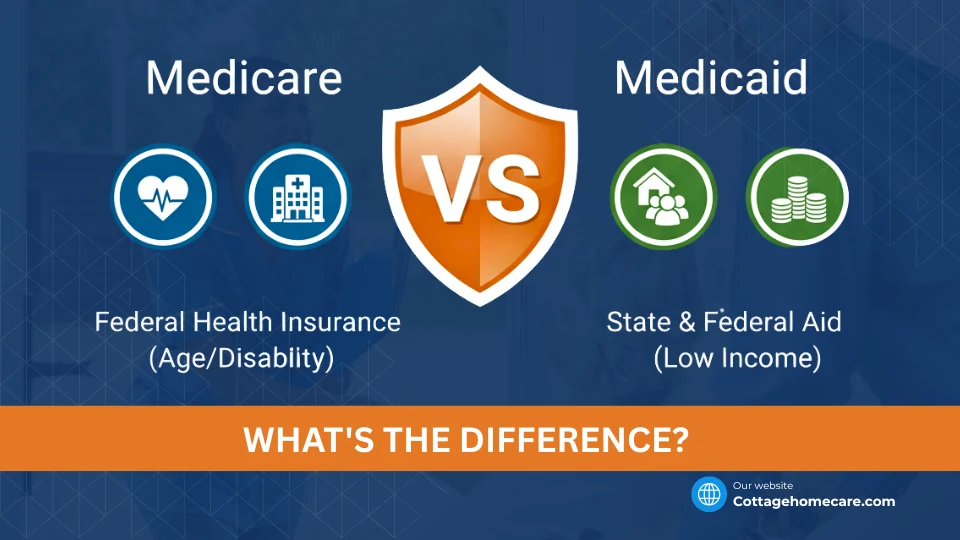
People mix up Medicare and Medicaid all the time. The difference matters a lot. Medicare is health insurance. You likely paid into it through your work taxes. Medicaid works differently. It is based on need, not on what you paid in. Medicaid is also the only one of the two that can pay for daily help at home, like bathing, dressing, cooking, and medicine reminders. For more on this, read our Medicare and Medicaid comparison.

Help Paying Your Medicare Premium: QMB, SLMB, and QI

Quick Answer

Medicare Savings Programs help pay your Medicare costs if your income is low. Your state runs them, and Medicaid pays for them. There are three levels. Most people have never heard of any of them.

QMB
2026 Income Limit
About $1,350 / $1,824 a month, one person / couple
What It Pays
Your Part A cost if you owe one, your full $202.90 Part B cost, and your deductibles. By law, doctors cannot bill you for the rest
SLMB
2026 Income Limit
About $1,616 / $2,184 a month, one person / couple
What It Pays
Just your $202.90 a month Part B cost, about $2,434.80 a year
QI
2026 Income Limit
About $1,816 / $2,455 a month, one person / couple
What It Pays
Just your Part B cost. Funding is limited each year, first-come first-served. You must apply again every year

If you get any of these three, you also get Extra Help. Extra Help caps what you pay for prescription drugs at just a few dollars each. Treat these numbers as a starting point only. Some states, like Connecticut, do not even check your savings. Always confirm the real number with your state Medicaid office.

You may also see Medicare Advantage plans advertise a “Part B giveback.” That is a different thing. It comes from a private insurance plan, not the government. The plan pays back part of your premium instead of the state paying it. It is worth comparing, but it is not the same as QMB, SLMB, or QI.

Medicaid’s Asset Limit and the 5-Year Look-Back

Quick Answer

Most states cap savings at $2,000 for one person applying for long-term Medicaid. A spouse who is not applying can usually keep much more, up to $162,660 in 2026. Before saying yes, the state checks the last 60 months of bank records. This check is called the look-back period.

This is often the biggest fear families bring to us. Will Mom have to give up everything first? A few facts help here:

  • The $2,000 limit only counts certain savings. It is not your full net worth. Your main home and one car usually do not count. Rules can still shift by state.
  • New York and a few other states set a much higher limit than $2,000. Do not assume you are over the line just because most states use $2,000.
  • The look-back covers the 60 months, or 5 years, right before you apply. It only flags gifts or sales made for less than fair value. It does not punish normal spending, like paying bills or buying food.
  • Money given to a spouse is always safe from the look-back. Some states also protect money given to an adult child who lived with a parent and gave care that kept them out of a nursing home for two years or more.
  • Getting this wrong can be costly. A poorly planned gift can block Medicaid for a while. This is a job for an elder law attorney, not a blog post, including this one.

Free and Low-Cost Extras From the Government

A few smaller, real perks come straight from the government too:

  • America the Beautiful Senior Pass. Pay $80 once, or $20 a year, and anyone 62 or older can visit every national park for life.
  • Free help from your Area Agency on Aging. Under the Older Americans Act, most areas offer home-delivered meals, rides to appointments, and friendly visits, often at no cost.
  • Phone and internet help through Lifeline, covered just below.
  • Home weatherization help, funded through LIHEAP, covered just below.

Be careful with ads that promise “free stuff for seniors.” Some ask for your Social Security number first. Some want a fee before they will even say what the “free” item is. Both are warning signs, not benefits.

Lifeline is a federal program. It takes up to $9.25 a month off a phone or internet bill. It is open to low-income households, and to anyone already on SNAP, Medicaid, or SSI. Lifeline works in every state. About four out of five people who qualify are not using it yet. A bigger, separate program called the Affordable Connectivity Program ended in 2024 and never came back. Lifeline is still active in 2026.

Food, energy, and housing
SNAP
Gives You
Monthly grocery help on an EBT card
Who It’s For
Low income; seniors often qualify under simpler rules
LIHEAP
Gives You
Help with heating and cooling bills, and sometimes home upgrades
Who It’s For
Low-income households, rules vary by state
HUD Section 8
Gives You
Help paying rent for private housing
Who It’s For
Income at or below half the area's typical income
HUD Section 202
Gives You
Subsidized apartments built for seniors, often with on-site help
Who It’s For
Someone in the home is 62+, income limits apply

Property Tax Relief for Seniors

Quick Answer

Nearly every state offers some kind of property tax break for senior homeowners. It usually comes as an exemption that shrinks your home's taxed value, a freeze that locks that value in place, or a deferral that lets you pay later. Almost all of these require you to apply. None of them happen just because you turned 65.

A few real examples show how much these differ by state:

New York
Program
Enhanced STAR
What It Does
Lowers your school tax bill for homeowners 65+ under an income cap, often saving $1,500 to $3,500 a year
New Jersey
Program
Senior Freeze
What It Does
Pays back eligible seniors for tax increases above their first qualifying year
Texas
Program
Over-65 exemption
What It Does
Adds a tax break on top of the normal homestead exemption, plus a freeze on school taxes at 65
Florida, others
Program
Tax deferral
What It Does
Lets seniors delay paying property tax, usually settled when the home is later sold

Your county tax office handles this paperwork, not Cottage or any home care agency. Still, check it either way. It has nothing to do with Medicaid home care, and having one does not affect the other.

More Tax Breaks for Seniors and Caregivers

  • Earned Income Tax Credit (EITC). If a senior still works and earns low to moderate pay, this credit can be worth several thousand dollars. Age alone does not block it.
  • Claiming a parent as a dependent. If you pay for more than half of your parent's support, you may be able to claim them on your own tax return, even if they live elsewhere. This can lower your own tax bill, not just theirs. Ask a tax professional to check the rules for your case.
Veterans’ Home-Modification Grants: Four Grants, Not One

Some veterans have a service-connected disability. If so, the VA offers four separate grants for home changes, not one. Mixing these up is the most common mistake we see in other guides on this topic:

SAH
FY2026 Max
$126,526
Best For
Building or majorly changing a home the veteran owns
SHA
FY2026 Max
$25,350
Best For
Smaller access changes, for a different set of conditions
TRA
FY2026 Max
$50,961, or $9,100 for SHA-level cases
Best For
Changing a home the veteran does not own, like a caregiver's house
HISA
FY2026 Max
$6,800, or $2,000 for non-service-connected cases
Best For
Medically needed changes, open to any disability level

Funeral and Burial Benefits

Quick Answer

Social Security pays a small, one-time payment after a death. It is $255. An eligible spouse or child can get it. Veterans and their families may also get VA burial help. This can include money toward the cost, a headstone, and a free grave in a national cemetery.

The Social Security payment is small. It rarely covers a full funeral, but it is real, and families often forget to ask for it. Veterans have more to work with. The VA can help pay burial costs, give a headstone or marker, and offer a free grave space. Ask your funeral home or the VA directly. They handle these forms every day.

The New Benefit Almost Nobody’s Covering Yet: The $6,000 “Senior Bonus” Deduction

Quick Answer

The senior bonus is a new federal tax break. It is worth up to $6,000 per person age 65 or older, or $12,000 for a married couple. A law called the One Big Beautiful Bill Act created it for tax years 2025 through 2028. It works whether you itemize or take the standard deduction. It starts to shrink once your income passes $75,000 (single) or $150,000 (joint).

This is truly new. It first applies to 2025 tax returns, filed in 2026. It stacks on top of your normal deductions rather than replacing them. It is not a check in the mail. It is a deduction on your tax return. Because it can interact with other tax rules, this is a good one to check with a tax professional, or a free counselor at your local Area Agency on Aging, rather than guessing on your own.

Can a Family Member Get Paid to Be a Caregiver?

Quick Answer

In several states, a Medicaid program can pay a family member or friend to give care. This works through a licensed home care agency. The program name, the rules, and even who employs the caregiver all change by state.

Maryland
Program
Community First Choice, Community Options Waiver
How It Works
A family member or friend can become the paid caregiver, hired by a licensed agency, after a state check
Learn More
Cottage Home Care in Maryland
Michigan
Program
Home Help
How It Works
Adult children, siblings, and other relatives can be paid. Spouses usually cannot
Learn More
Cottage Home Care in Michigan
Connecticut
Program
Adult Family Living
How It Works
The caregiver must live in the same home as the person getting care
Learn More
Cottage Home Care in Connecticut
Florida
Program
Participant-direction option
How It Works
The person getting care, not the agency, hires the family caregiver
Learn More
Cottage Home Care in Florida
New York
Program
Home Care
How It Works
New York's rules for paid family caregivers are stricter than most states. Ask a licensed local agency what applies now
Learn More
Contact our New York team

Note: the Florida link above points to a county-level page (Marion County); swap in whichever Florida page fits your site once you confirm the right URL.

The state decides who qualifies. Not a home care agency. Not us. That decision comes after an in-person check of medical need and income. An agency can still help. It can walk your family through the paperwork. It can tell you honestly if it looks like a good fit. It can handle the hiring and pay once someone is approved.

Need Help Navigating Your State’s Medicaid Application?

Getting approved for paid family caregiving, or for Medicaid home care, can mean months of paperwork if you try it alone. Our care coordinators do that heavy lifting for free, whether or not you end up working with us.

Call 516-367-2266Request a Free Eligibility Check →

Common Myths & Scams: Cleared Up

Warning

Scams spike right after official Cost-of-Living Adjustments (COLA) hit the news. The government will never ask for payment or gift cards to process a benefit application.

✕
“Seniors get an extra $200 to $300 stimulus check every month.”
Fake. This rumor comes from online sensationalism around routine COLA increases.
✕
“The government is sending seniors a stimulus check in 2026.”
Fake. There is no federal stimulus program for seniors right now.
✕
“Social Security checks are jumping to $4,800 for everyone.”
Misleading. $4,800 was close to the top payout a couple of years back. The real 2026 maximum, for someone who waits until age 70, is $5,181, and it is not a raise everyone gets.
✕
“Seniors born before a certain year get a special benefit.”
Fake. Real programs go by your current age and income, never your exact birth year. Treat this kind of ad as a red flag.
✓
“There’s a new $6,000 Senior Bonus Deduction.”
Real. Created by the One Big Beautiful Bill Act, this is an active federal tax deduction for people 65+ earning under $75,000 (single) or $150,000 (joint).
✓
“Social Security got a 2.8% raise for 2026.”
Real. A confirmed cost-of-living increase, effective January 2026.

Watch for ads about a “senior check” or “senior check benefits” too. Do not click the link or share any information. Call the Social Security Administration directly, using a number you look up yourself.

Many families ask us one real question: who actually pays for Mom’s day-to-day care? Our care coordinators walk families through which of these programs might fit. This costs nothing. There is no pressure, whether or not you end up working with us.

Common Mistakes and Best Practices

Quick Answer

Three mistakes cost families the most. Guessing you make too much to qualify. Letting paperwork lapse instead of renewing it each year. Waiting for a crisis before you look into Medicaid home care. A little planning ahead fixes all three.

Mistake: Assuming you’re automatically over the income line. Many programs let you “spend down” using medical costs. Many also allow more income than people assume. Skipping the form over a guess costs families real money every year.

Mistake: Treating this as a one-time task. Rules get reviewed. Income limits change every year. Some benefits need a new form each year too. A program that said no last year might say yes today.

Mistake: Mixing up Medicare and Medicaid. This one mix-up is why so many families think Medicare will pay for home care, then find out it will not. Medicaid can. If you are sorting out both at once, our Medicare vs. Medicaid guide breaks it down in plain words.

Mistake: Waiting for a crisis. Families often start looking into Medicaid home care right after a fall or a hospital stay. A calmer path was open months earlier. Looking early gives you more choices, not fewer.

Mistake: Answering an unsolicited benefit offer. A real caseworker never asks you to pay to process a benefit. Only the state decides who qualifies, never an ad, a text, or a random call.

Best practice: Stack your programs on purpose. Many SSI recipients also qualify for Medicaid and SNAP without extra work. Apply through official .gov sites or your local Area Agency on Aging. Keep your income papers current. Renew on schedule instead of waiting to be reminded.

When to get professional help: An elder law attorney is worth the cost for asset questions. Think of the look-back period, or protecting a home from estate recovery. We cover how Medicaid and your home interact here. A free counselor at your Area Agency on Aging can help with tricky, multi-program cases. A licensed home care agency is the right call for Medicaid home care and paid-family-caregiver questions. We handle that paperwork every day.

Your Step-by-Step Checklist to Start Claiming Benefits

Quick Answer

Gather your papers first. Then check your age and income against the limits above. Apply through a real government channel or a licensed agency. Set a reminder to check everything again next year.

  1. Gather your papers. A government ID, Social Security card, proof of income, a Medicare card if you have one, and a list of current medicines.
  2. Check your age and income against the tables above. Use them as a starting checklist, not a guess.
  3. Use a real screening tool first. NCOA’s BenefitsCheckUp (benefitscheckup.org) and your local Area Agency on Aging (find yours at eldercare.acl.gov) are both free. Neither asks you to share your details with a private company just to get a first answer.
  4. Ask specifically about home-care Medicaid programs, not just “Medicaid” in general. A general benefits line may not bring these up on its own.
  5. If care is already needed, call a licensed home care agency. Ask if a family member could become a paid caregiver, and what that really involves.
  6. Put a yearly check on your calendar. Income limits, raises, and premiums all change every January.

Warning signs it’s a scam: A request for payment or gift cards to “process” your form. Pressure to act within hours. A caller who already knows your Social Security number and asks you to “confirm” it. A promise that you are “already approved” before anyone has checked anything.

Good questions to ask a caseworker or agency: Which programs can I apply for at once? What is the real income limit for my state and family size? If I am slightly over, is there a spend-down option? If a family member gets paid to give care, who employs them, the agency or my relative? How long does a decision usually take?

Frequently Asked Questions

What government benefits are available for seniors?+
The main ones are Social Security, SSI, Medicare, and Medicaid, including state home-care programs. Add SNAP, LIHEAP, HUD housing help, VA home grants, and a new $6,000 tax break for 2026.
Is there really free government money for seniors?+
Not as one lump-sum “free money” check, no. But there are dozens of real programs for income, health care, food, housing, and home care that many seniors never claim.
What is the $6,000 senior bonus deduction?+
A federal tax break of up to $6,000 per person 65 or older, for tax years 2025 through 2028, on top of what you already get. It shrinks once income passes $75,000 (single) or $150,000 (joint).
Can a family member get paid to be a caregiver?+
In many states, yes, through a program like Community First Choice or Home Help. The rules, and who employs the caregiver, change a lot by state.
Will Medicaid pay for home care instead of a nursing home?+
In many states, yes. Medicaid can pay for home care for people who would otherwise need nursing-home-level care, if they pass the state’s check.
Are seniors getting a special stimulus check in 2026?+
No. There is no federal stimulus program for seniors right now, at any dollar amount you may have heard.
What age counts as a senior for benefits?+
It depends on the program: 60 for meal and chore help, 62 for early Social Security, and 65 for Medicare. Check each program’s own age rule.
What’s the difference between Medicare and Medicaid?+
Medicare is federal health insurance for people 65 and up. Income does not matter. Medicaid is based on need. It can also pay for ongoing home care, which Medicare usually does not.
Can I deduct my Medicare premiums on my taxes?+
Often yes, as part of medical costs you itemize, or through the new senior deduction. A tax professional can confirm what fits your own return.
Does Social Security pay for a funeral?+
It pays a small, one-time $255 payment to an eligible spouse or child. It will not cover a full funeral, but veterans may also get separate, larger VA burial help.

The Bottom Line

None of this is hard once someone lays it out. It is just spread across too many offices for most families to see the whole picture at once. Start with the checklist above. Apply through real channels. And if the part you are stuck on is “how do we actually pay for care at home,” that is the talk our team has every day. Call us or reach out through our contact page for a free, no-pressure look at what might fit your family. Check our FAQ page for more on how we work.

This article reflects U.S. federal and state benefit rules as of July 2026. These rules change every year. They also vary by state. This is general information only. It is not legal, tax, or financial advice. Check current details with the official sources above, or with a licensed professional. Confirm your state’s exact program details and license information with a Cottage Home Care team member.

About the author

Cottage Home Care logo
Cottage Home Care on FacebookCottage Home Care on InstagramCottage Home Care on LinkedInCottage Home Care on YouTube

Cottage Home Care

Since 1992, Cottage Home Care has helped families across seven states live independently at home—delivering CHAP-accredited nursing, personal care, and specialized home care programs, backed by clinical oversight from our team of registered nurses and care specialists.

Popular Tags

Home Care ServicesHome Care Near MeCottage Home Care ServicesElderly CareHome Care Services Near MePrivate Pay Home CareHome Care For ElderlyIn-home CareIn-home Care ServicesMedicaid Home CareAffordable Home CareHome Health Aides

Leave a Reply

Need Immediate Care Advice?

Our specialists are available 24/7 to help guide your family through crucial care decisions.

Explore Our Proof

Recent Insights

Which States Have the Highest Nursing Home Care Costs?

Which States Have the Highest Nursing Home Care Costs?

Jul 29, 2026

Are You a Family Caregiver Who Feels Completely Alone?

Are You a Family Caregiver Who Feels Completely Alone?

Jul 28, 2026

PCA & HHA Eligibility: Who Qualifies as a Paid Caregiver

PCA & HHA Eligibility: Who Qualifies as a Paid Caregiver

Jun 30, 2026

Text size

Browse by State

Jump to the articles written for your state.

  • New York
  • Michigan
  • MarylandComing soon
  • ConnecticutComing soon
  • New JerseyComing soon
  • FloridaComing soon
View all articles
Getting Started

Private Pay Care Can Begin
in as Little as 24 Hours

Companion care covers a wide range of social, emotional, and practical support services — all delivered in the comfort of home.

  1. 1

    Call Us or Apply Online

    Reach out by phone or complete our eligibility form. A care advisor will call you within hours.

  2. 2

    Free Home Assessment

    We visit your home (or speak by phone) to understand your loved one's needs, personality, and preferences.

  3. 3

    Caregiver Matching

    We select 2–3 companion caregivers who match your loved one's interests and introduce you to your top choice.

  4. 4

    Care Begins

    Your companion caregiver starts their visits. We check in regularly to ensure everything is going well.

Frequently Asked Questions

Can companion care help a senior who lives alone and feels lonely?

Absolutely. Companion care is designed specifically for seniors who live alone and need regular social interaction, emotional support, and safe company. A trained companion caregiver visits regularly to talk, play games, go for walks, or simply be present — reducing loneliness and improving quality of life.

Is companion care right for someone with early-stage dementia?

Yes — companion care is often an ideal starting point for someone with early-stage dementia. A companion caregiver provides consistent routines, gentle engagement, and supervision that helps slow cognitive decline while keeping your loved one safe and stimulated at home.

Is companion care covered at no cost for Medicaid recipients?

In many states, companion care services are fully covered by Medicaid with no out-of-pocket cost to eligible clients. Cottage Home Care will verify your loved one's Medicaid coverage and explain exactly what is included at no cost to you.

Can companion care give family members a break from caregiving?

Yes — many families use companion care as respite care, allowing a daughter, son, or spouse to take a break from daily caregiving duties without worrying about their loved one being alone. Regular companion visits reduce caregiver burnout and give families peace of mind.

How quickly can companion care begin after I call?

Companion care can typically begin within 24–48 hours of your initial call. Cottage Home Care handles the intake process quickly so that your loved one has support as soon as possible.

Recommended Blogs

Stay ahead with our latest insights

Experienced, passionate, and deeply committed to raising the bar for home care — in New York and across the country.

Easter Eggstravaganza at Cottage Home Care 2026

Easter Eggstravaganza at Cottage Home Care 2026

Make memories with Easter crafts, games, and family fun at Cottage Home Care’s exciting Easter Eggtravaganza.

Continue reading
Home Care Services in Maryland: Caring for You

Home Care Services in Maryland: Caring for You

Discover compassionate and professional home care services in Maryland. At Cottage Home Care, we offer skilled nursing, companionship, and more.

Continue reading
Emergency Home Care: Fast & Reliable Help When You Need It

Emergency Home Care: Fast & Reliable Help When You Need It

Emergency home care when your loved one needs immediate support. Cottage Home Care Services offers quick, professional assistance. Contact us now.

Continue reading
Easter Eggstravaganza at Cottage Home Care 2026

Easter Eggstravaganza at Cottage Home Care 2026

Make memories with Easter crafts, games, and family fun at Cottage Home Care’s exciting Easter Eggtravaganza.

Continue reading
Home Care Services in Maryland: Caring for You

Home Care Services in Maryland: Caring for You

Discover compassionate and professional home care services in Maryland. At Cottage Home Care, we offer skilled nursing, companionship, and more.

Continue reading
Emergency Home Care: Fast & Reliable Help When You Need It

Emergency Home Care: Fast & Reliable Help When You Need It

Emergency home care when your loved one needs immediate support. Cottage Home Care Services offers quick, professional assistance. Contact us now.

Continue reading
Easter Eggstravaganza at Cottage Home Care 2026

Easter Eggstravaganza at Cottage Home Care 2026

Make memories with Easter crafts, games, and family fun at Cottage Home Care’s exciting Easter Eggtravaganza.

Continue reading
Home Care Services in Maryland: Caring for You

Home Care Services in Maryland: Caring for You

Discover compassionate and professional home care services in Maryland. At Cottage Home Care, we offer skilled nursing, companionship, and more.

Continue reading
Emergency Home Care: Fast & Reliable Help When You Need It

Emergency Home Care: Fast & Reliable Help When You Need It

Emergency home care when your loved one needs immediate support. Cottage Home Care Services offers quick, professional assistance. Contact us now.

Continue reading
Easter Eggstravaganza at Cottage Home Care 2026

Easter Eggstravaganza at Cottage Home Care 2026

Make memories with Easter crafts, games, and family fun at Cottage Home Care’s exciting Easter Eggtravaganza.

Continue reading
Home Care Services in Maryland: Caring for You

Home Care Services in Maryland: Caring for You

Discover compassionate and professional home care services in Maryland. At Cottage Home Care, we offer skilled nursing, companionship, and more.

Continue reading
Emergency Home Care: Fast & Reliable Help When You Need It

Emergency Home Care: Fast & Reliable Help When You Need It

Emergency home care when your loved one needs immediate support. Cottage Home Care Services offers quick, professional assistance. Contact us now.

Continue reading
Easter Eggstravaganza at Cottage Home Care 2026

Easter Eggstravaganza at Cottage Home Care 2026

Make memories with Easter crafts, games, and family fun at Cottage Home Care’s exciting Easter Eggtravaganza.

Continue reading
Home Care Services in Maryland: Caring for You

Home Care Services in Maryland: Caring for You

Discover compassionate and professional home care services in Maryland. At Cottage Home Care, we offer skilled nursing, companionship, and more.

Continue reading
Emergency Home Care: Fast & Reliable Help When You Need It

Emergency Home Care: Fast & Reliable Help When You Need It

Emergency home care when your loved one needs immediate support. Cottage Home Care Services offers quick, professional assistance. Contact us now.

Continue reading
Easter Eggstravaganza at Cottage Home Care 2026

Easter Eggstravaganza at Cottage Home Care 2026

Make memories with Easter crafts, games, and family fun at Cottage Home Care’s exciting Easter Eggtravaganza.

Continue reading
Home Care Services in Maryland: Caring for You

Home Care Services in Maryland: Caring for You

Discover compassionate and professional home care services in Maryland. At Cottage Home Care, we offer skilled nursing, companionship, and more.

Continue reading
Emergency Home Care: Fast & Reliable Help When You Need It

Emergency Home Care: Fast & Reliable Help When You Need It

Emergency home care when your loved one needs immediate support. Cottage Home Care Services offers quick, professional assistance. Contact us now.

Continue reading