
Cottage Care Blog
Home Care vs. Home Health Care: Understanding Your Options

By Cottage Home Care Services
0Comment
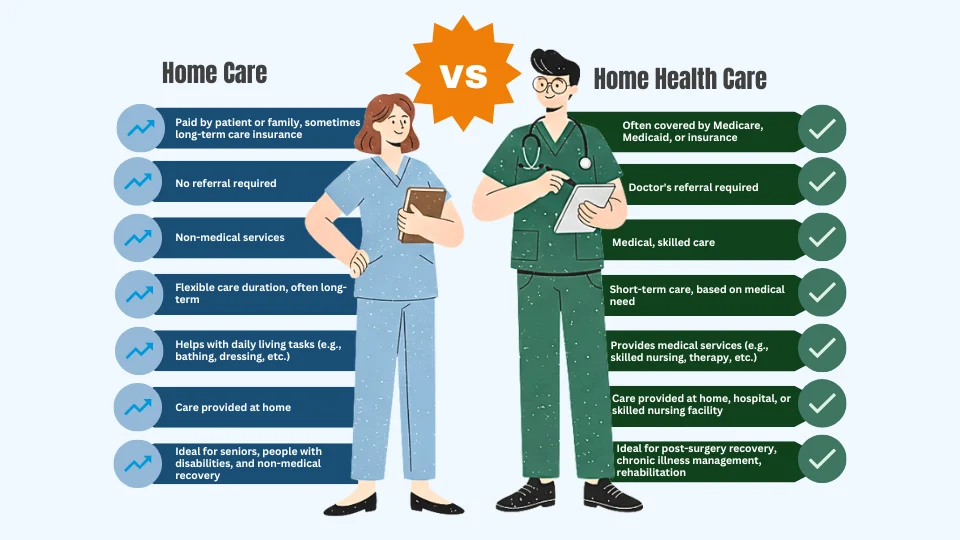
Home Care vs. Home Health Care: Understanding Your Options
Home Care vs. Home Health Care: Key Differences Explained
Are you confused about the difference between home care and home health care? You’re not alone — many people use the terms interchangeably, but they serve different purposes. Understanding these distinctions can help you or a loved one make the right decision about care, ensuring you get the support you need while maintaining independence at home.
In this article, we’ll explore the critical differences between home care and home health care, providing you with clear insights to choose the best option for your needs.
Overview of Home Care and Home Health Care
What Is Home Care?
Home care, sometimes referred to as personal care, companion care, or custodial care, involves non-medical assistance to help individuals with daily living activities. It’s ideal for seniors, people with disabilities, or those recovering from surgery who need support with everyday tasks but don’t require medical supervision. These services help people live independently at home for as long as possible.
What Is Home Health Care?
Home health care, on the other hand, refers to medically necessary services provided by licensed healthcare professionals like nurses, physical therapists, and speech therapists. These services are usually prescribed by a doctor and are aimed at helping patients recover from illnesses, surgeries, or manage chronic conditions. Unlike home care, home health care involves medical treatment and therapy to improve a patient’s health and functional abilities.
Breaking Down Home Care
Home care focuses on making daily living more manageable and comfortable. Services provided include:
- Personal Care: Assistance with bathing, dressing, grooming, and toileting.
- Homemaker Services: Meal preparation, light housekeeping, and laundry.
- Companionship: Offering emotional support, conversation, and even help with hobbies or outings.
- Transportation: Providing rides to medical appointments, shopping, or social events.
Who Needs Home Care?
Home care is a great option for people who have chronic illnesses or disabilities but don’t require medical supervision. It’s also useful for those recovering from surgery who need help with everyday tasks. Many seniors opt for home care to maintain their independence without going to a nursing home.
Breaking Down Home Health Care
Home health care is medical in nature, often prescribed by a doctor. Services provided include:
- Skilled Nursing Care: Nurses visit to manage medical needs like wound care, intravenous medications, or monitoring vital signs.
- Physical, Occupational, and Speech Therapy: These services are designed to help patients regain function and independence after an illness or injury.
- Medication Management: A nurse may assist with administering medications or managing a patient’s medication schedule.
- Health Monitoring: This includes monitoring conditions like blood pressure, diabetes, and other chronic diseases.
Who Needs Home Health Care?
Home health care is suitable for individuals recovering from surgery, managing chronic conditions, or needing therapy after a serious illness or injury. This type of care is often short-term and prescribed to assist in recovery and rehabilitation.
Eligibility and Coverage
Home Care: No doctor’s referral is required. It’s available to anyone needing assistance with daily tasks. Payment is typically out-of-pocket or covered by long-term care insurance.
Home Health Care: Requires a doctor’s prescription. Medicare, Medicaid, and most private insurance plans cover home health services, but certain eligibility criteria must be met, including being homebound or needing medical treatment.
Cost Comparison
Home care: Typically cheaper (national average of $30/hour).
Home health care: Can be more expensive due to the medical nature of services provided. Covered by insurance under certain conditions.
Comparison Table: Services Provided
| Home-based Service | Home Care | Home Health Care |
|---|---|---|
| Bathing/dressing assistance | Yes (Non-medical help) | No (Provided by medical professionals) |
| Bathroom support | Yes (Personal care aides assist) | Sometimes (Provided if part of treatment) |
| Cleaning | Yes (Light housekeeping) | No (Not included in medical care) |
| Companionship | Yes (Social interaction and emotional support) | No (Not a focus in medical care) |
| Health monitoring | No | Yes (Vital signs, chronic condition management) |
| Injections and IV therapies | No | Yes (Administered by registered nurses) |
| Meal prep or delivery | Yes (Meal preparation, groceries) | No (Medical professionals do not handle meals) |
| Medical tests | No | Yes (Lab work, diagnostic testing, etc.) |
| Medication administration | No | Yes (Nurses administer or manage medications) |
| Medication reminders | Yes (Remind patient to take meds) | Yes (Ensure correct medication usage) |
| Pain management | No | Yes (Provided by healthcare professionals) |
| Rehabilitative therapies | No | Yes (Physical, occupational, speech therapy) |
| Skilled nursing | No | Yes (Nurses provide skilled medical care) |
| Transportation | Yes (Non-medical transportation) | No (Medical transportation may be included if necessary) |
| Wound care | No | Yes (Wound care performed by nurses) |
Comparison Table: Other Key Differences
| Aspect | Home Care | Home Health Care |
|---|---|---|
| Eligibility | No referral required | Doctor's referral required |
| Coverage | Out of pocket, long-term care insurance | Covered by Medicare, Medicaid, insurance |
| Duration of Care | Long-term, can be ongoing | Short-term, based on medical need |
| Level of Care | Non-medical care | Medical, skilled care |
| Payment Structure | Paid by patient or family, sometimes long-term care insurance | Often covered by Medicare, Medicaid, or insurance |
| Location | Care provided at home | Care provided at home, hospital, or skilled nursing facility |
| Care Team | Caregivers, family members, aides | Registered nurses, physical therapists, medical professionals |
| Purpose | Assist with daily living tasks and companionship | Medical recovery and rehabilitation |
| Ideal for | Post-surgery recovery, chronic illness management, rehabilitation | Seniors, people with disabilities, recovery from non-medical conditions |
Common Mistakes to Avoid
Confusing Home Care with Home Health Care: The biggest mistake people make is assuming that home care can provide medical services like home health care. If you or a loved one needs medical supervision, home health care is the right choice.
Underestimating Costs: While home care may seem less expensive, the costs can add up over time, especially if 24/7 care is required. It’s important to assess your budget and needs thoroughly before making a decision.
What’s Changed in 2025
Telehealth Integration: Telemedicine is increasingly being incorporated into home health care services. This means patients can receive consultations, follow-ups, and even therapy sessions remotely, reducing the need for in-person visits.
Personalized Home Care: Many home care services are now offering customized care based on the patient’s health conditions. For example, home care aides might now be trained in caring for individuals with dementia or other specific needs.
How to Choose the Right Care
To decide between home care and home health care, follow these steps:
- Assess Your Needs: Do you need assistance with daily tasks like dressing or bathing? → Home care. Do you need medical supervision, like medication management or therapy? → Home health care.
- Consult Your Doctor: A doctor’s referral is needed for home health care, so discuss your medical needs with them.
- Consider Your Budget: Home care may cost less but requires ongoing payments. Home health care can be covered by insurance or Medicare, but it’s often short-term and for specific needs.
- Choose a Provider: Research agencies that specialize in either home care or home health care based on your needs and budget.
Conclusion
Understanding the difference between home care and home health care is crucial for making the right decision based on your needs and budget. Home care offers essential support for daily living tasks, while home health care provides specialized medical care. Consult with your healthcare provider and consider your personal needs before deciding.
Click here to discover more about the differences between CNA and CMA careers.
Recent Posts
Categories
Related Topic
home carehome health carehome care serviceshome health servicespersonal careskilled nursingelderly caremedical home caresenior carehome care near mehome health care near mein-home carecaregiving servicessenior care services near me
0comments
COMMENT SECTION

![[Valid RSS]](https://www.rssboard.org/rss-validator/images/valid-rss-rogers.png "Validate my RSS feed")
Copyright © 2026 Cottage Home Care - All Rights Reserved.