
516-367-2266info@cottagehomecare.com
Follow Us :
Cottage Home Care logo
  • Contact Us
Free Consultation

Why Cottage Homecare Agency?

Since 1992, our aim to set the bar higher for home-based care has resulted in
better health for our clients and greater peace of mind for our client's families.

REQUEST CARE516-367-2266Find care near me
Join Our Care Community

Join Our Care Community

Receive weekly inspiration, expert health advice, and heartwarming stories from our sanctuary families.

Cottage Home Care Services

We provide personalized care. Each of our patients receives one-on-one attention and a care plan tailored to their specific needs.

Home Care

  • Companion Care
  • Personal Care
  • Specialized Care
  • Pediatric Care
  • Private Pay
  • Home Health

Company

  • Our Team
  • Blog
  • Press
  • Careers
  • Locations
  • About Us

Useful Links

  • FAQs
  • Terms & Conditions
  • Privacy Policy
  • Disclaimer
  • Contact Us
  • Our Story

Contact

516-367-2266
516-367-1067
info@cottagehomecare.com
294 West Merrick Road, Suite 12, Freeport, NY 11520, United States
REQUEST CARE516-367-2266
[Valid RSS]

Cottage Home Care is a fully licensed home care services agency providing trusted, high-quality care across 25+ states,
including New York, New Jersey, Michigan, Maryland, Florida, and more.

© 2026 Cottage Home Care. All Rights Reserved.

FAQs|Terms & Conditions|Privacy Policy|Disclaimer|Contact Us|Our Story

Back to blogs
BLOG4 min read

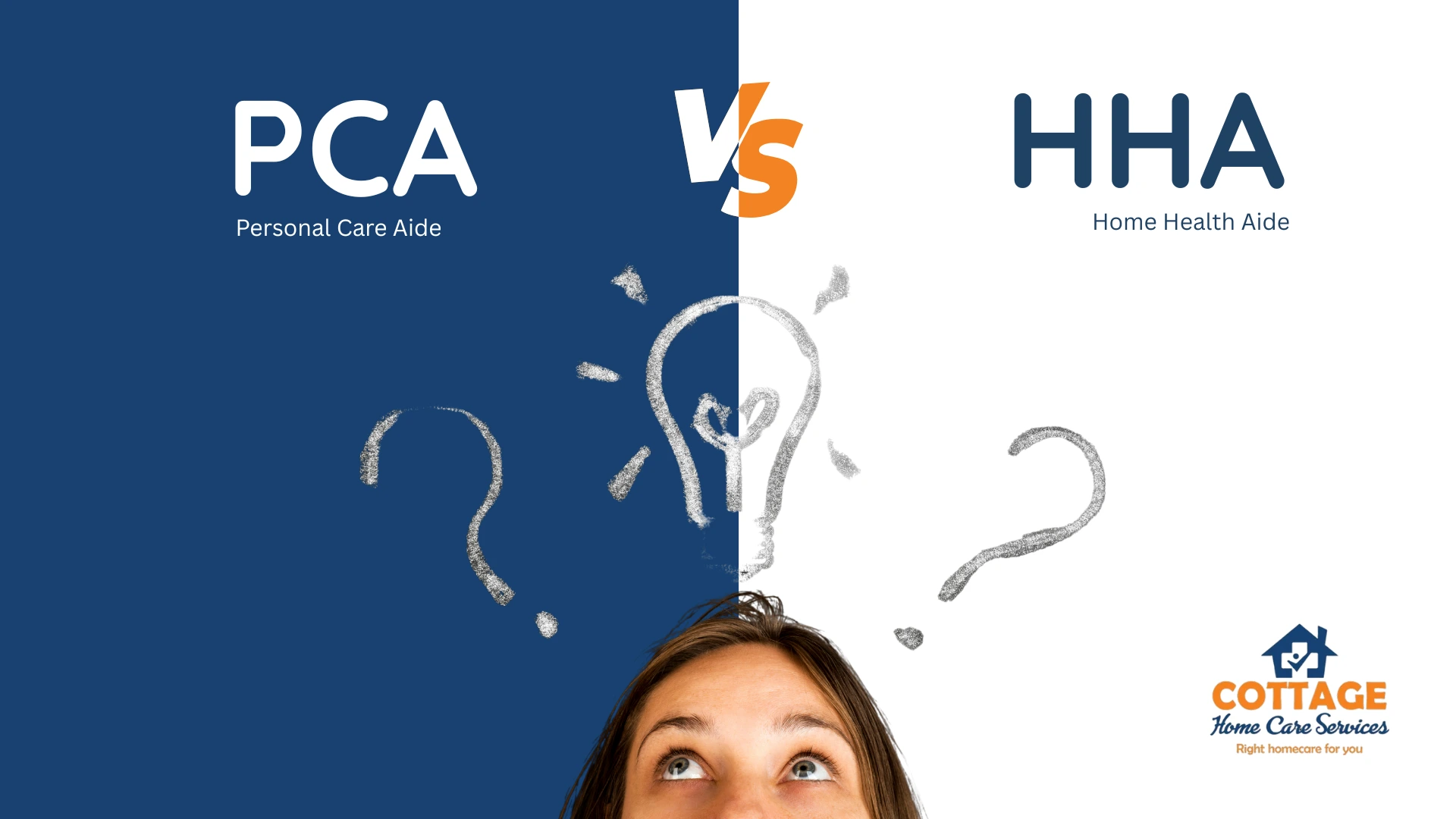
PCA vs HHA: Which Home Care Role Fits You Best?

Cottage Home Care

Cottage Home Care

Editorial Team • Published Jul 19, 2025

PCA vs HHA: Which Home Care Role Fits You Best?

PCA vs HHA: A Comprehensive Guide to Home Care Careers

Choosing between a career as a Personal Care Aide (PCA) or a Home Health Aide (HHA) can be tough. It's important to know the differences, benefits, and requirements of each role.


This article clarifies the differences between PCA (Personal Care Assistant) and HHA (Home Health Aide), along with their certifications, salaries, and highlights why the Brooklyn Institute of Vocational Training is an excellent choice for PCA and HHA training. By choosing the right institution for your PCA and HHA education, you can maximize your career potential in the growing healthcare field.


What Is a PCA vs HHA?

Both PCAs and HHAs play important roles in providing assistance with daily tasks, but their duties and training differ:


  • Personal Care Aide (PCA): PCAs provide non-medical support, helping with personal care tasks like bathing, dressing, grooming, and light housekeeping. Their focus is on improving the comfort and well-being of clients in a non-medical setting.

  • Home Health Aide (HHA): HHAs provide both medical and non-medical care, often under the supervision of a registered nurse or physician. They may assist with tasks such as monitoring vital signs, administering medications, and helping clients with medical equipment.


Benefits of PCA and HHA Roles

Both PCA and HHA roles come with rewarding opportunities.


PCA Benefits:


  • Shorter training programs, allowing quicker entry into the workforce.

  • Less stringent certification requirements, making it easier to get started.

  • Ideal for those looking for entry-level positions in home care that focus on personal care and daily assistance tasks.


HHA Benefits:


  • Higher earning potential compared to PCAs due to the inclusion of medical tasks.

  • Opportunities to assist with medical procedures and provide more comprehensive care to clients.

  • Greater career advancement potential in healthcare settings, with possible transitions into higher roles in patient care and medical support.


PCA and HHA Certification Requirements in New York

To become certified, each role has its own certification requirements:


  • PCA Certification: Completion of a state-approved training program is required, typically lasting between 40 to 75 hours of both classroom and practical training. This certification process is straightforward and less time-consuming than HHA training.

  • HHA Certification: Requires a minimum of 75 hours of training, including both classroom instruction and supervised practical training. This role is best suited for those seeking to take on more medical responsibilities and earn a higher salary.


The Brooklyn Institute of Vocational Training offers comprehensive and accredited home care training programs to help you succeed in the home care field.


How to Become PCA or HHA Certified in NY

  1. Select an Accredited Training Program: Choose a program approved by the New York State Department of Health. Look for recognized programs that offer both classroom instruction and hands-on training.

  2. Complete the Required Training Hours: Attend and complete the required classroom and practical training for either PCA or HHA.

  3. Pass the Certification Exam: Demonstrate your competency in the required skills for either PCA or HHA by passing the certification exam.

  4. Submit Your Application for Certification: Apply to the New York State Department of Health to receive your certification once you meet all the requirements.


Why Choose the Brooklyn Institute of Vocational Training?

The Brooklyn Institute of Vocational Training stands out for those looking to become a certified PCA or HHA. Here’s why:


  • Accredited Programs: Offers state-approved HHA and PCA training programs designed to meet all certification requirements.

  • Experienced Instructors: Learn from trained professionals who provide practical, hands-on education.

  • Flexible Schedules: Courses align with your lifestyle, offering both day and evening options.

  • Job Placement Assistance: The institute offers job placement support to help you secure employment after certification.


For more details, visit the Brooklyn Institute of Vocational Training.


Conclusion

When deciding between a career as a Personal Care Aide (PCA) and a Home Health Aide (HHA), it's important to consider your interests and long-term goals. Your personal preferences and career objectives should guide your decision.


Both roles provide an opportunity to make a meaningful impact on the lives of others in the home care industry. If you wish to take on more medical responsibilities and earn a higher salary, pursuing HHA certification is a great option. On the other hand, becoming a PCA is ideal for those looking to start in an entry-level position focused on assisting with daily activities.


The Brooklyn Institute of Vocational Training offers accredited programs to help you confidently pursue your career aspirations in home care. Whether you choose to become a PCA or HHA, both paths allow you to contribute positively to the well-being of individuals in need.

About the author

Cottage Home Care logo

Cottage Home Care

Since 1992, Cottage Home Care has helped families across seven states live independently at home—delivering CHAP-accredited nursing, personal care, and specialized home care programs, backed by clinical oversight from our team of registered nurses and care specialists.

Leave a Reply

Need Immediate Care Advice?

Our specialists are available 24/7 to help guide your family through crucial care decisions.

Explore Our Proof

Recent Insights

Easter Eggstravaganza at Cottage Home Care 2026

Easter Eggstravaganza at Cottage Home Care 2026

Apr 4, 2026

Home Care in Michigan for Families

Home Care in Michigan for Families

Mar 12, 2026

Home Care Montgomery | What Makes Families Choose Us?

Home Care Montgomery | What Makes Families Choose Us?

Mar 11, 2026

Popular Tags

Home Care ServicesHome Care Near MeCottage Home Care ServicesElderly CarePrivate Pay Home Care

Text size

Getting Started

Private Pay Care Can Begin
in as Little as 24 Hours

Companion care covers a wide range of social, emotional, and practical support services — all delivered in the comfort of home.

  1. 1

    Call Us or Apply Online

    Reach out by phone or complete our eligibility form. A care advisor will call you within hours.

  2. 2

    Free Home Assessment

    We visit your home (or speak by phone) to understand your loved one's needs, personality, and preferences.

  3. 3

    Caregiver Matching

    We select 2–3 companion caregivers who match your loved one's interests and introduce you to your top choice.

  4. 4

    Care Begins

    Your companion caregiver starts their visits. We check in regularly to ensure everything is going well.

Frequently Asked Questions

Can companion care help a senior who lives alone and feels lonely?

Absolutely. Companion care is designed specifically for seniors who live alone and need regular social interaction, emotional support, and safe company. A trained companion caregiver visits regularly to talk, play games, go for walks, or simply be present — reducing loneliness and improving quality of life.

Is companion care right for someone with early-stage dementia?

Yes — companion care is often an ideal starting point for someone with early-stage dementia. A companion caregiver provides consistent routines, gentle engagement, and supervision that helps slow cognitive decline while keeping your loved one safe and stimulated at home.

Is companion care covered at no cost for Medicaid recipients?

In many states, companion care services are fully covered by Medicaid with no out-of-pocket cost to eligible clients. Cottage Home Care will verify your loved one's Medicaid coverage and explain exactly what is included at no cost to you.

Can companion care give family members a break from caregiving?

Yes — many families use companion care as respite care, allowing a daughter, son, or spouse to take a break from daily caregiving duties without worrying about their loved one being alone. Regular companion visits reduce caregiver burnout and give families peace of mind.

How quickly can companion care begin after I call?

Companion care can typically begin within 24–48 hours of your initial call. Cottage Home Care handles the intake process quickly so that your loved one has support as soon as possible.

Recommended Blogs

Stay ahead with our latest insights

Experienced, passionate, and deeply committed to raising the bar for home care — in New York and across the country.

Average Calcium Score for 60 Year Old's

Average Calcium Score for 60 Year Old's

Discover what the average calcium score is for 60-year-olds, how to interpret it, and what it means for your heart health and future risk.

Continue reading
Explore the Complete List of Adult Foster Care Homes in Michigan

Explore the Complete List of Adult Foster Care Homes in Michigan

Explore the top adult foster care homes in Michigan. Find trusted homes with personalized care, medical support, and companionship for your loved ones.

Continue reading
Fun & Memorable Birthday Party Games for Elderly Guests

Fun & Memorable Birthday Party Games for Elderly Guests

Fun & Memorable Birthday Party Games for Elderly Guests

Continue reading