
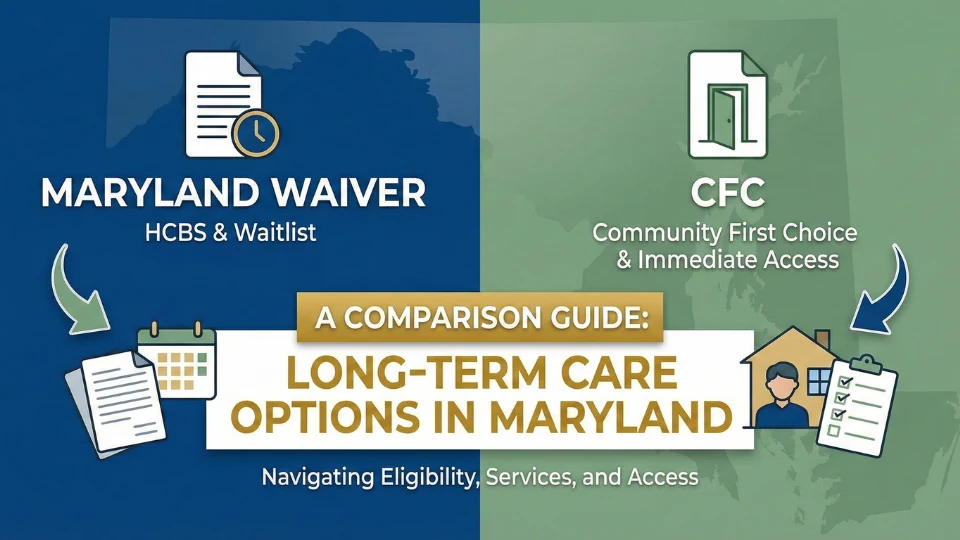
Maryland Waiver vs. CFC: A Comparison Guide – Which Program Is Right for You?
Introduction: Choosing the Right Care Program for You
If you or someone you care for needs long-term care, you may be thinking about Maryland’s Waiver program or Community First Choice (CFC). These programs provide assistance for people who need help with daily activities like bathing, eating, and getting around. The decision you make will affect what services you get, how much you pay, and how soon you can start getting help.
This guide will compare Maryland Waivers and CFC in simple terms so you can make an informed decision about which one is best for you or your loved one.
Main Section 1: What Are Maryland Waivers and CFC?
Before we dive into the details, let's start by understanding what these programs are.
What Is the Maryland Waiver Program?
Maryland offers several Waiver programs under Medicaid to provide home and community-based services (HCBS). These are for people who need care that they can’t get from just visiting a doctor or nurse. Instead, these services are provided at home or in the community.
One common waiver is the Home and Community-Based Options Waiver (HCBOW). This Waiver is for people who need nursing-home-level care but want to live at home or in the community instead of in a nursing home. Waiver programs are not entitlement programs, which means you may have to wait for a spot if there is not enough funding.
What Is Community First Choice (CFC)?
CFC is another program offered under Medicaid. It is a State Plan Option, which means it provides services under Medicaid rules, but it is different from the Waiver. The biggest difference is that CFC is an entitlement program, which means that if you qualify, you can start receiving services right away. There is no waiting list like there is for the Waiver.
CFC provides personal care assistance, but it’s more limited in terms of services compared to the Waiver.
Main Section 2: Key Differences Between the Maryland Waiver and CFC
Now that you understand what these programs are, let's compare them in more detail.
Eligibility: Who Can Qualify for These Programs?
To qualify for both the Maryland Waiver and CFC, you must meet certain requirements. However, the rules for each program can be different.
Income and Assets
Maryland Waivers: There are different rules for income and assets in the Waiver program. The Waiver may allow people with higher incomes to qualify. For example, if you're married, your spouse may be able to keep more of the family’s income and assets under the spousal impoverishment rules.
CFC: The income limits for CFC are lower. You generally need to be under 150% of the Federal Poverty Level (FPL). This is usually lower than the Waiver’s income limits.
Institutional Level of Care
Both programs require that you need care that is at the level of care provided in a nursing home. This means you must need help with basic daily activities such as eating, bathing, or dressing. An assessment is done to determine if you meet this level of care.
Services: What Do These Programs Cover?
Both the Maryland Waiver and CFC offer services that help with daily living. But the Waiver provides more services than CFC.
Maryland Waiver Services
The Waiver program offers a wide range of services, such as:
- Personal care assistance (help with bathing, dressing, eating).
- Respite care (temporary care to give caregivers a break).
- Medical services like physical therapy and occupational therapy.
- Home modifications like ramps or other changes to make your home more accessible.
- Residential care options, such as assisted living or adult day care.
- Behavioral health services for people who need help with mental health or behavior issues.
CFC Services
CFC offers a smaller list of services:
- Personal care assistance (help with daily living tasks).
- Emergency response systems (PERS) for safety.
- Supports planning (help with coordinating your services and care).
CFC doesn’t cover things like residential care or behavioral health services that the Waiver provides.
Flexibility: How Much Control Do You Have Over Your Care?
The level of control or flexibility you have in choosing your caregivers and how your services are delivered is important.
Self-Directed Services in CFC
CFC has a self-directed model. This means you can hire and manage your own caregivers. You can decide who will help you and how you want your care to be done.
Flexibility in Waiver Programs
The Waiver program also allows some flexibility, but it is often more limited than CFC in terms of how much control you have.
Waiting Lists: How Long Will You Have to Wait?
One of the biggest differences between the Maryland Waiver and CFC is the waiting list.
Waiver Programs: Waivers often have long waiting lists because there are limited slots available for new participants. This means that even if you qualify, it may take months or even years before you can receive services.
CFC: The CFC program does not have a waiting list. If you qualify, you can start receiving services immediately. This is a huge advantage if you need care right away.
Main Section 3: Common Mistakes to Avoid
When choosing between the Maryland Waiver and CFC, there are some common mistakes that people make. Let’s go over what to avoid.
1. Not Realizing the Wait for Waivers
Many people assume that both programs offer immediate services. But Waivers often come with long waiting lists. If you need care right away, CFC might be the better choice because there is no waiting list.
2. Overlooking the Differences in Services
Another mistake is not comparing the services each program offers. CFC offers fewer services than the Waiver, so make sure to check what services you really need before choosing.
3. Missing the Financial Eligibility Details
Some people don’t fully understand the income limits for both programs. For example, the Waiver might allow higher-income individuals to qualify, while CFC has stricter income rules. Be sure to check the income limits for each program.
Main Section 4: How to Apply for Each Program
Applying for the Maryland Waiver
- Step 1: Apply for Medicaid – Start by filling out the Medicaid application for long-term care.
- Step 2: Eligibility Check – You’ll need to meet the level of care requirement. This will be assessed by a case worker.
- Step 3: Waiting List – If you are approved, you may be placed on a waiting list for services.
- Step 4: Service Plan – Once a spot is available, you’ll work with a case manager to create a care plan that fits your needs.
Applying for CFC
- Step 1: Apply for Medicaid – Apply for Medicaid through the regular channels.
- Step 2: Eligibility – CFC eligibility is simpler, and you won’t have to wait for a spot.
- Step 3: Service Plan – You will meet with a service coordinator to plan your care.
- Step 4: Immediate Services – If you qualify, you can start receiving services right away.
F.A.Q.
1. Can I apply for both programs?
Yes, you can be enrolled in both the Maryland Waiver and CFC programs at the same time if you qualify. This is a great way to get the most care possible.
2. How long do I have to wait for the Waiver?
It depends on availability, but you may have to wait months or even years for a Waiver slot due to limited funding.
3. What happens if I don’t qualify for either program?
If you don’t qualify for the Waiver or CFC, you may be able to receive other forms of assistance, like in-home care through regular Medicaid.
Conclusion: Making the Right Decision for Your Care
Choosing between the Maryland Waiver and CFC is a big decision. Both programs provide important services to help people live independently. The Waiver offers a broader range of services, but it has a waiting list. CFC, on the other hand, is an entitlement program with no waiting list, but it provides fewer services.
By understanding your eligibility, the services offered, and the waiting list situation, you can make the best choice for your care needs.
If you need help deciding, speak with a case manager or social worker who can help guide you through the process. Don’t delay in getting the care you need!
Internal Links:
- Maryland’s Best Home Care Agencies: A 25-Year Legacy
- Learn About Home Care Agencies in Maryland
- Maryland Waiver Program – Eligibility and Services