Intro
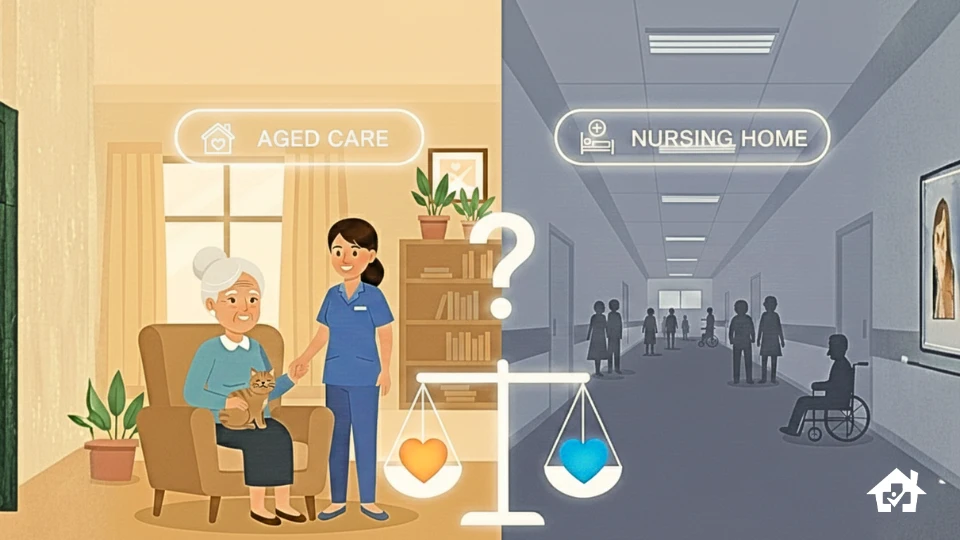
Choosing how to care for an elderly loved one can be emotionally taxing and intimidating. The question "what's the difference between aged care and a nursing home?" is probably on your mind. "Can I stay at home instead of going to a nursing home?" First of all, a nursing home offers more closely monitored medical care, whereas elderly care at home typically offers a more pleasant and independent setting. This post discusses these distinctions, how to choose between nursing homes and aged care, as well as costs and payment options in New York, New Jersey, Maryland, and Michigan. It also explains how trustworthy companies, such as Cottage Home Care Services (phone 516-367-2266 | info@cottagehomecare.com), can help you by offering veteran experience, licensed home care agency status, and faith-based home care.
You will learn about the differences between nursing homes and elderly care, decision-making frameworks, service comparisons, cost breakdowns, clinical quality criteria, lifestyle differences, and highlights of state-specific programs (NY, NJ, MD, MI). Learn how Cottage Home Care Services helps your family make the best decision by providing compassionate home care, RN-supervised care, skilled nursing staff, and background-checked caregivers.
What is Aged Care?
The phrase aged care typically refers to in-home care or home support services that allow a senior to remain in a comfortable and familiar environment. Aged care may include personal care or help with bathing, dressing, light housekeeping, preparing meals, transportation, companionship, and may include health monitoring services all to the framework of a faith-based home care provider or agency that provides the senior care service. Aged care takes a holistic care approach and a focus on trusted in-home care service instead of facility-based living situation.
In the aged care at home model you’ll often see:
- Personal care services by a personal care aide (PCA) or home health aide (HHA).
- Visits by a registered nurse care coordinator (RN) or licensed practical nurse (LPN) for oversight, especially for chronic illness support, medication management home care, fall risk assessment home care, or wound care nursing.
- Flexible scheduling: hours are tailored, sometimes 24-hour supervision or live-in care if needed.
- Funding via private pay or through programs like MLTC home care, Medicaid home care programs, waiver programs, or long-term care insurance.
A major benefit: staying in the comfort of home helps preserve familiar routines, pets, neighborhood ties and often improves quality of life for seniors with more independence at home.
In essence, aged care helps someone live safely at home with support, rather than moving into a facility. It’s ideal if your loved one needs assistance but doesn’t yet require full-time institutional medical supervision.
What is a Nursing Home?
An assisted living facility (often referred to as a Skilled Nursing Facility or SNF) is a facility that provides round-the-clock institutional care; medical oversight; rehabilitative services; and custodial care for individuals that need continuous medical or physical assistance.
Key features of a nursing home include:
- Ongoing skilled nursing performed by RNs, LPNs, and certified nursing assistants; medication administration, wound care, therapy (PT/OT), etc.
- Semi-private or private rooms within a dedicated facility as opposed to a personal home environment.
- Less flexible in terms of schedule, but provides a better safety net and structure, especially for the following situations: 24-hour supervision, individuals with advanced care needs, complicated wounds, or those at high risk for falls.
- Costs tend to be significantly higher than home-based aged care because of staffing, resources, and infrastructure required.
In short, when the level of care required goes beyond what can be practically and safely managed at home, a nursing home becomes a more appropriate choice.
Comparison Table
| Feature | Aged Care (Home) | Nursing Home (Facility) |
| Setting | Private home or apartment | Institutional facility, private/semi-private rooms |
| Staff / Medical Care Level | PCAs/HHA + RN/LPN visits | 24/7 skilled nursing, RNs always onsite |
| Flexibility | High – customised schedule, home environment | Lower – fixed facility routines |
| Cost (typical) | Hourly rates, potential 24-hr packages | Monthly rates, often higher |
| Eligibility | Care needs manageable at home | Need for full-time supervision or skilled nursing care |
When Aged Care (Home Care) is the Better Option
- The senior is mostly independent but needs help with ADL support such as bathing, dressing, meal prep, mobility assistance.
- The desire is to remain at home rather than move into a facility.
- Family caregiver or support network is available to help coordinate, supplement or provide respite.
- The home environment is safe or can be modified (ramps, grab bars, fall prevention strategy).
- Funding options like MLTC, Medicaid home care, waivers, or private pay home care are available.
The idea is to grow old in the same place while maintaining your independence, dignity, and familiar surroundings.
When you select home-based aged care, you can remain active in your community, interests, and family while receiving quality care from a licensed home care agency, a certified HHA training program, or a faith-based home care provider such as Cottage Home Care Services.
When a Nursing Home May Be Necessary
- The individual requires 24-hour skilled nursing, frequent medicine adjustments, complex wound care or rehabilitation after surgery or major illness.
- Constant supervision is needed—due to advanced dementia, frequent falls, or inability to safely remain at home.
- The home setting is unsafe or requires too many adaptations to manage medical risk.
- Care needs escalate beyond what a compassionate home care team or RN supervised care can safely deliver at home.
- The family or home caregiver network is unable to meet the demands or there is caregiver burnout.
At this stage, a nursing home offers a structured environment where experienced nursing staff, full-time medical oversight and infrastructure are built in.
Decision Flowchart
- Assess current daily needs (ADLs, mobility, medical supervision).
- If home is safe & caregiver support exists → aged care at home likely; if not → proceed to next step.
- If medical needs exceed home care capacity → nursing home may be required.
- Re-assess every 6 months or after significant health change.
Care Services Explained (for Aged Care)
- PCA / HHA services: Assistance with daily activities and companionship.
- CHHA, RN/LPN nurse visits: Clinical oversight and plan adjustments.
- 24-hour packages: Live-in or continuous care through licensed agencies.
- PRN nurse visits, post-hospital assessments, medication checks, fall-risk evaluations.
- Programs & waivers vary by state (MI Choice, CFC, NHTD, etc.).
Normal Cost Ranges
Home Care: $15 to $40 or more per hour, depending on the state and the degree of service.
Monthly Fee for Nursing Home: $5,000 to $12,000 or more for care in a facility.
The entire cost depends on where you live, what kind of care you need, whether you qualify for funding, and what kind of insurance you have.
Insurance & Programs That Help Pay
- Managed Long-Term Care (MLTC): Supports in-home elderly care, includes nurse assessments.
- Medicaid waiver programs include NHTD (NY), MI Choice (MI), and CFC (MD).
- PACE: The Programs for All-Inclusive Care for the Elderly let seniors who qualify have care in their own homes.
- Paying out of pocket and long-term care insurance: Include both home and facility choices.
Who Provides the Care?
- Home care: PCAs/HHAs supervised by RNs/LPNs via licensed agencies with background checks.
- Care for the facility: RNs, LPNs, and CNAs on-site work with therapy teams around the clock.
- Clinical oversight in home care makes sure that medications are managed, falls are assessed, and rules are followed.
Cottage emphasizes faith-based, compassionate, and family-centered care.
Quality of Life Differences
At home (aged care):
- Familiar surroundings, pets, routines, and personal freedom.
- Stronger family involvement and independence.
In a home for the elderly:
- Routines that are set up and places that are shared.
- More chances to meet others, but less independence for each person.
Case Studies
- Mary (82): Continued gardening and reading club at home with the help of Cottage's PCA/HHA and RN visits, which helped her manage her COPD.
- John (88): Transitioned from home care to nursing home after a fall; Cottage coordinated his smooth transition.
Local Options — State by State
- New York: MLTC, NHTD, private pay home care. Coverage: NYC, Long Island, Westchester. Call 516-367-2266.
- Michigan: MI Choice waiver, Home Help, PACE. Cottage provides local coordination.
- New Jersey: Private pay HHA services, licensed home care agency. Call for consultation.
- Maryland: Community First Choice (CFC), private pay, licensed home care providers.
FAQs
- What is the main difference between aged care and a nursing home? Aged care supports independence at home; nursing homes provide 24-hour skilled care in a facility.
- Can Medicaid cover home care? Yes—through programs like MLTC, MI Choice, and CFC.
- How do I know if my parent needs a nursing home? If they need constant supervision or skilled nursing despite home support.
- What is the cost difference? Home care is hourly; nursing homes charge higher monthly fees.
- Do family members get paid to provide care? In some states yes, depending on waiver program eligibility.
Why Choose Cottage Home Care Services?
- Faith-based care with over 25 years’ experience.
- Licensed home care agency with caregivers who have been background-checked and trained.
- We are experts in MLTC, waiver programs, and moving people from home to a facility.
- Mission-driven, family-centered, dignity-focused senior care.
Call :
Call 516-367-2266
✉️ Email info@cottagehomecare.com
Request a free nurse assessment today — home care you can trust.
7-Step Plan & Next Steps
- Assess needs (ADLs, home safety).
- Get a formal nurse assessment for eligibility.
- Call Cottage Home Care for a free consultation.
- Explore funding (MLTC, PACE, waivers, private pay).
- Trial home care hours before long-term commitment.
- Schedule reassessment every 3–6 months or after health changes.
- Hold a family meeting to review and decide next steps.
Contact: 516-367-2266 | info@cottagehomecare.com
Conclusion & Resources
Choosing between aged care vs nursing home is a deeply personal and practical decision. Whether you decide on home-based aged care or facility care, understanding definitions, services, costs, state programs, and lifestyle differences will help you make a confident choice.
Free consult & nurse assessment available — call today and let a trusted senior care agency guide you through options with care, compassion, and full support.